Northcote House by Olaver
Northcote House by Olaver
On a narrow inner-Melbourne site, Northcote House creates a generous family home by providing space only where it serves a clear purpose.
Location
Northcote, Victoria, Australia
Architecture
Olaver Architecture
Build
Silverstream Constructions
Structural Engineering
R.I Brown
Landscape Design
Florian Wild
Film & Photography
Anthony Richardson
Production
Simple Dwelling
“Life is complicated enough. So how can we create spaces that don't add to those complications? So providing spaces for function, but not providing space for the sake of providing space.”
— Emlyn Olaver, Olaver Architecture
Northcote House by Olaver is shaped by a simple question: how can architecture make everyday life less complicated? In adapting an Edwardian house for a young family, the project answers not through expansive rooms or visual minimalism, but through the careful use of space, material and light.
The existing house, on the western edge of Northcote, was dilapidated and included a relatively recent rear addition, but its poor planning prevented it from supporting the clients’ needs. Ruby and Jesse required a three-bedroom home with enough living area for their growing family, but Olaver recognised that meeting this brief did not require every part of the house to become larger.
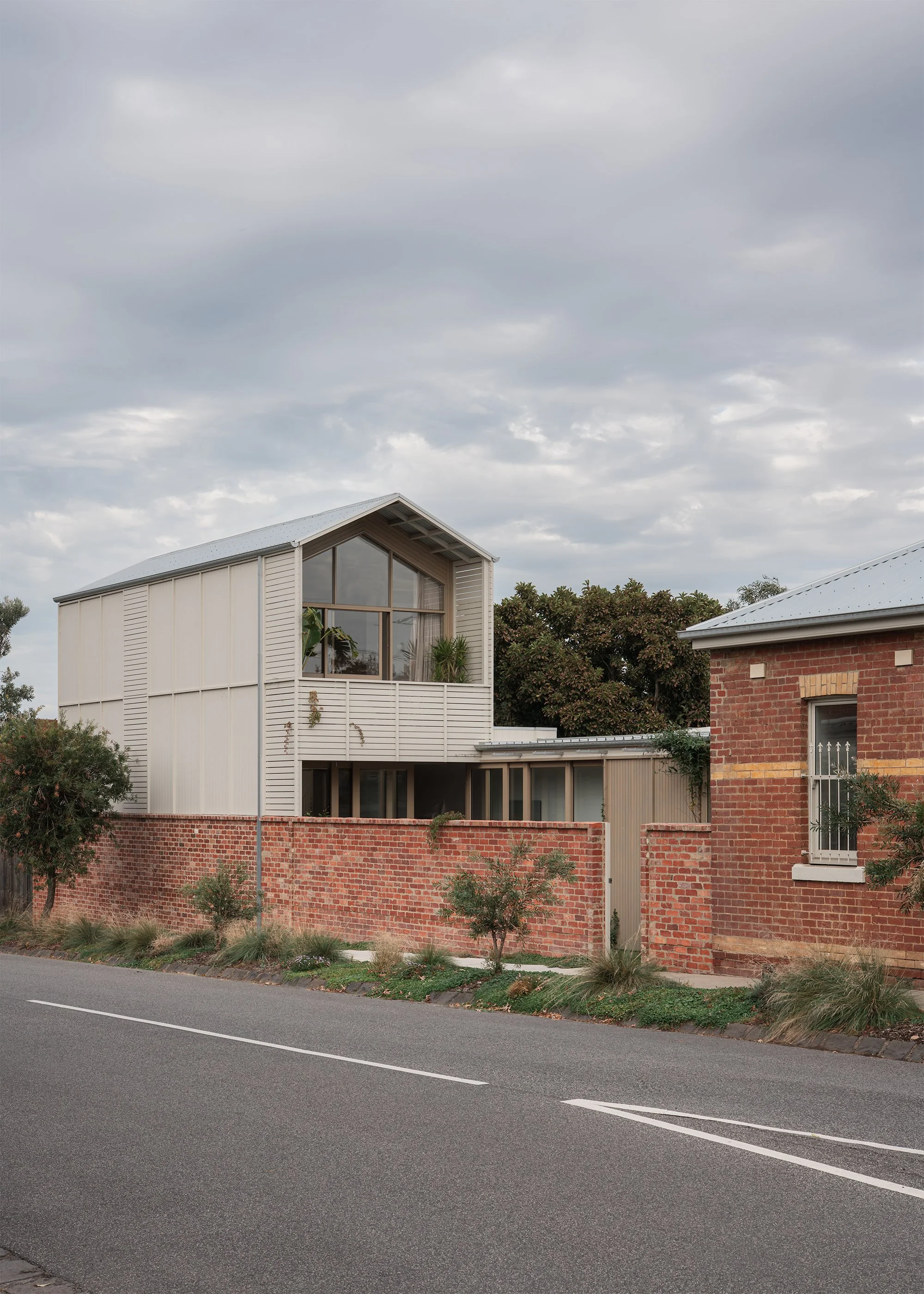
The narrow site constrained the extension. Its northern orientation and rear laneway access offered opportunities, but the project still needed to bring light into a deep plan, connect with the retained Edwardian rooms and accommodate a second storey.
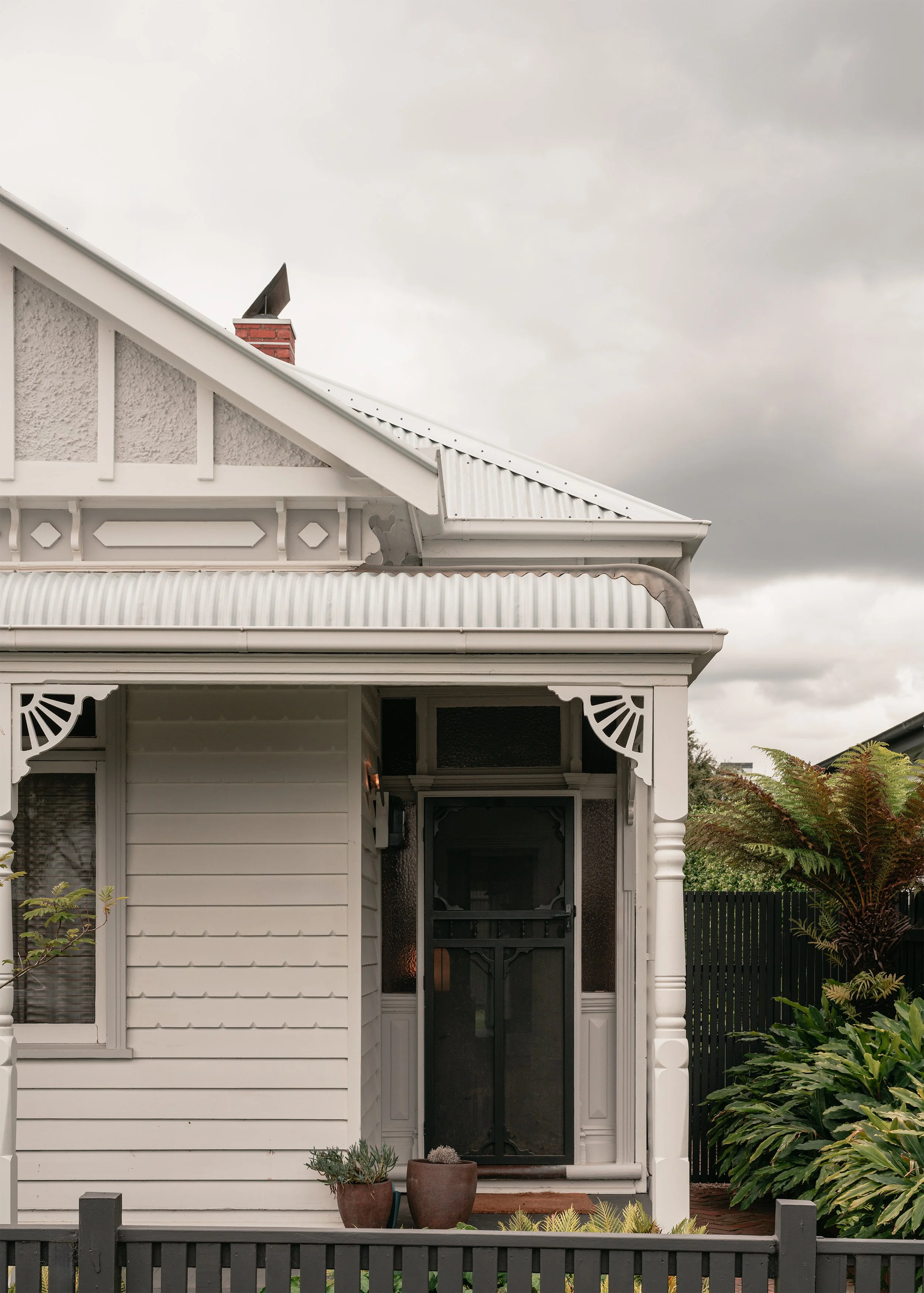
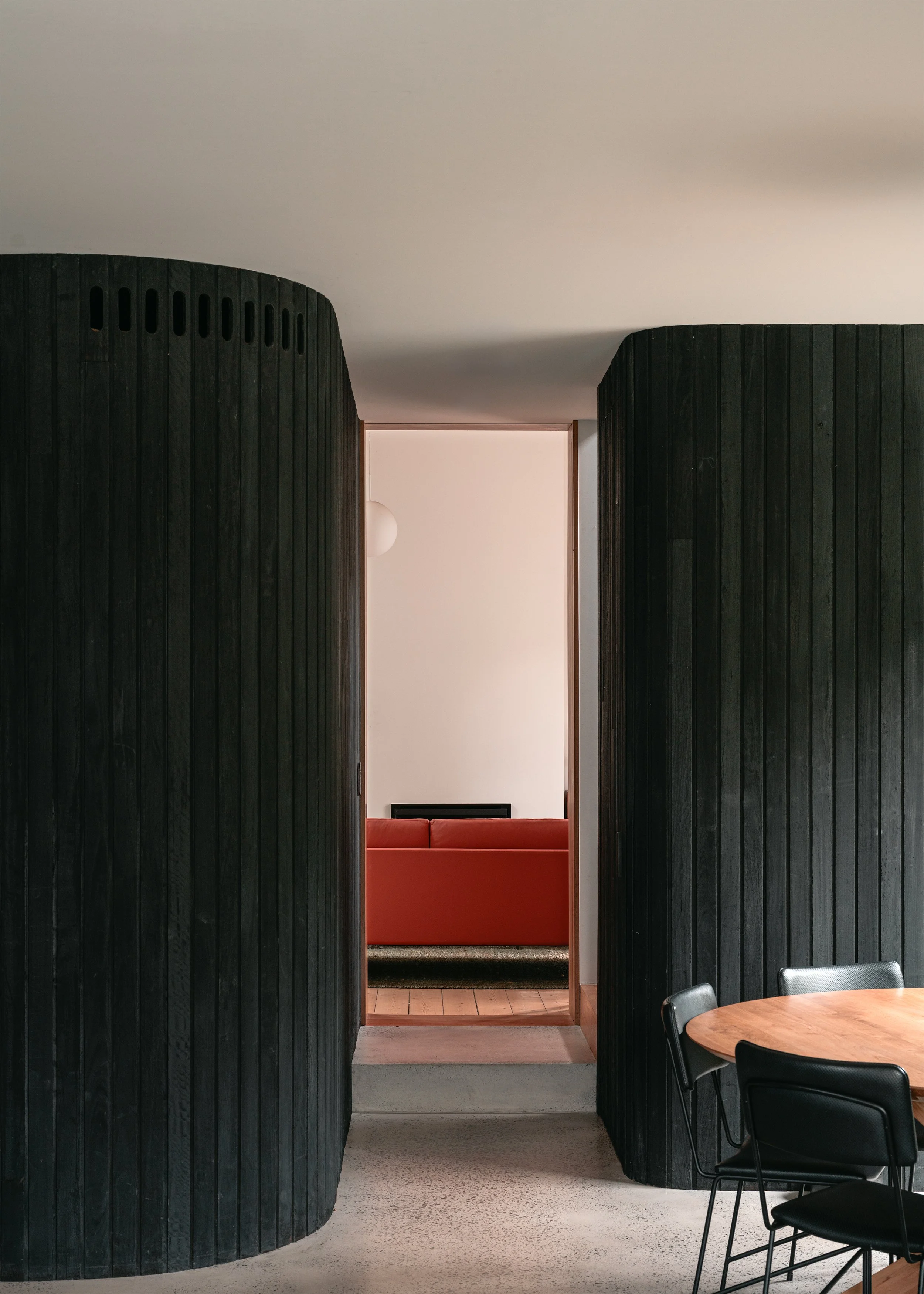
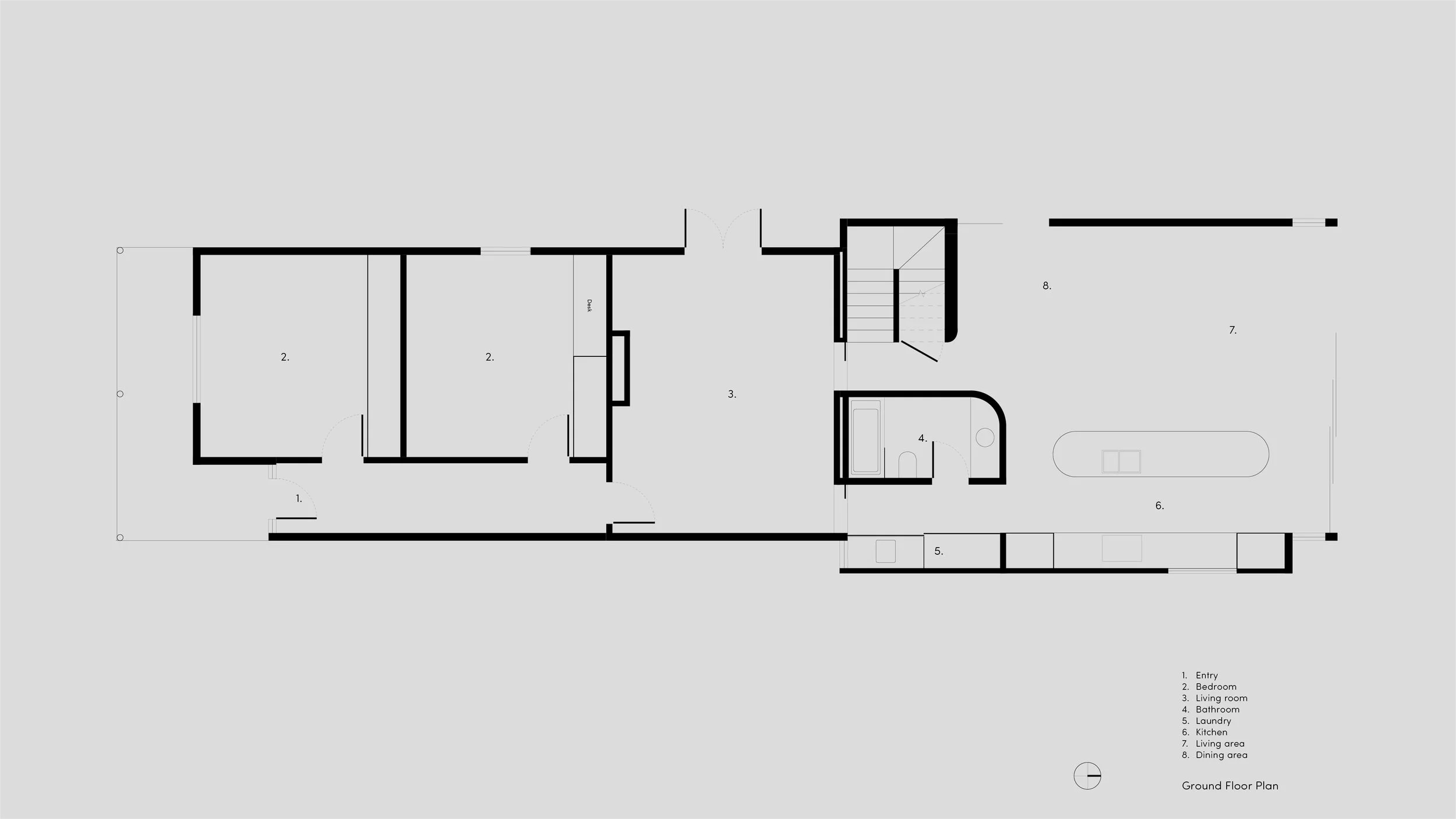
The architects instead compressed the house’s supporting functions. A central “knuckle” combines the stair, bathroom, European-style laundry and circulation where the original building meets the extension. Their close arrangement allows the transitional zone to work harder and ensure more of the footprint is for habitable spaces.
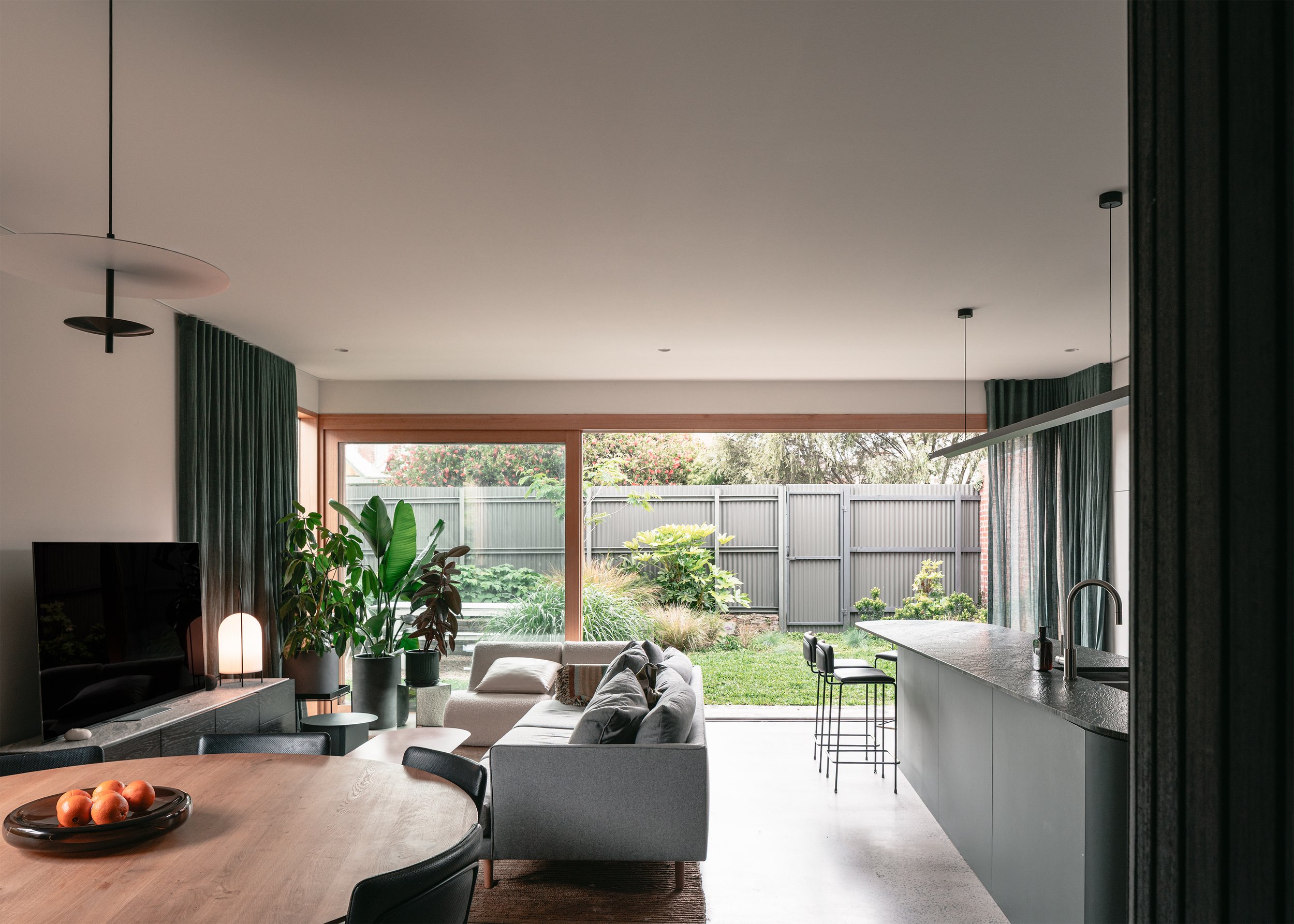
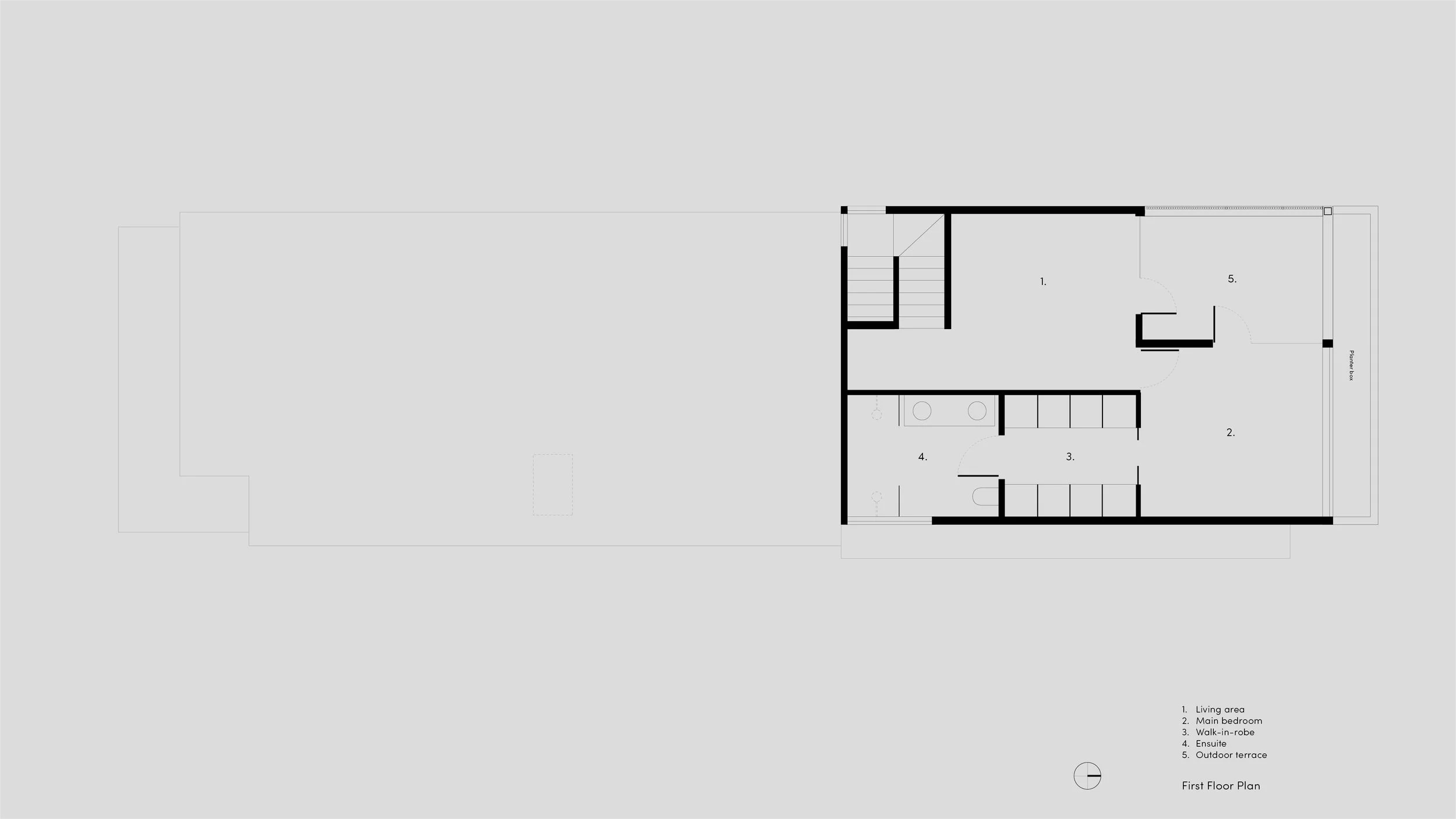
One large open plan is rejected; instead, three smaller but functional living areas were incorporated. An existing sitting room remains within the Edwardian portion, supported by a new living room downstairs and another upstairs. This arrangement rejects the idea that one large room must accommodate every communal activity. The smaller rooms can support different modes of family life, from gathering to retreat, and can be occupied concurrently without competing for space. All up, the three living areas occupy the same floor area as a typical singular open plan space, but remain more functional for family life.
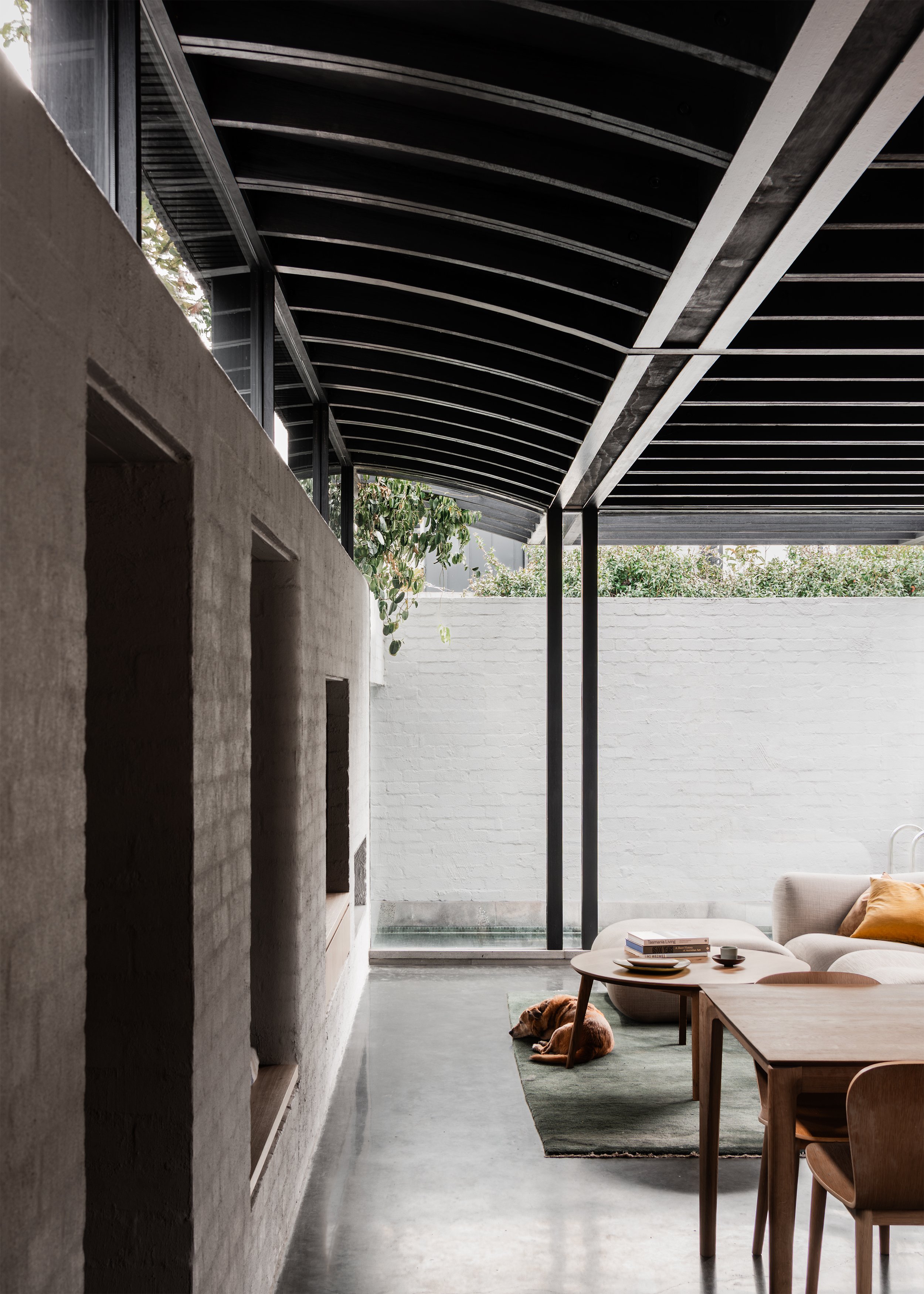
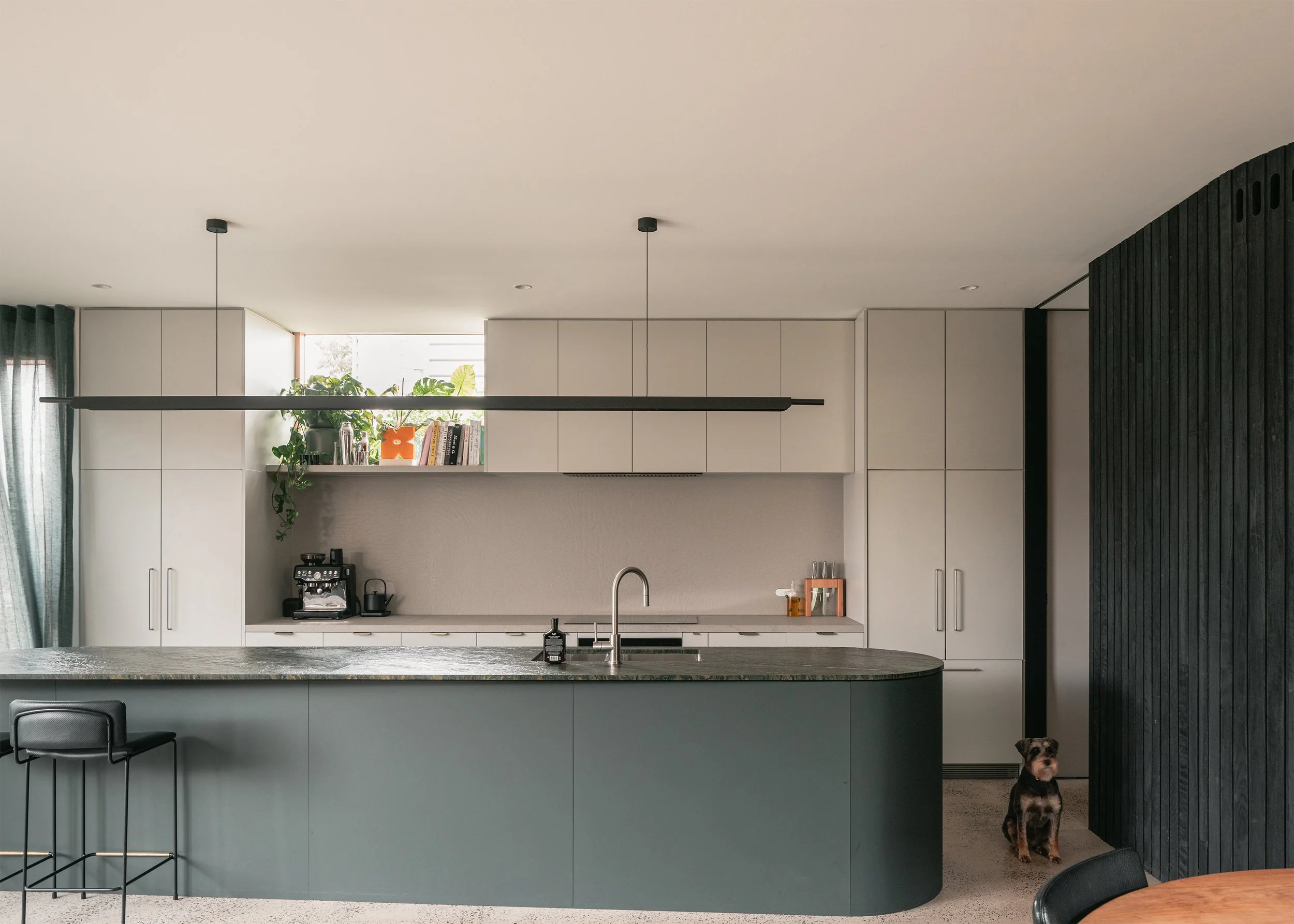
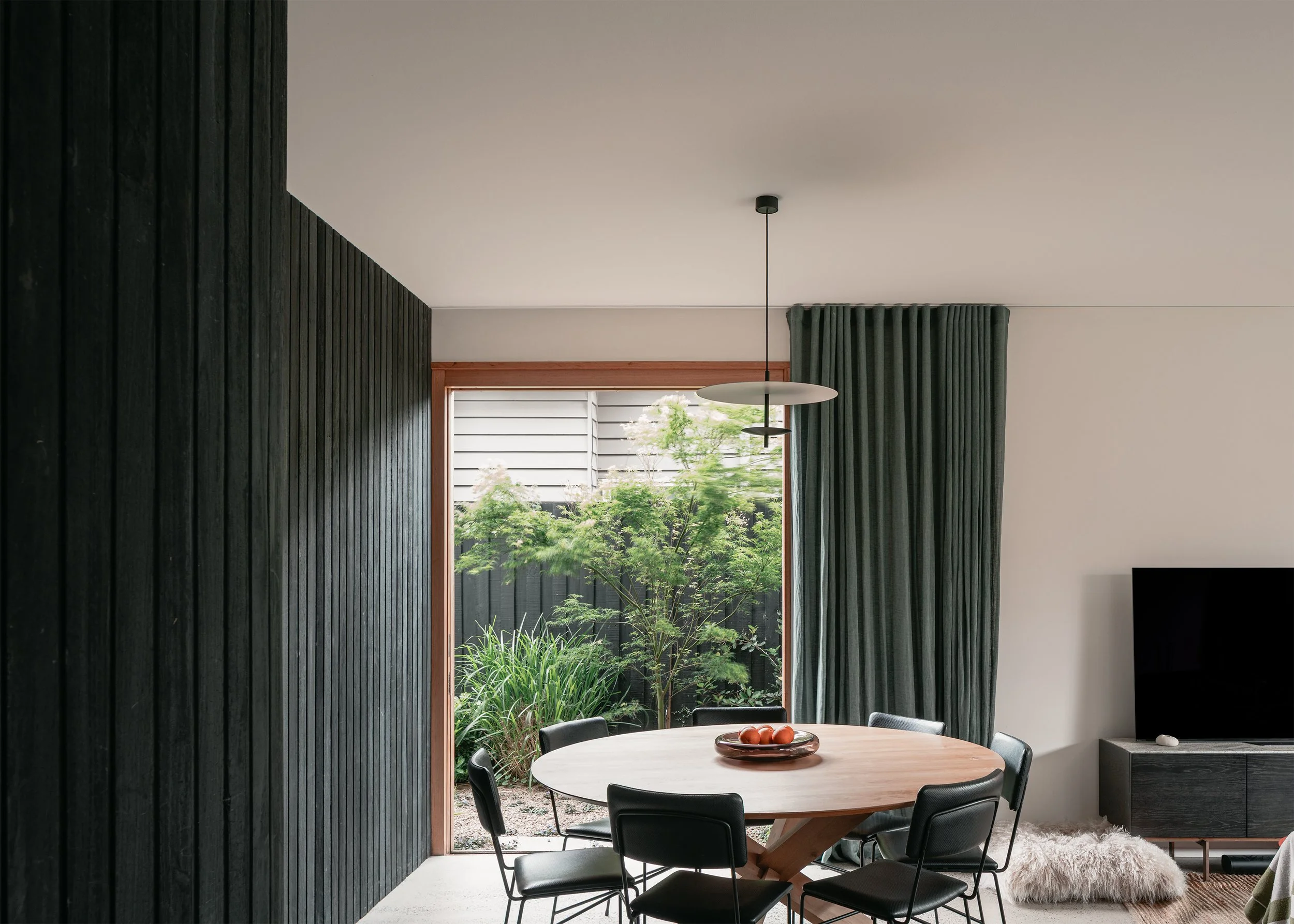
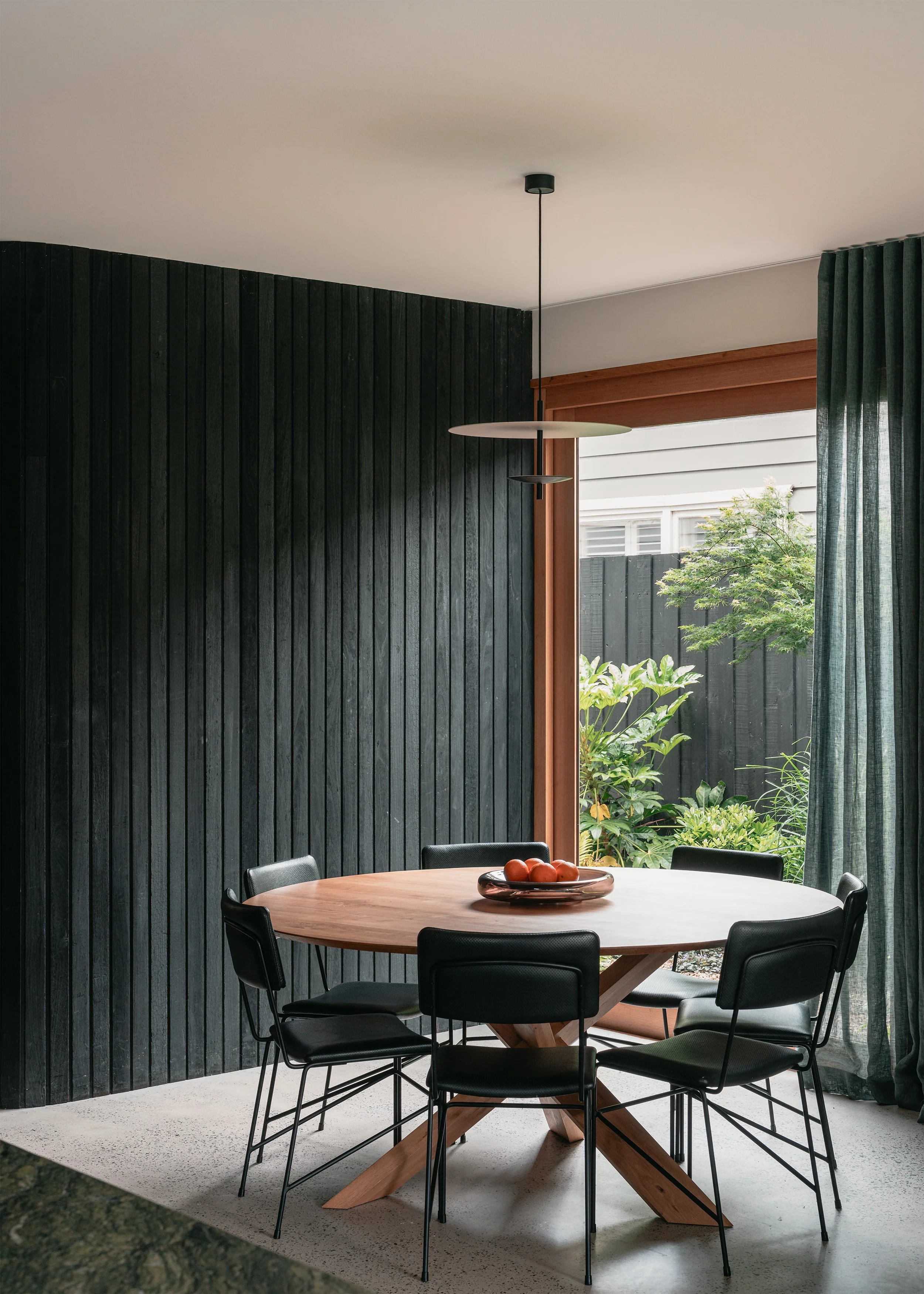
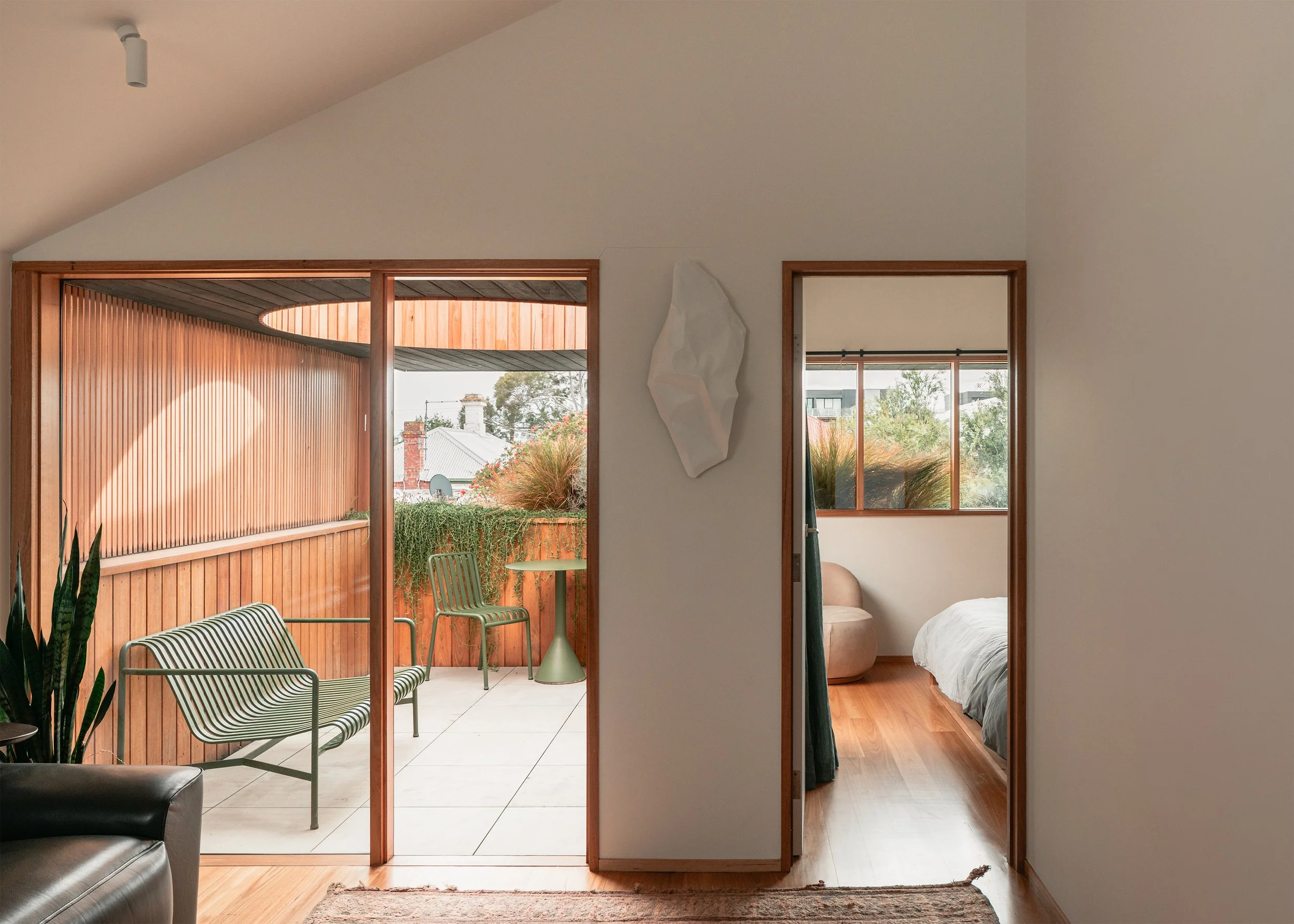
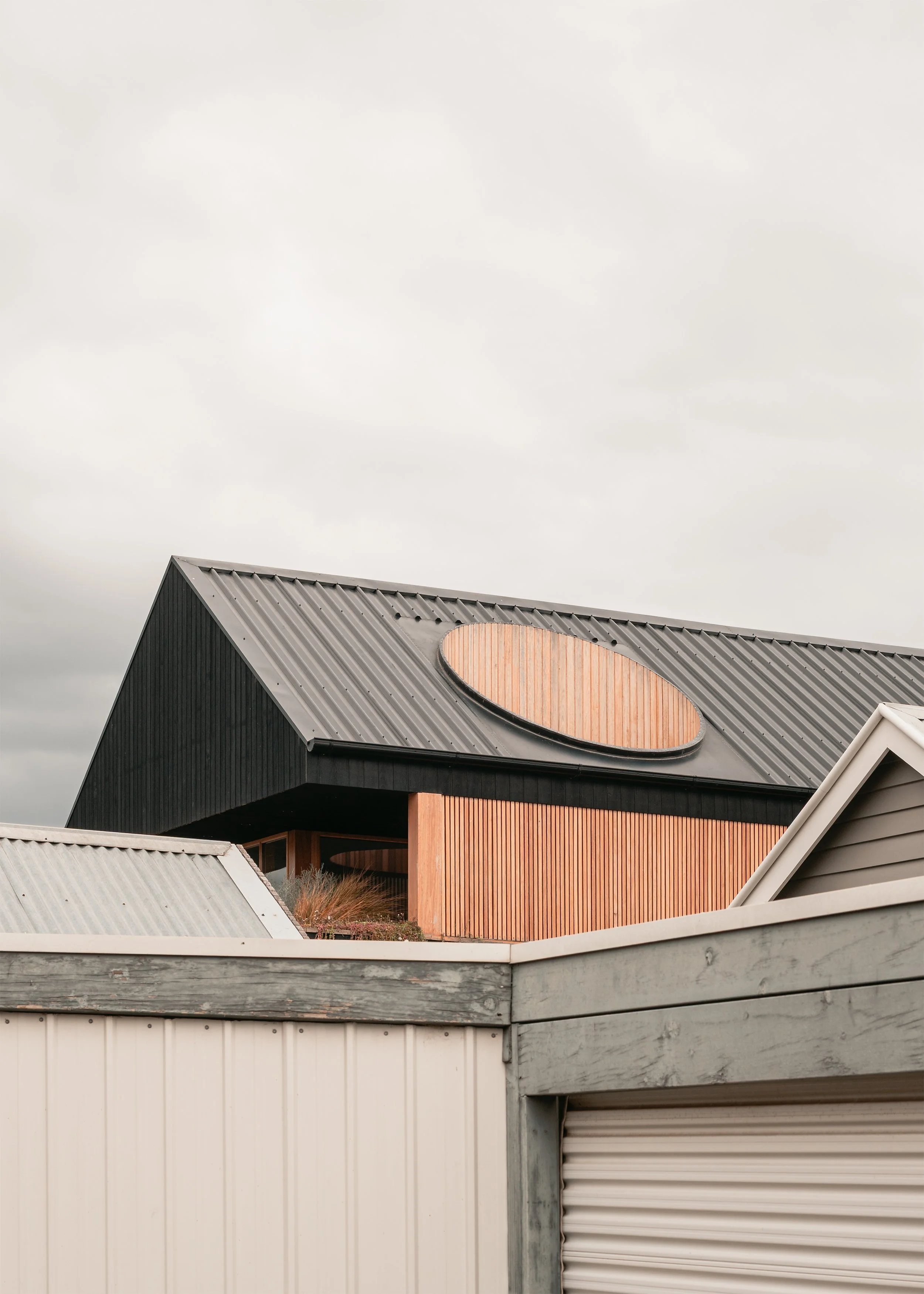
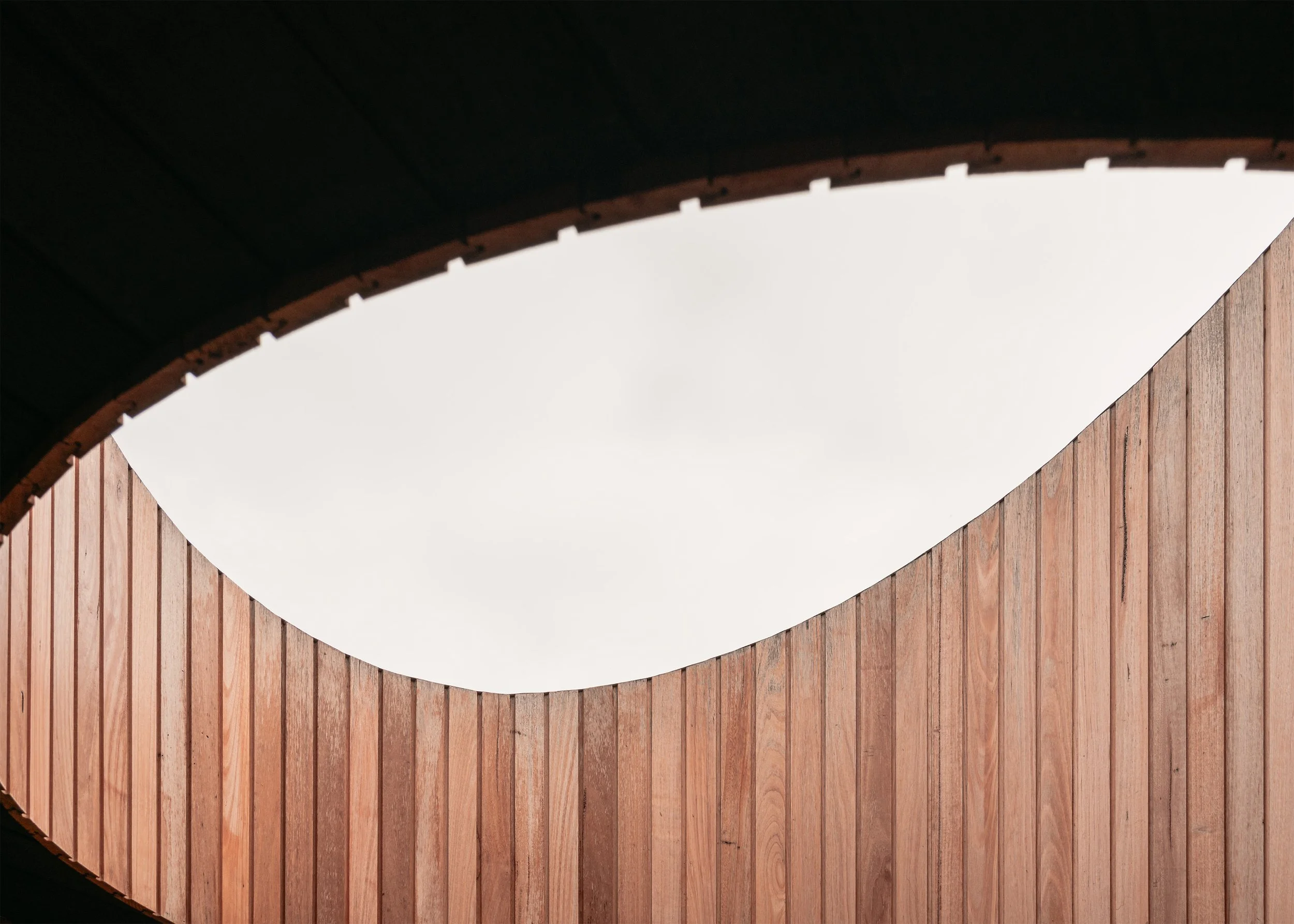
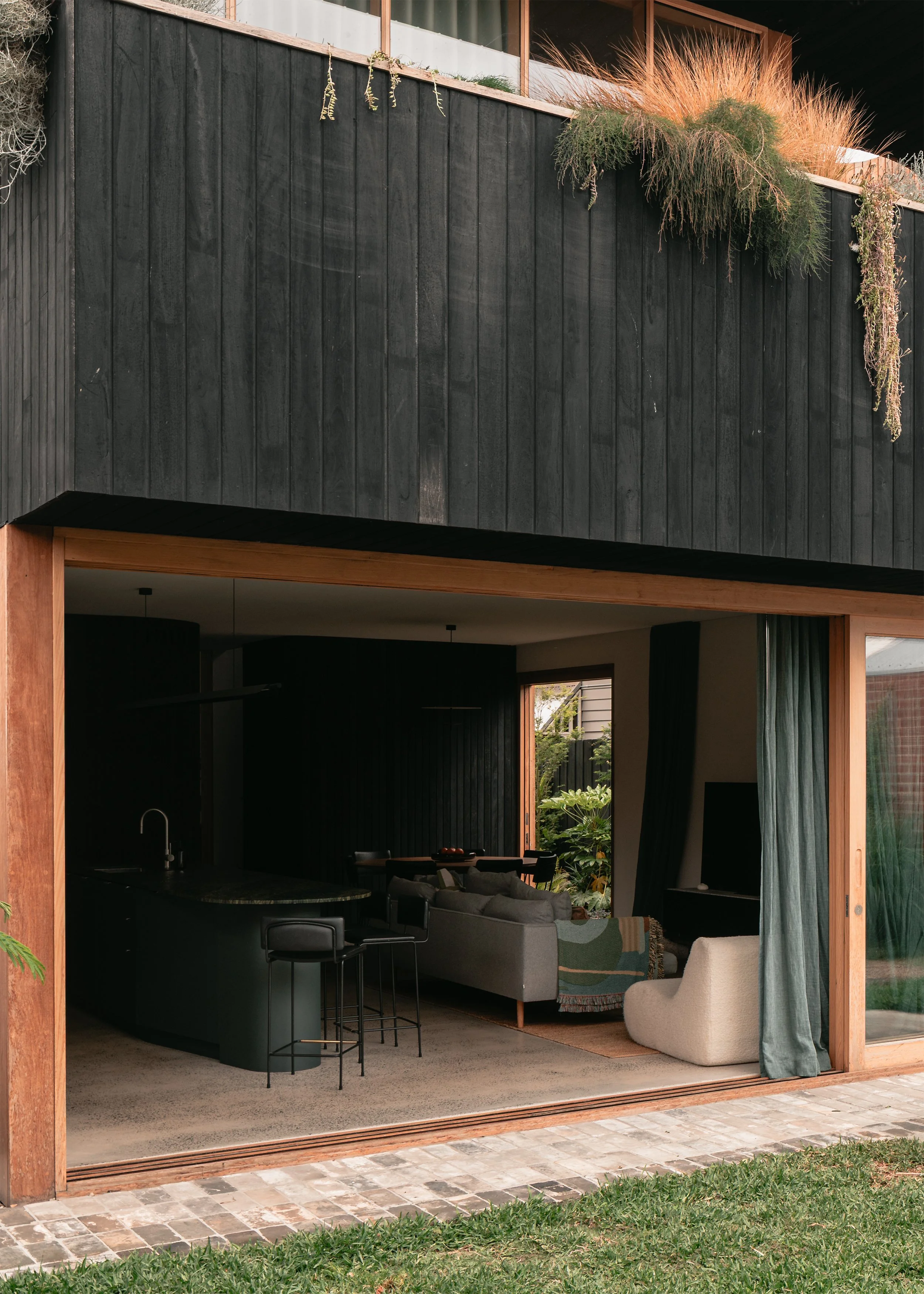
Curved black pods guide circulation around the service spaces and soften the geometry of the otherwise rectilinear interior. These curves perform practical work, helping movement through the compact plan feel more natural. A circular opening above the upper deck similarly combines formal character with environmental effect, projecting a patch of light that shifts across the room.
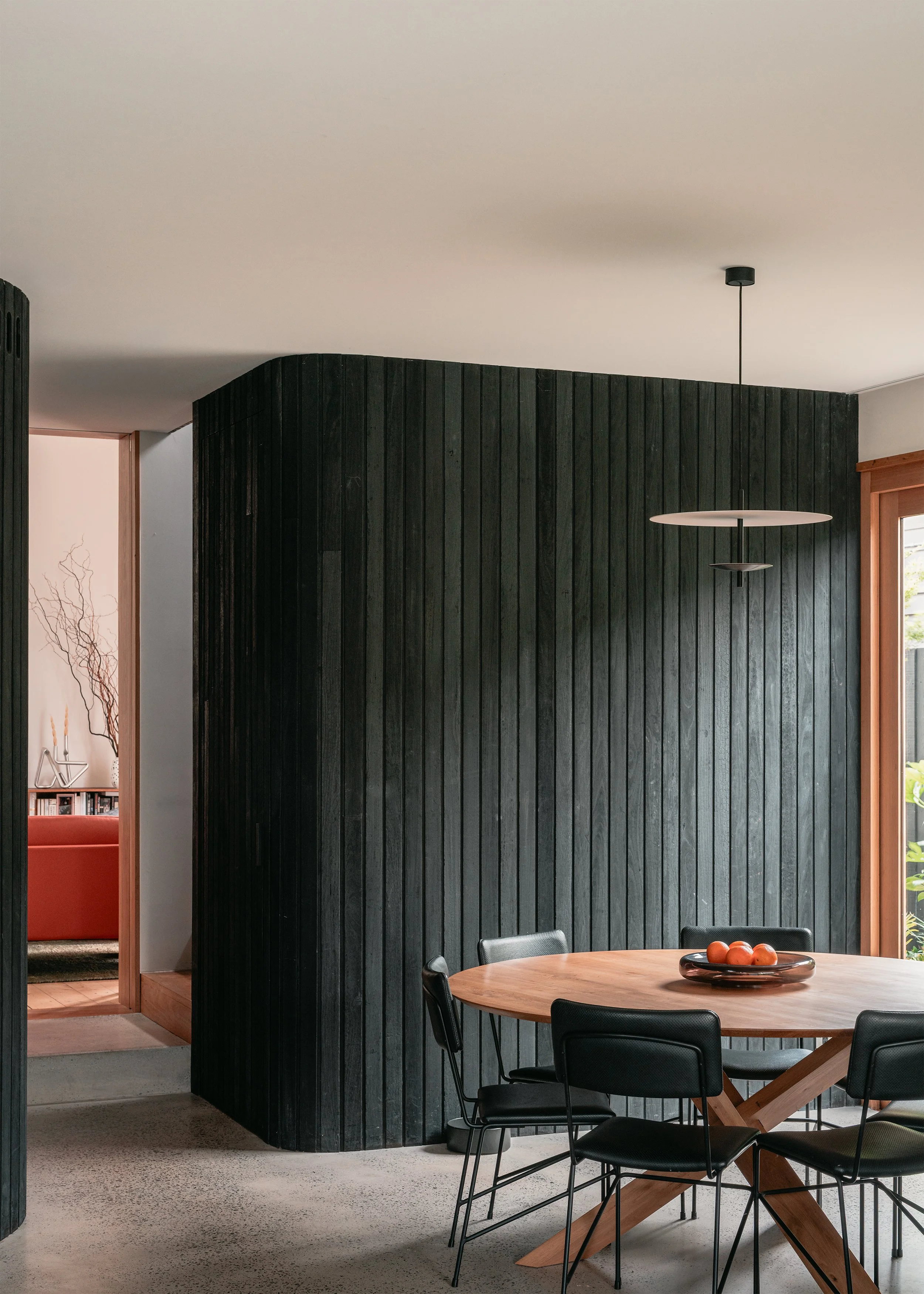
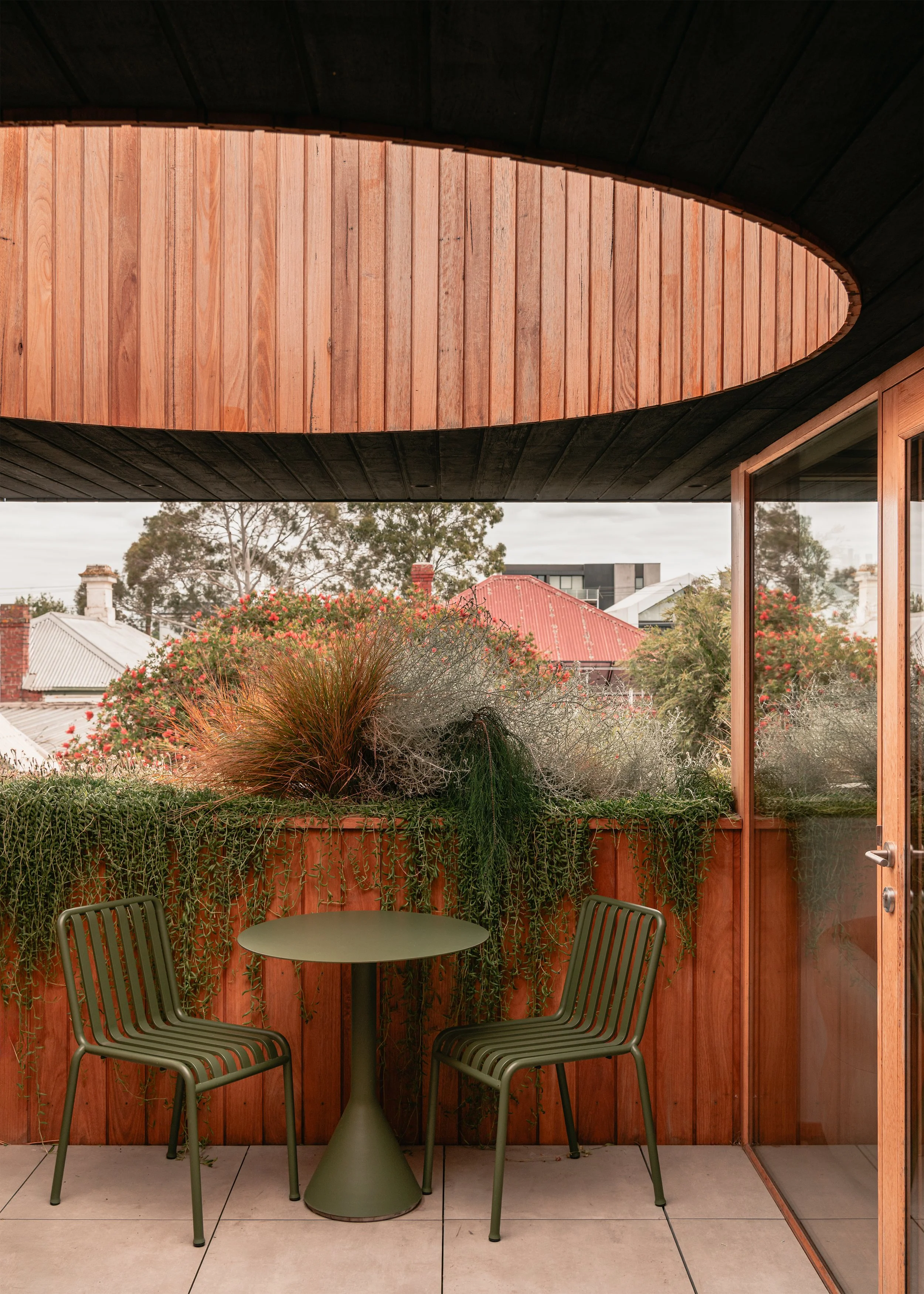
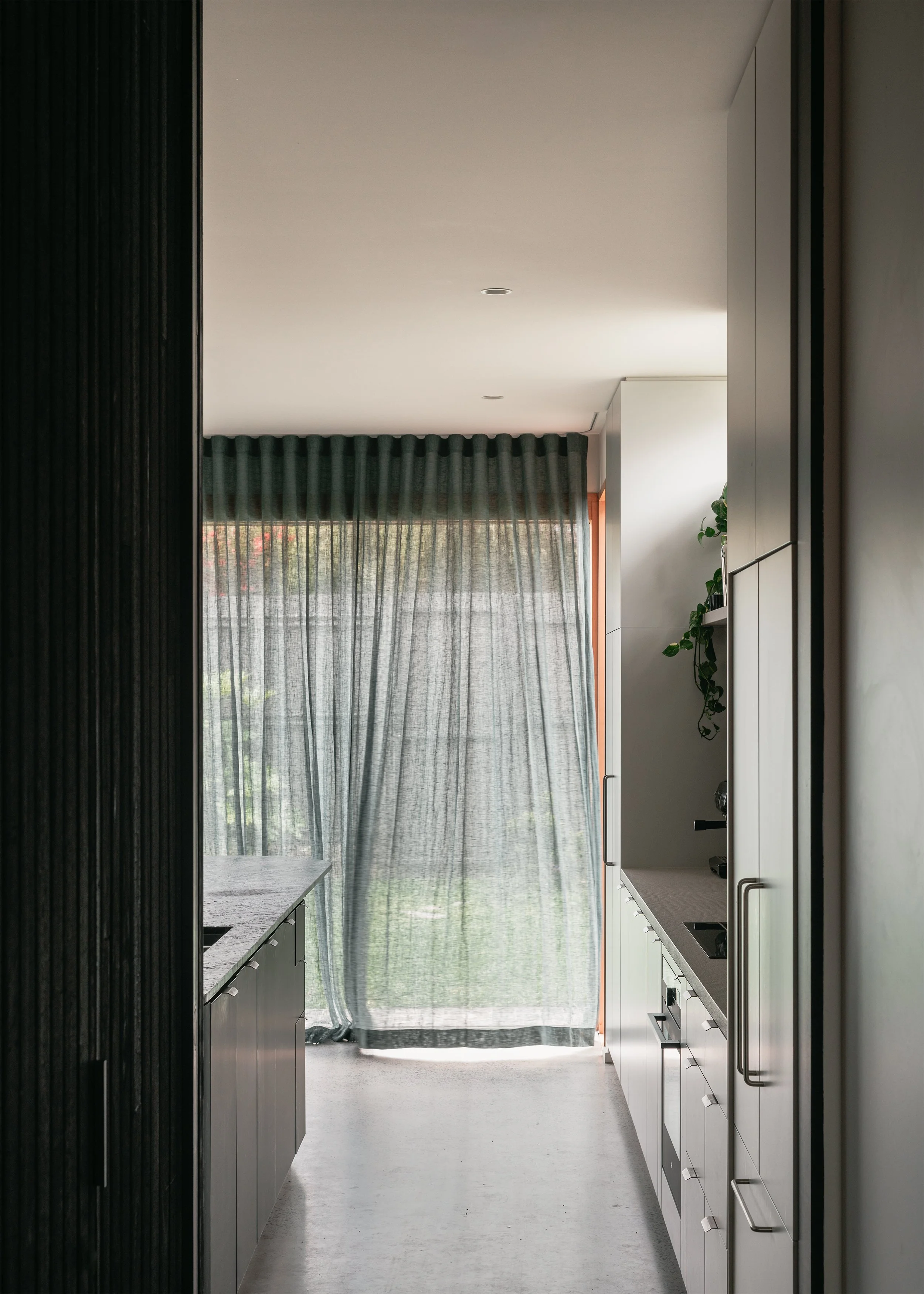
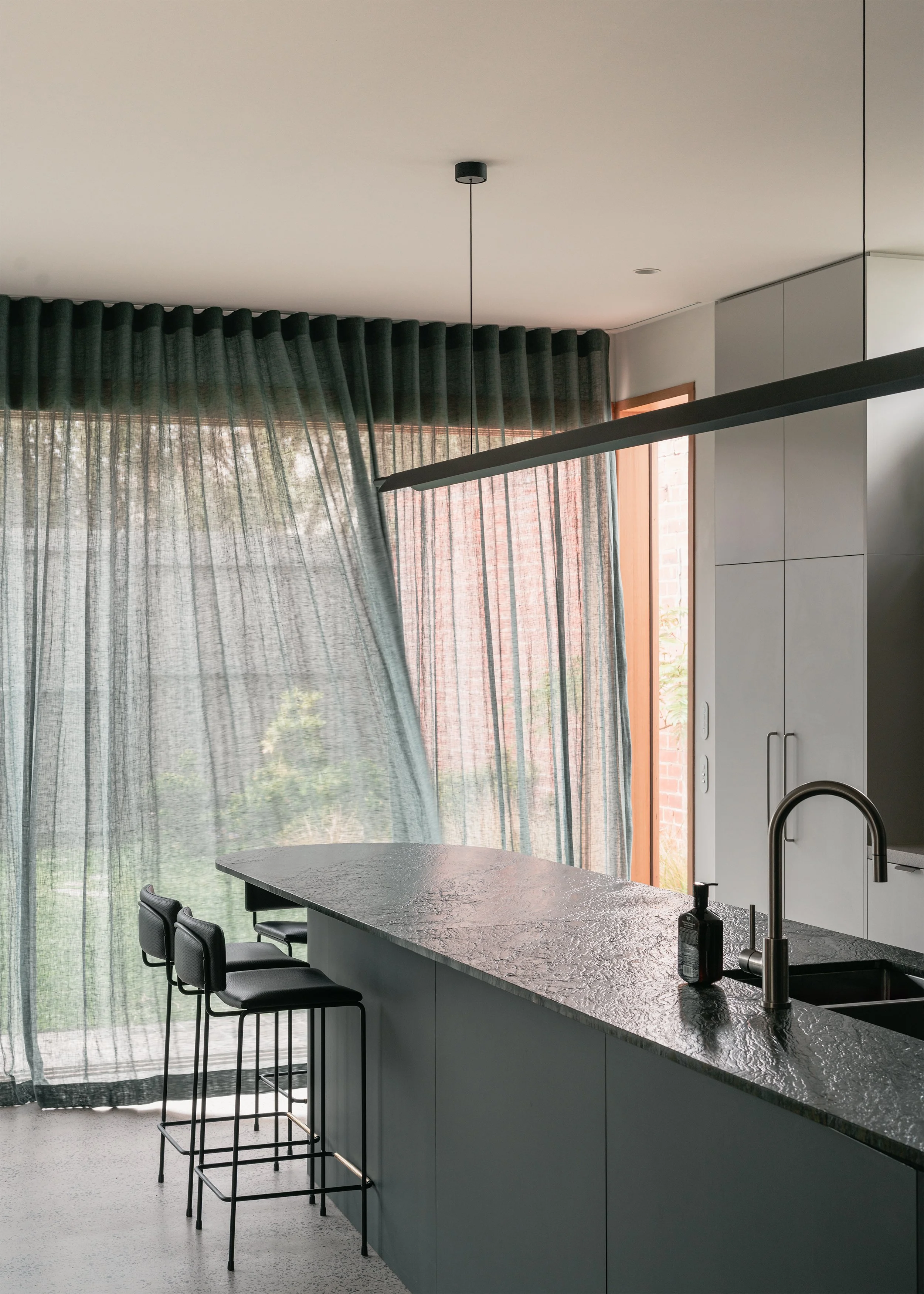
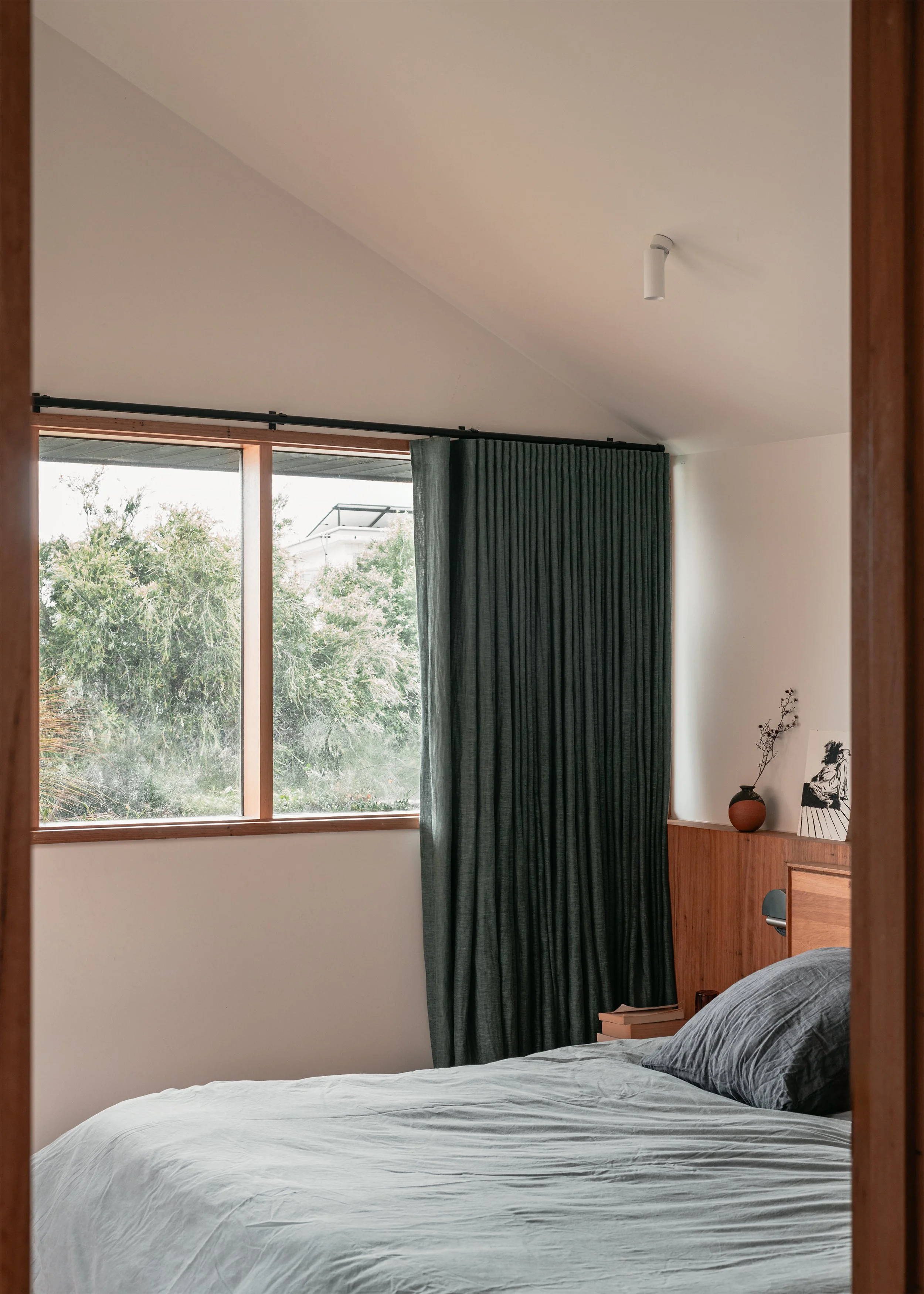
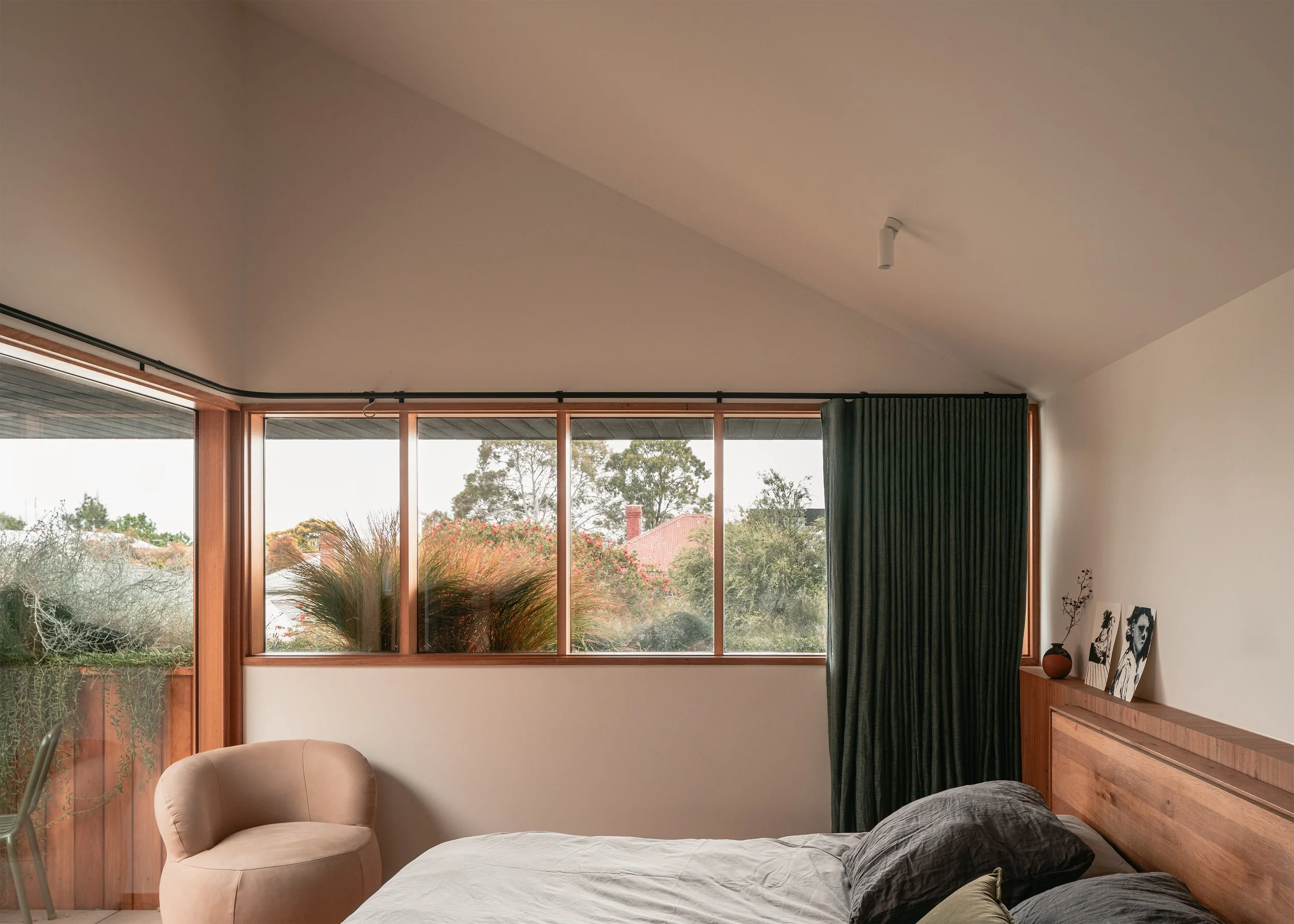
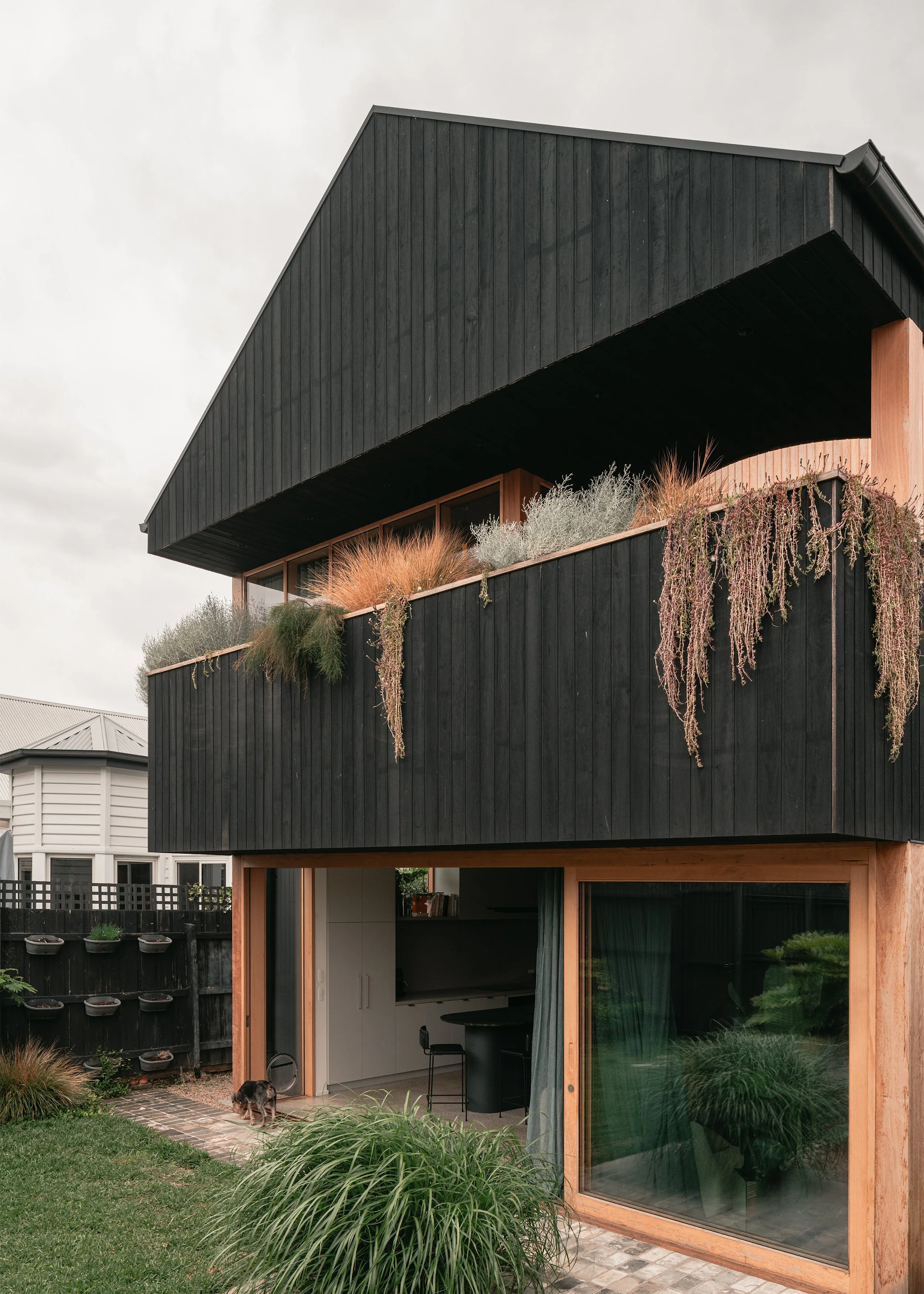
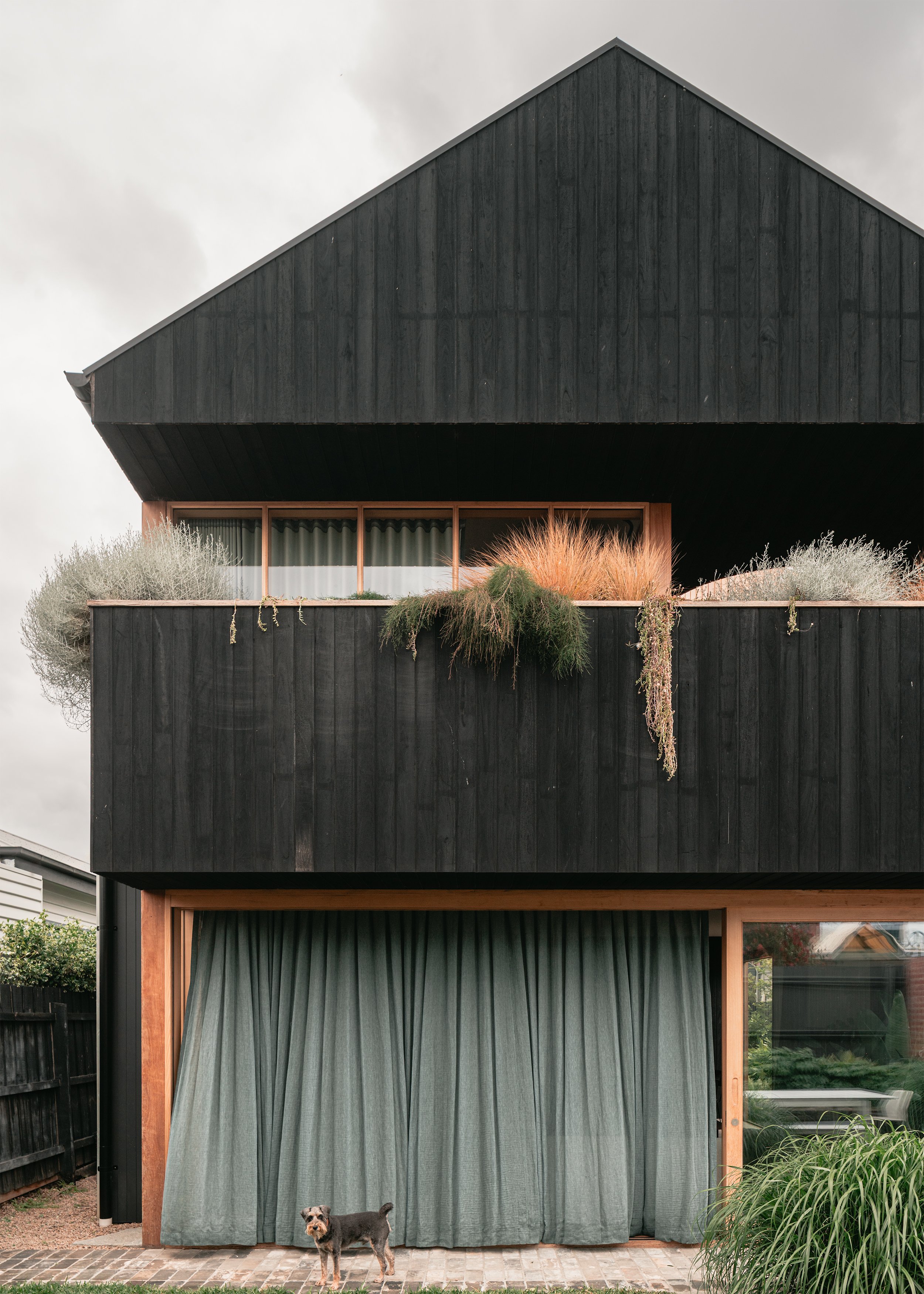
Elsewhere, daylight is moderated through eaves, screening, curtains and vegetation. Rather than eliminating shadow, the architects use contrast to give the rooms greater depth. Views to the garden and the patterns cast by foliage allow the interior to change throughout the day.
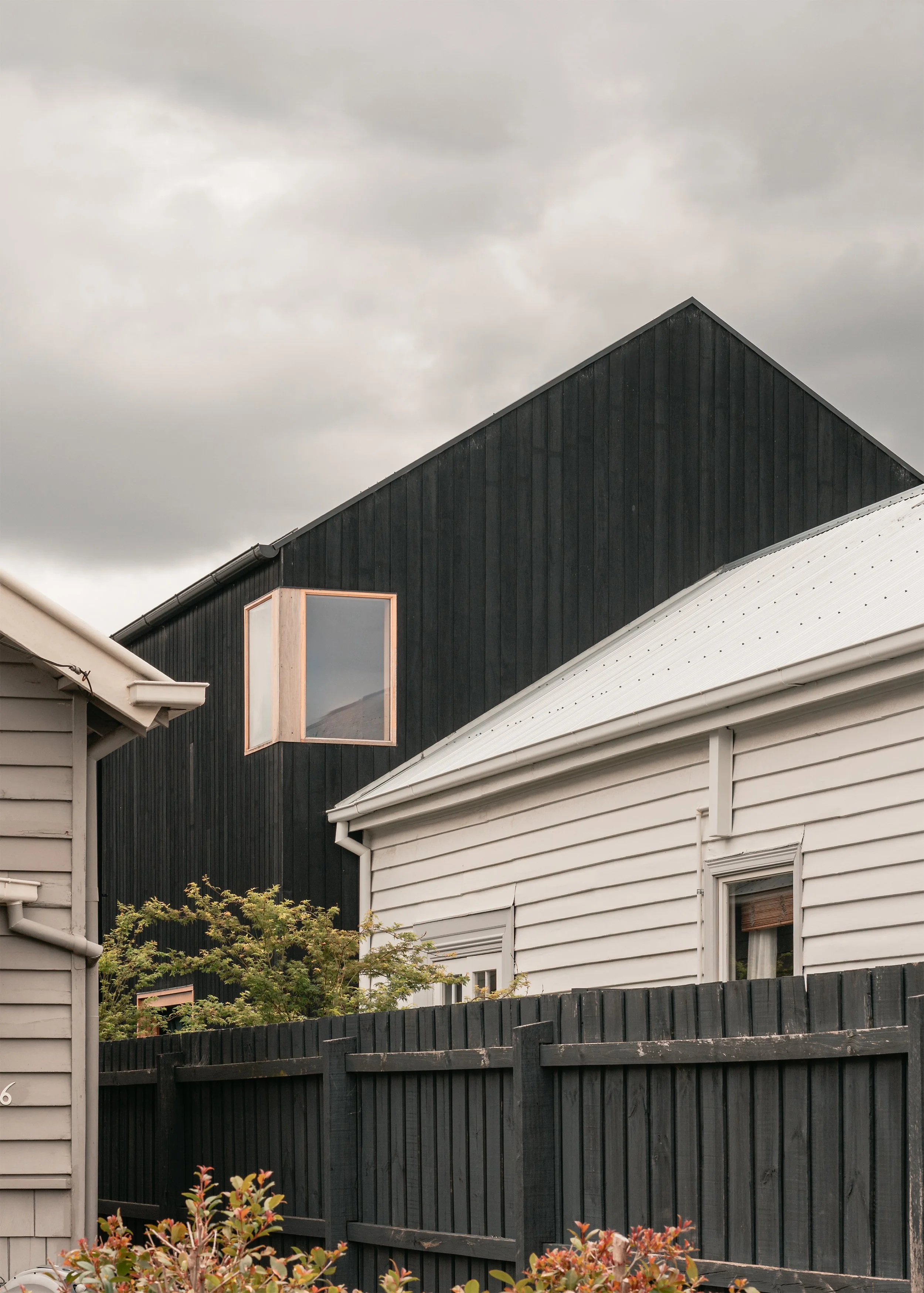
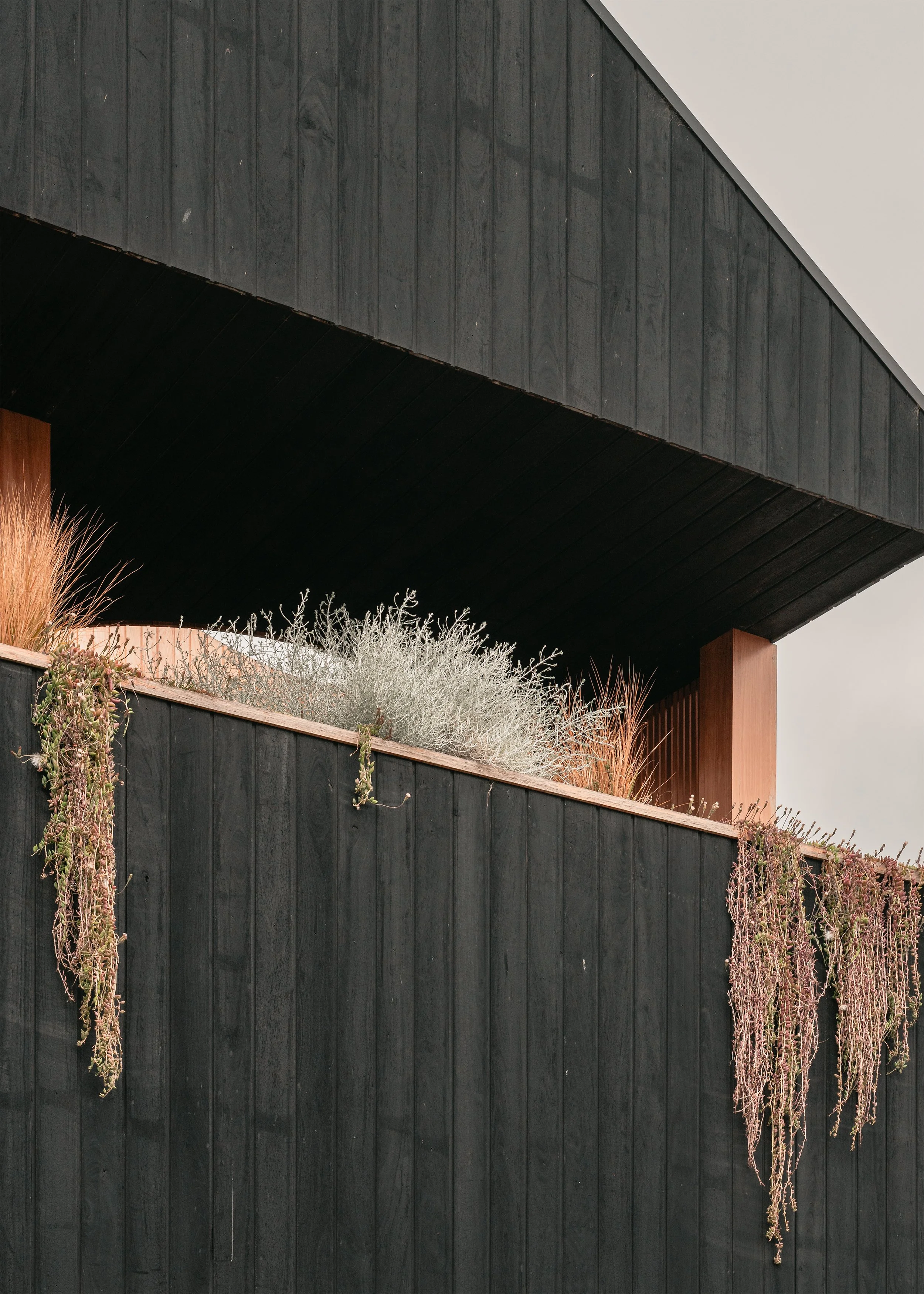
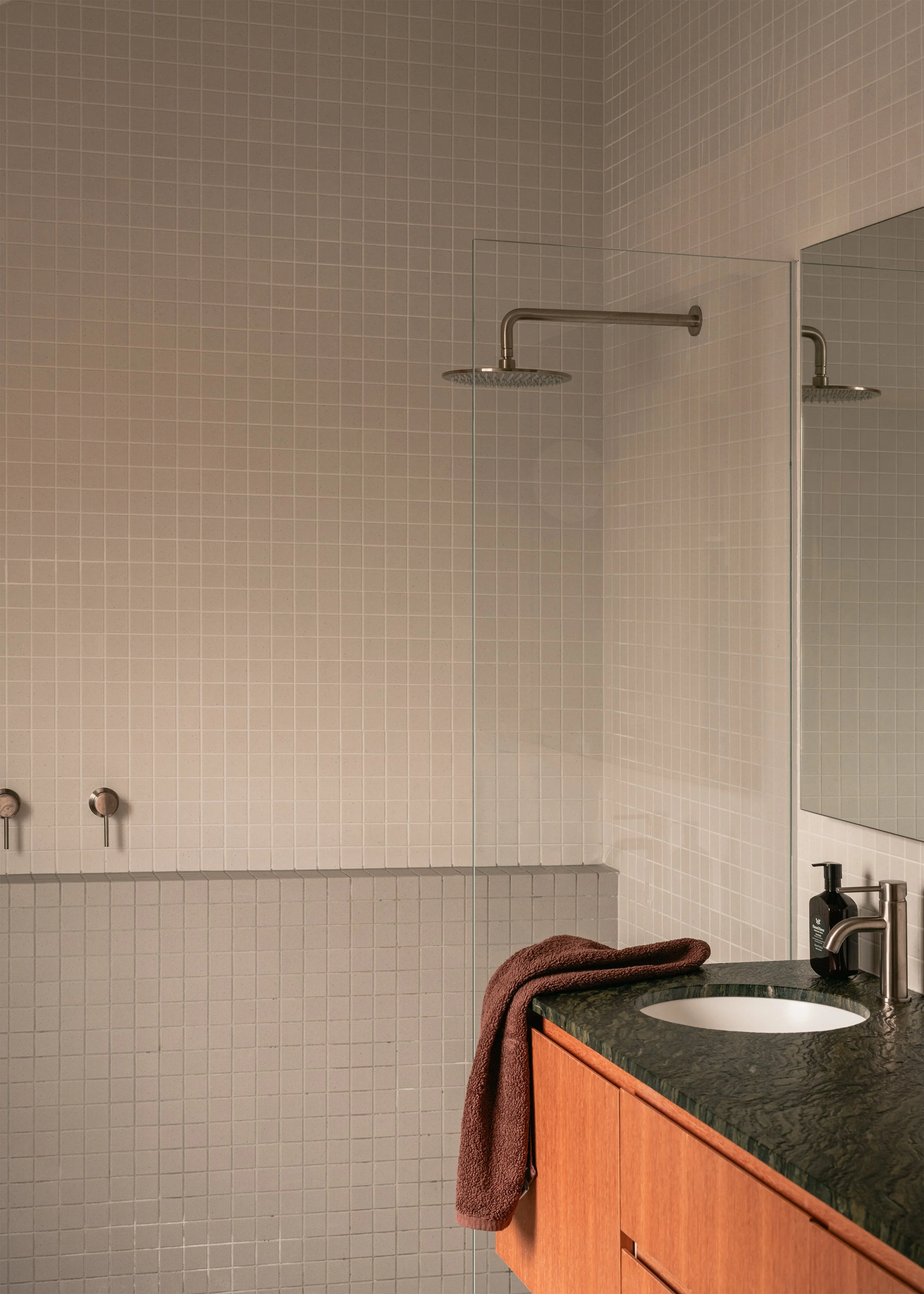
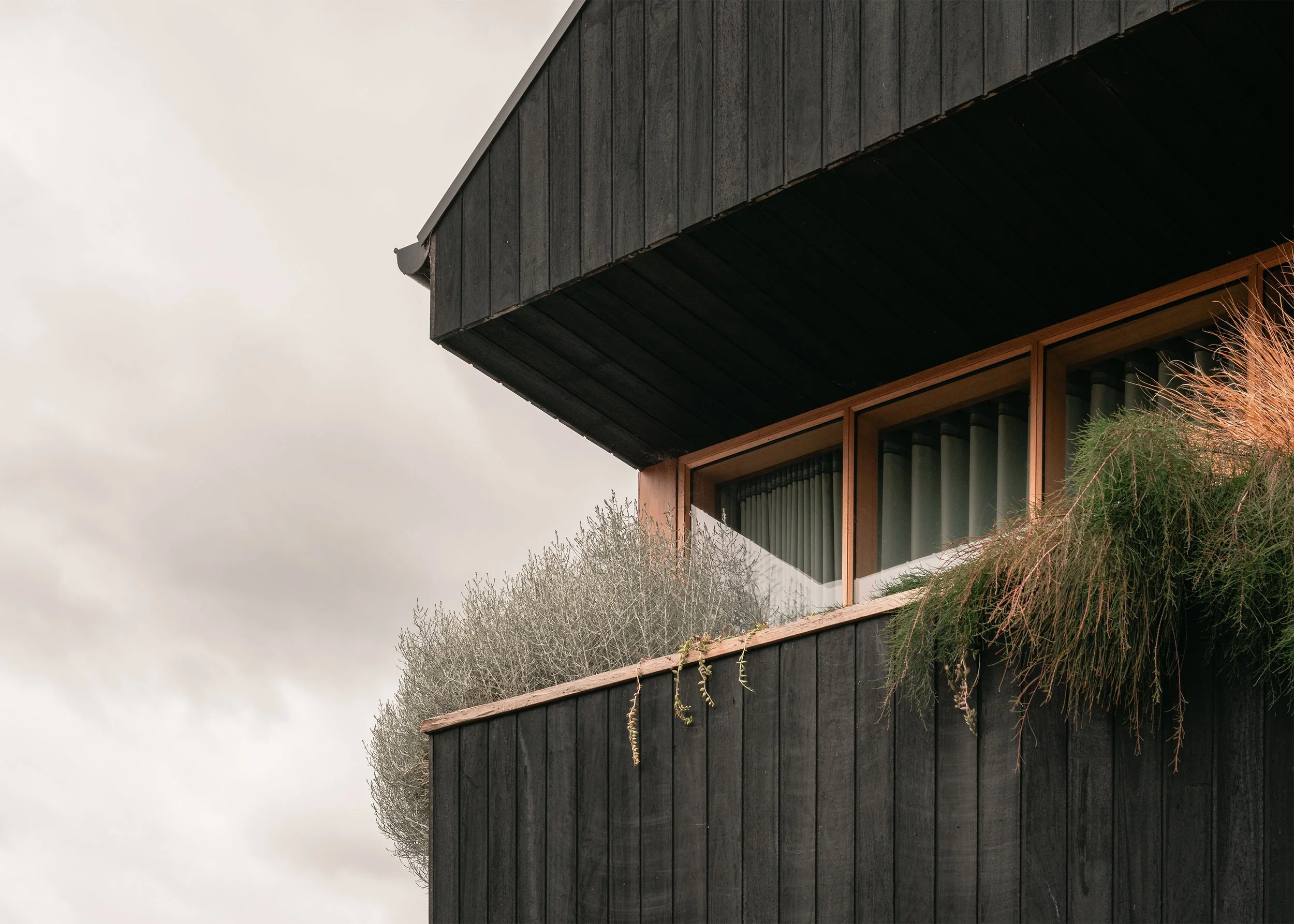
Deeply charred timber gives the exterior texture and reflects the clients’ interest in Japanese architecture. Timber windows and doors add warmth, while distinctive stone and tiles are reserved for areas where their presence is most strongly felt. Coloured laminates make the cabinetry durable and economical.
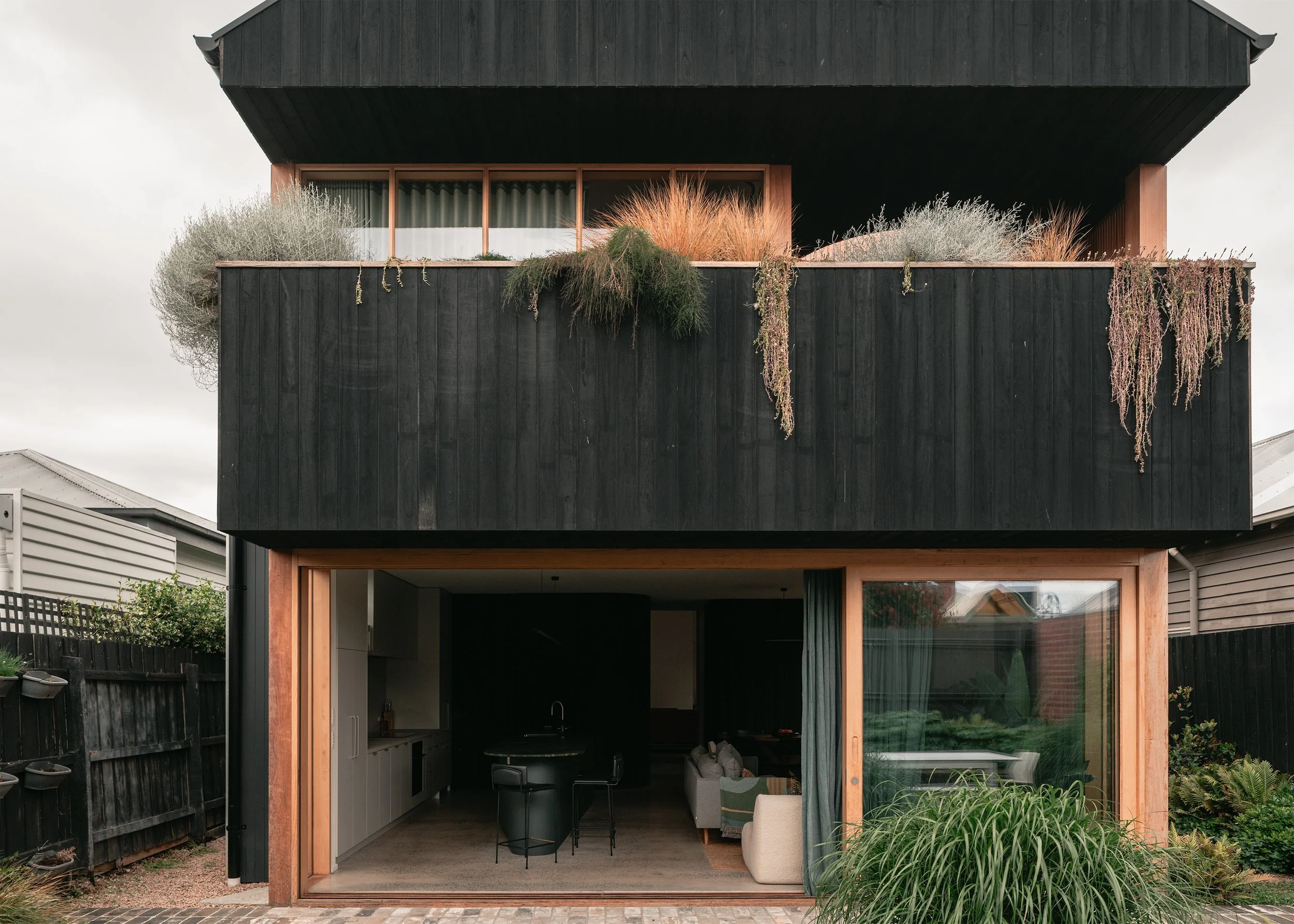
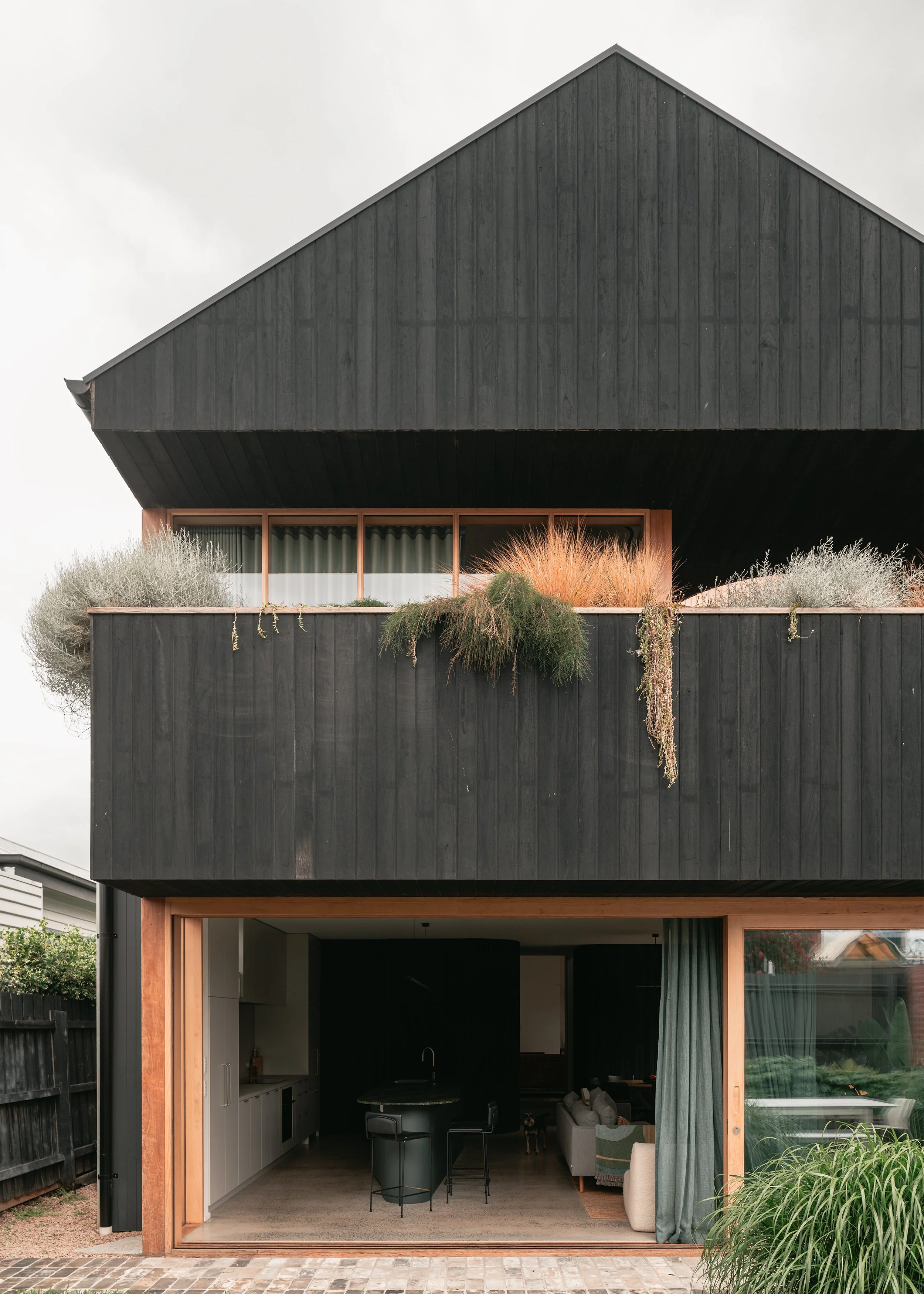
The gabled extension follows the pitch of the Edwardian house and the repeated roof forms of the rear laneway. Its black cladding distinguishes the new work, while its overall form remains grounded in the surrounding context.
Northcote House locates simplicity in clear decisions: separating activities, concentrating services, controlling light and spending the budget where it matters. The result is an architecture of enough, providing for family life without allowing unnecessary space or material to become another complication.
Follow the publication by email
Receive new films and features on Australian homes shaped by restraint and place.

Related
Brunswick West House by Olaver Architecture
Pat and Taryn were in need of a renovation to their early-1900s Victorian weatherboard home in Brunswick, engaging Olaver to design a natural and light-filled extension for their growing family.
Related Features