Bittern Cabin by Nic Morgante
Bittern Cabin by Nic Morgante
Set within lowland forest on the Mornington Peninsula, Bittern Cabin uses a compact footprint and carefully defined thresholds to bring daily occupation closer to the surrounding landscape.
Location
Bittern, Victoria
Architecture
Nic Morgante
Build
Dynes Eco Build
Landscape
SONNESCAPES
Film & Photography
Anthony Richardson
Production
Simple Dwelling
Archive
‘The simplicity is in the kind of analogue nature of the shutters, which is this kind of skin of the building that can respond to the site. As the light kind of tracks through the trees, you can manage the light through the shutters, and they act as blinds during the night as well. You're linked to the weather and the time of day, and it forces you to be in tune with your environment and gives you a mechanism to manage the building with your two hands.’
– Nic Morgante, Nic Morgante
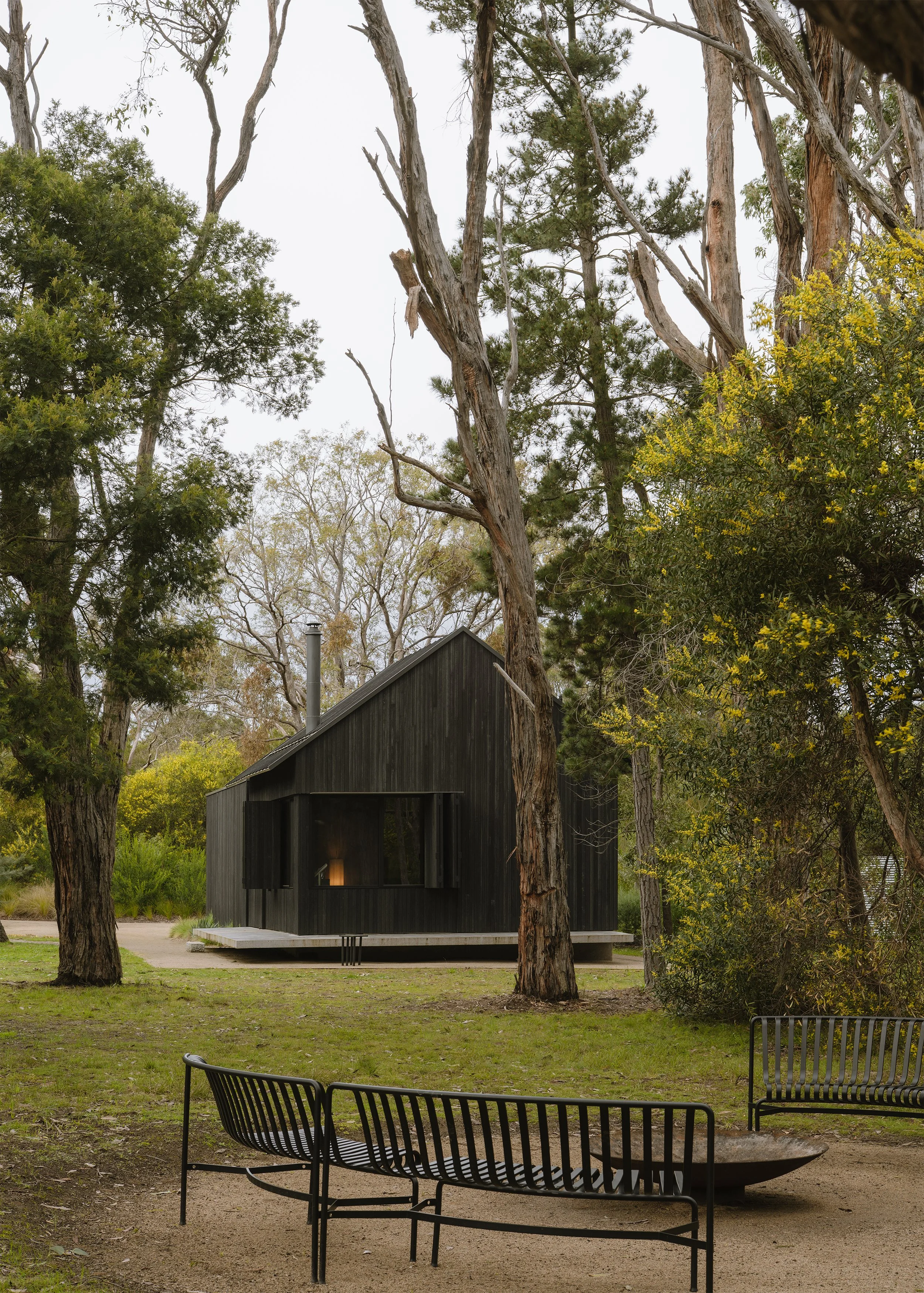
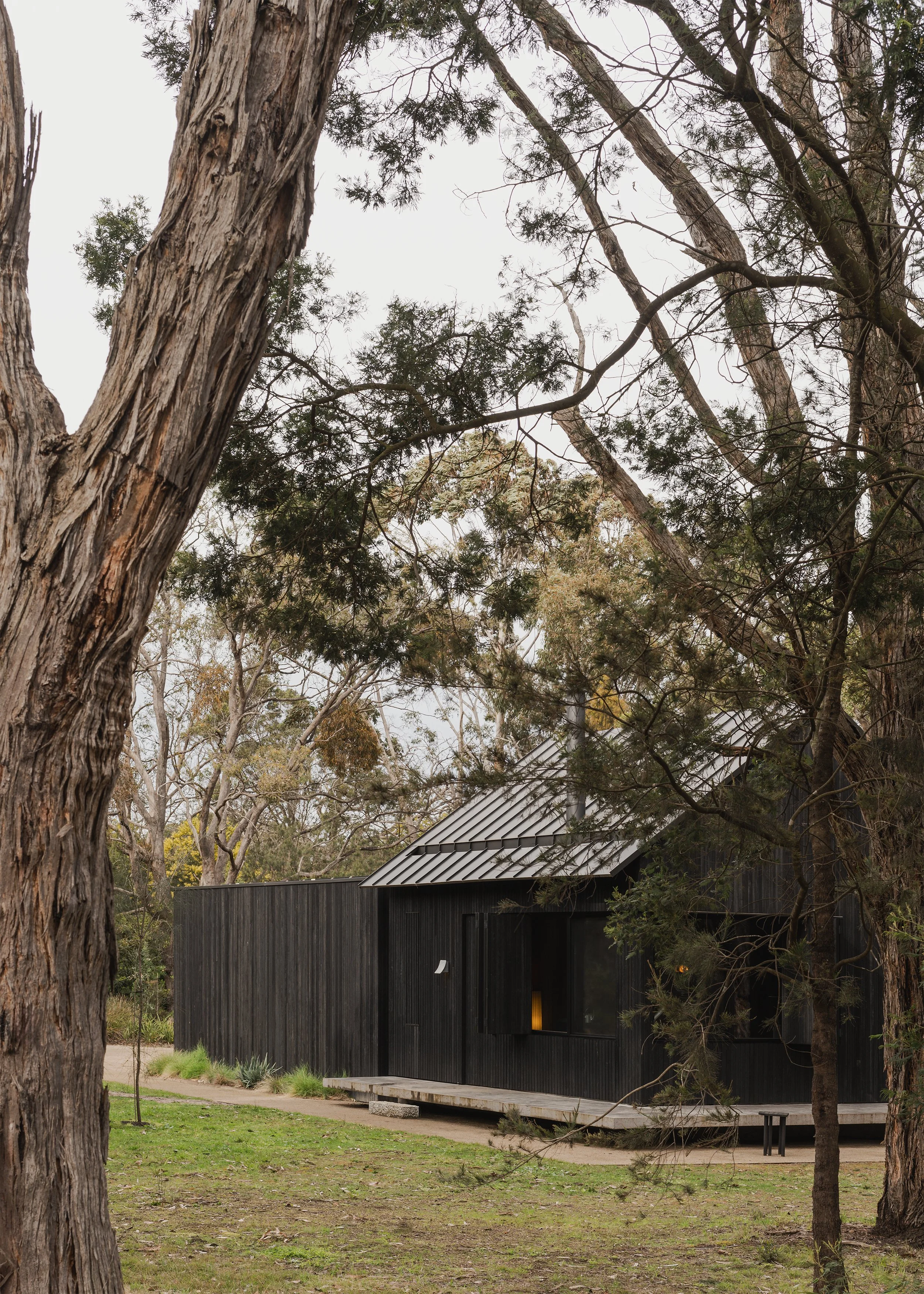
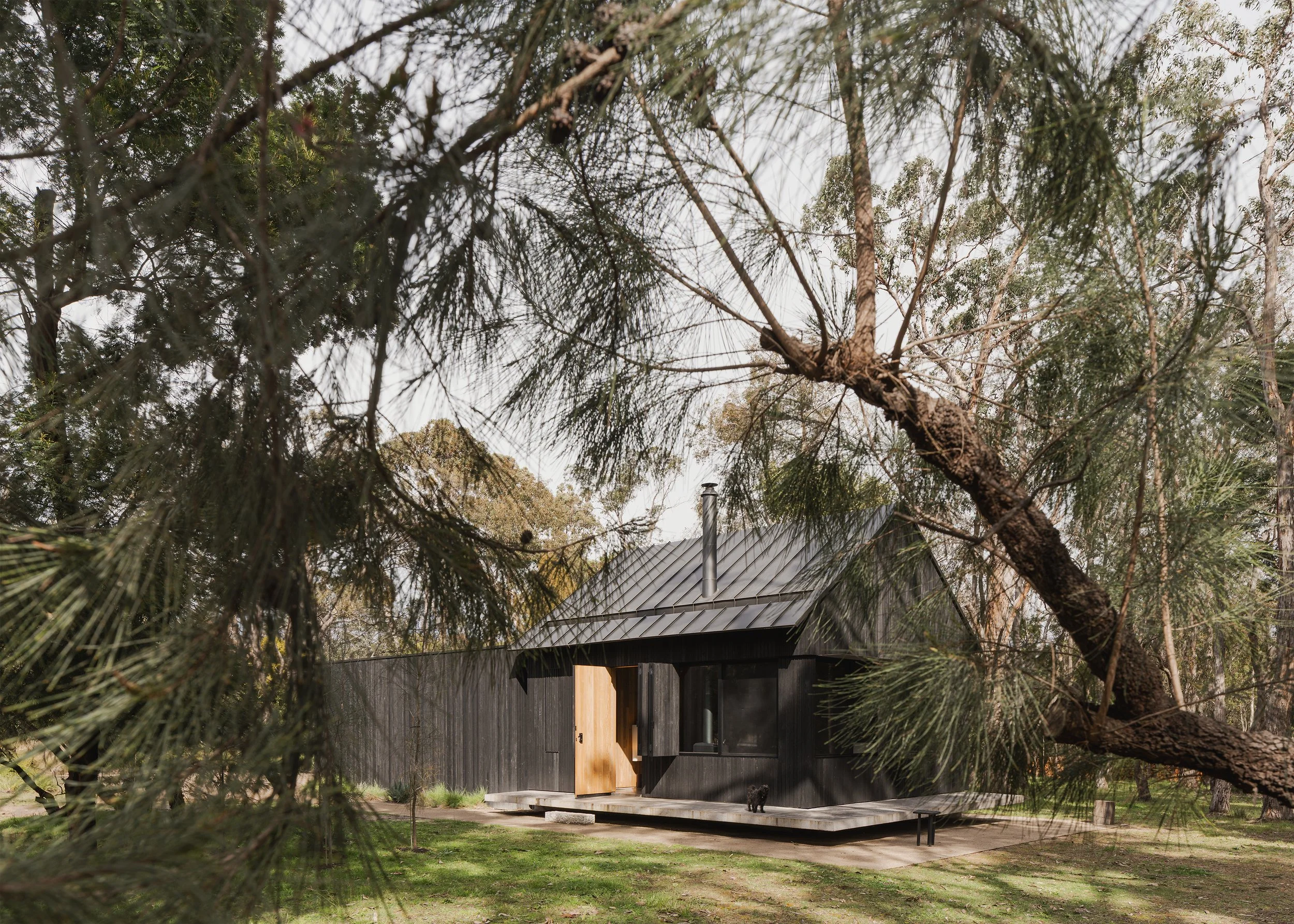
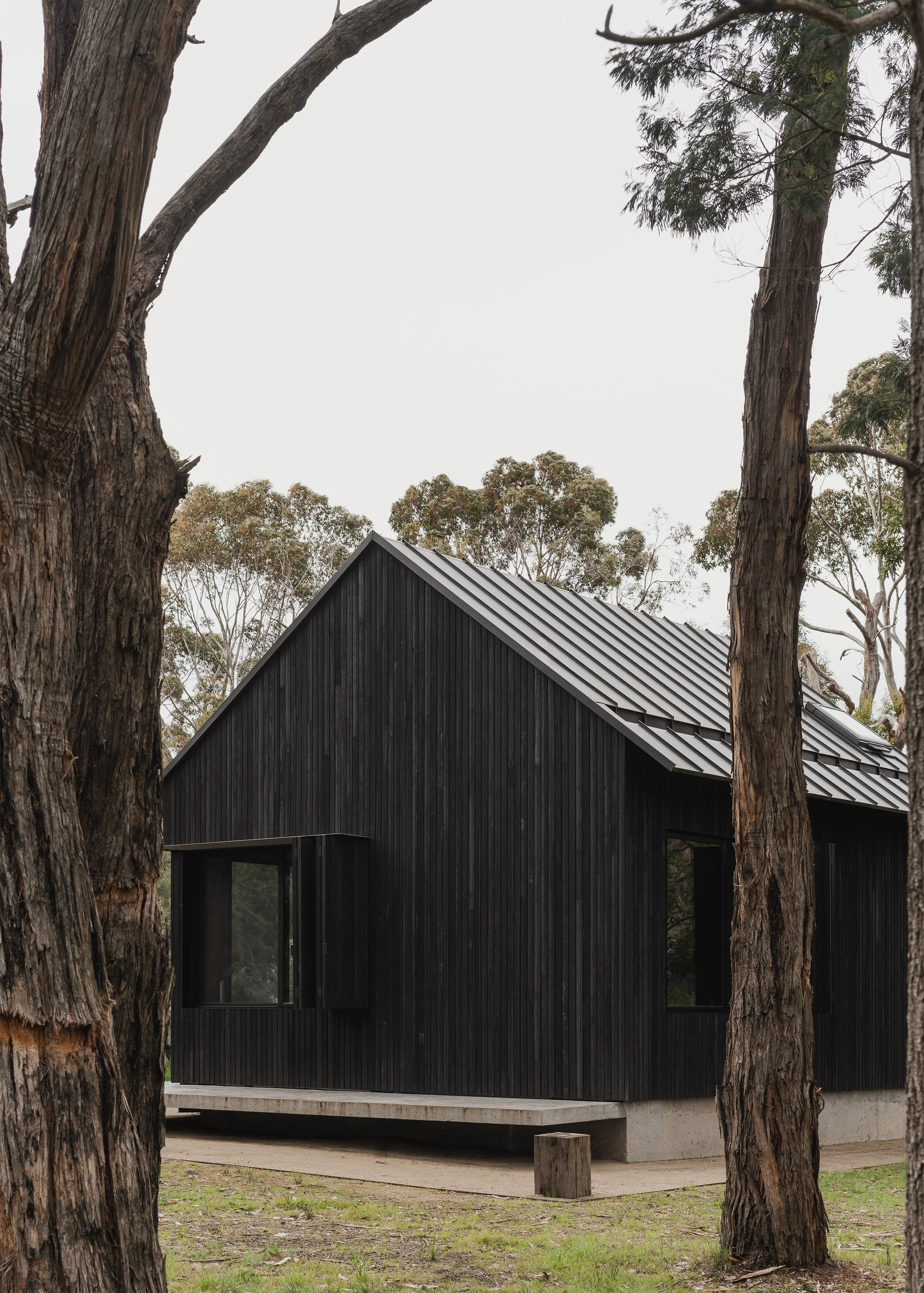
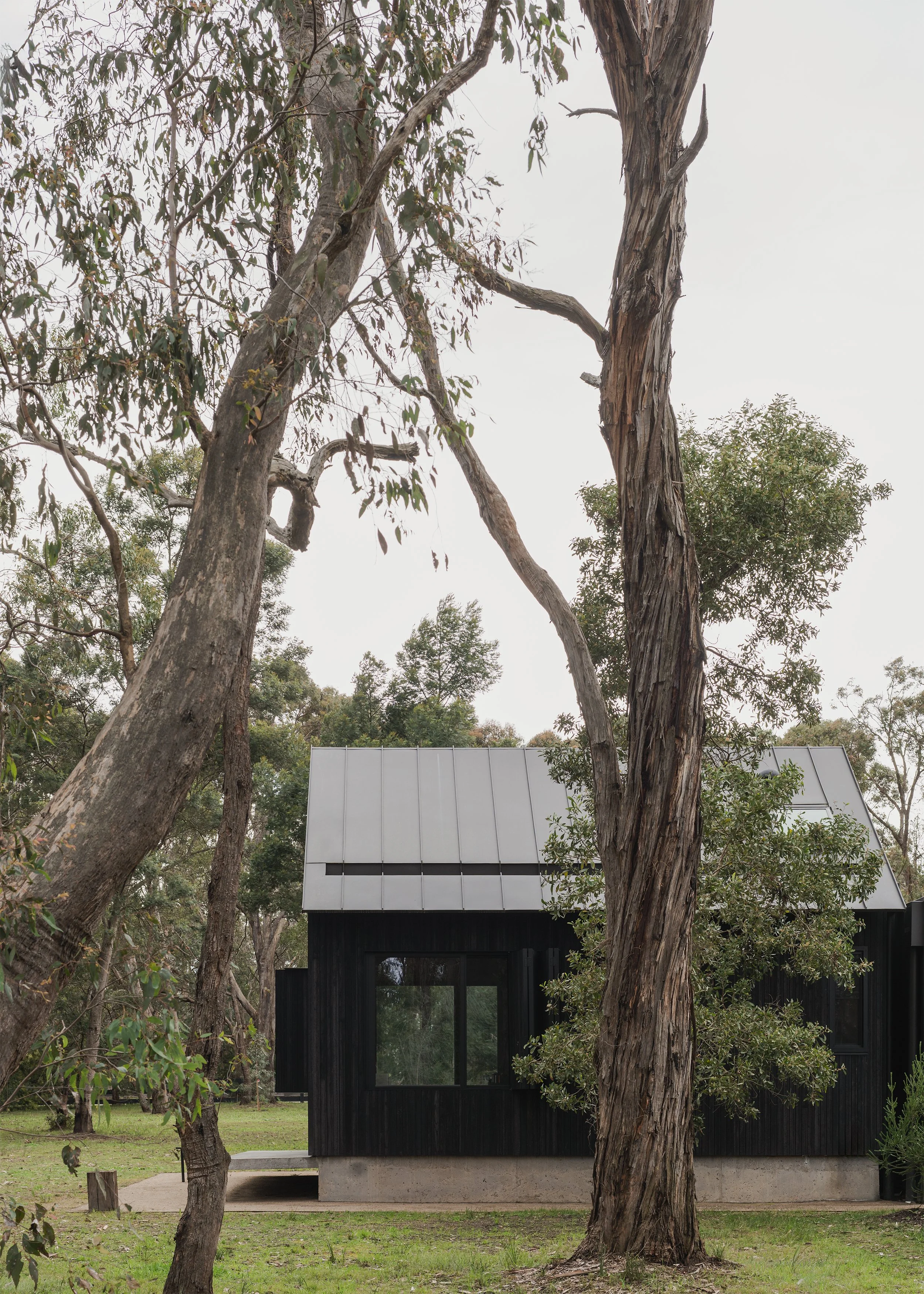
Bittern Cabin by Nic Morgante is a compact retreat in Bittern on Victoria’s Mornington Peninsula, set within a lowland forest where dense tree canopies filter the light and a seasonal swale crosses the site. The brief was simple: create a place where family and friends could stay together while also providing the facilities required to care for the land. Rather than spreading this program through the property, Morgante concentrates it into a small gabled cabin and a secondary garage, using the architecture to establish a precise threshold from which occupation can extend into the forest.
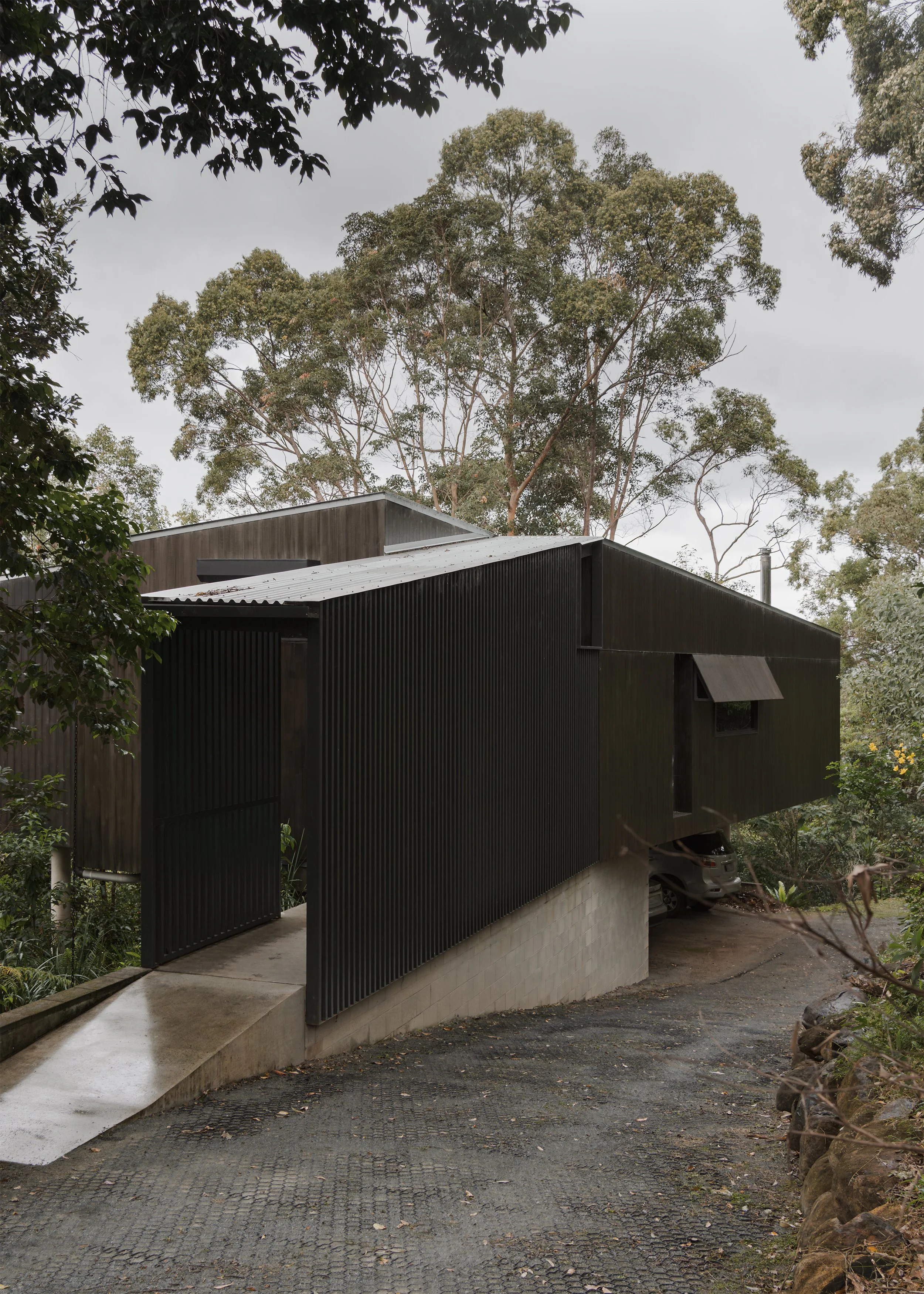
Arrival is important to understanding the project. The gravel access road passes from a suburban edge into increasingly dense vegetation before reaching the building. Morgante describes wanting the siting to become “an extension of this experience.” The cabin was consequently pushed as far into the property as practical, though not without limit.
“It was nestled as far into the block as we could manage without getting a higher bushfire rating,” he explains.
That qualification is significant. The project’s relationship with landscape is not based on placing the building at the most picturesque or secluded point regardless of consequence. Its position is negotiated between the desire for immersion and the practical conditions of building within bushland.
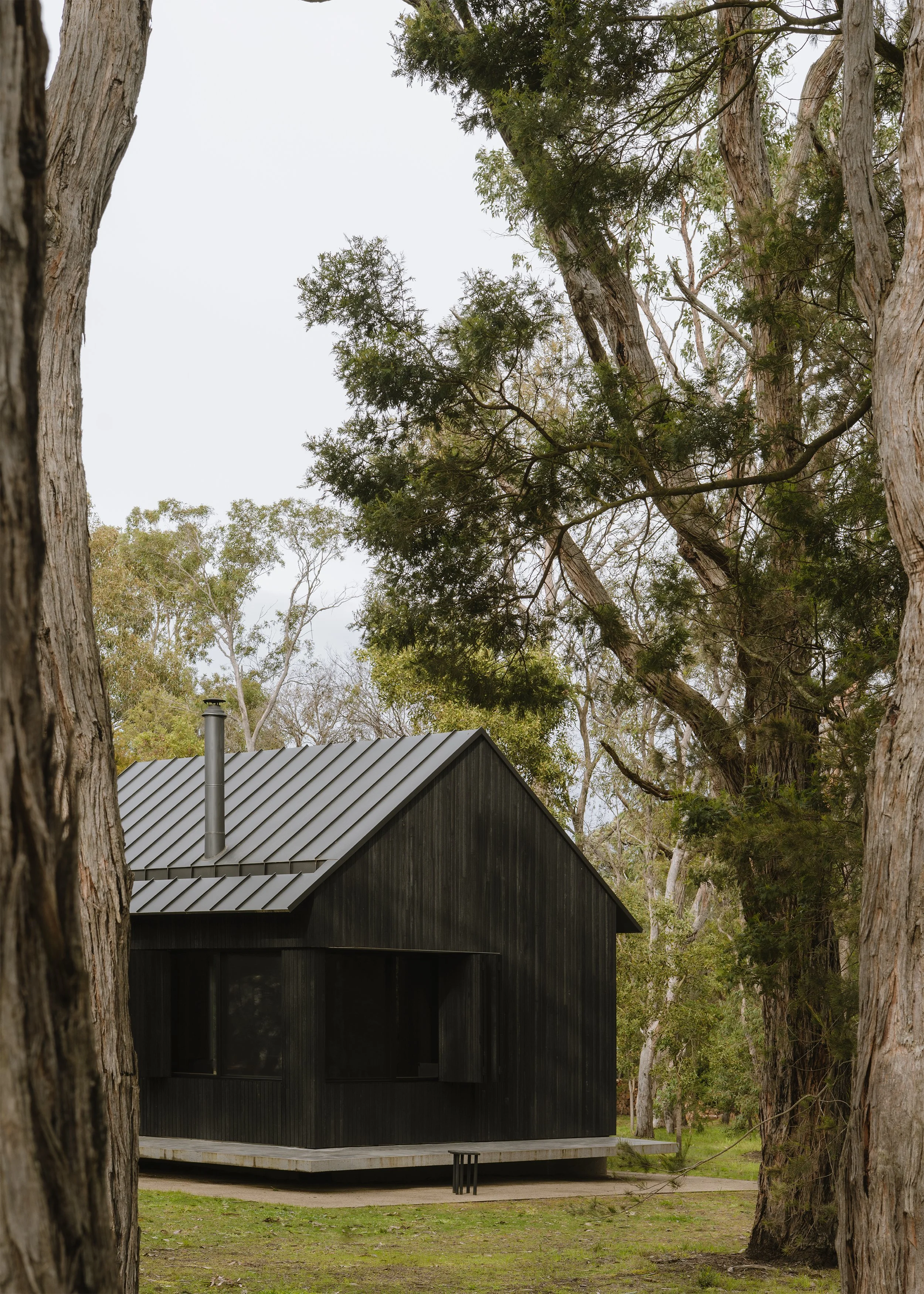
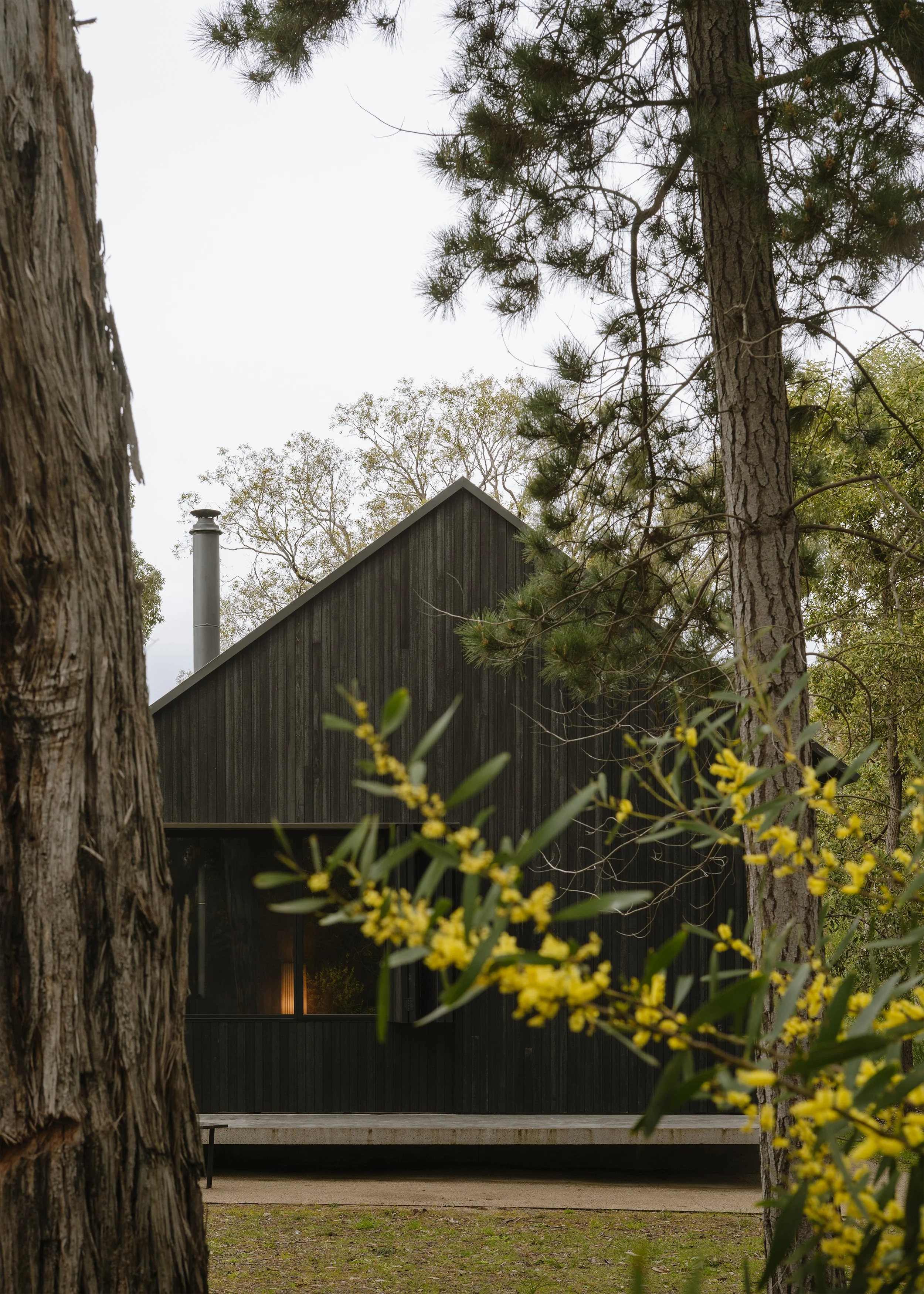
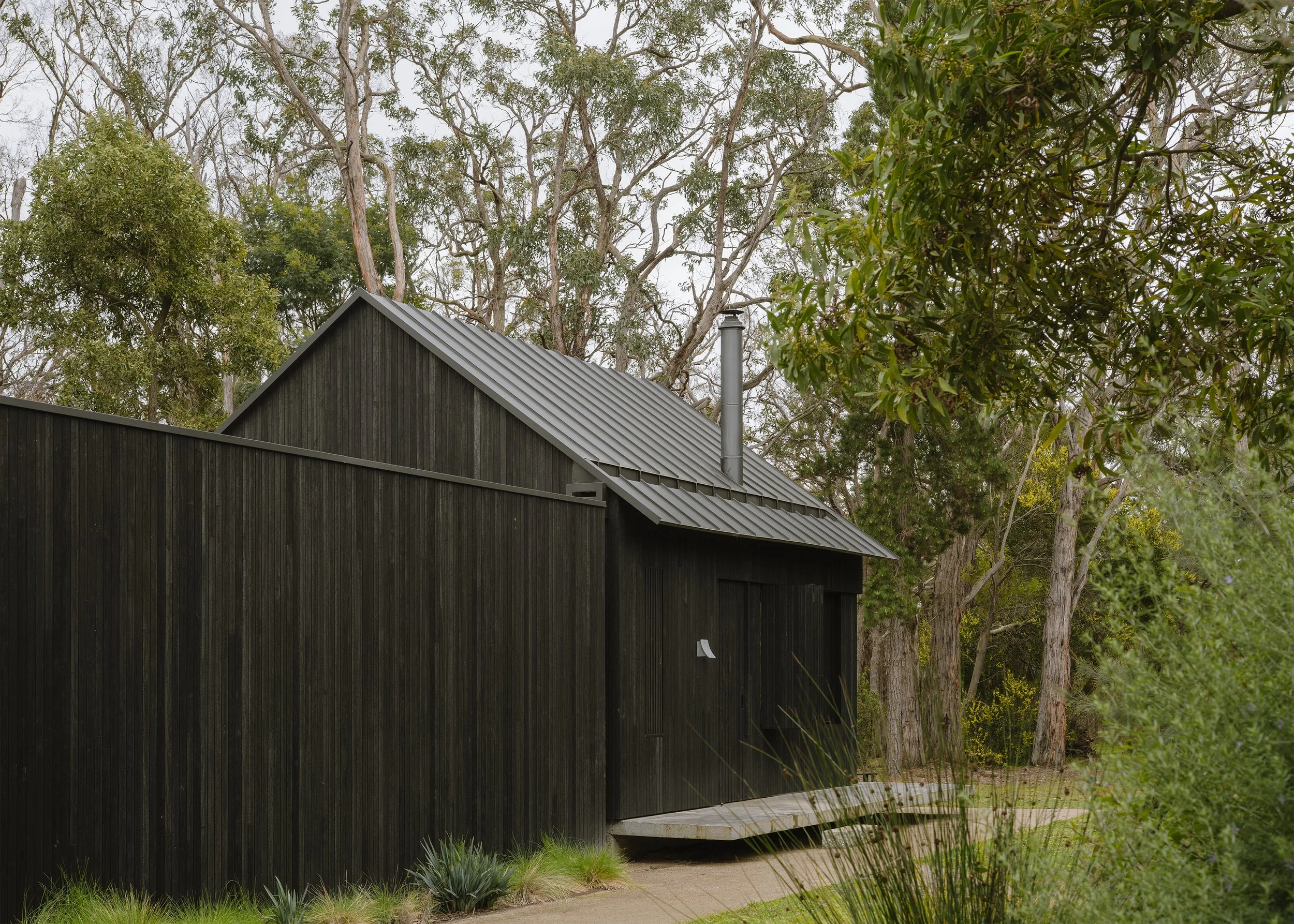
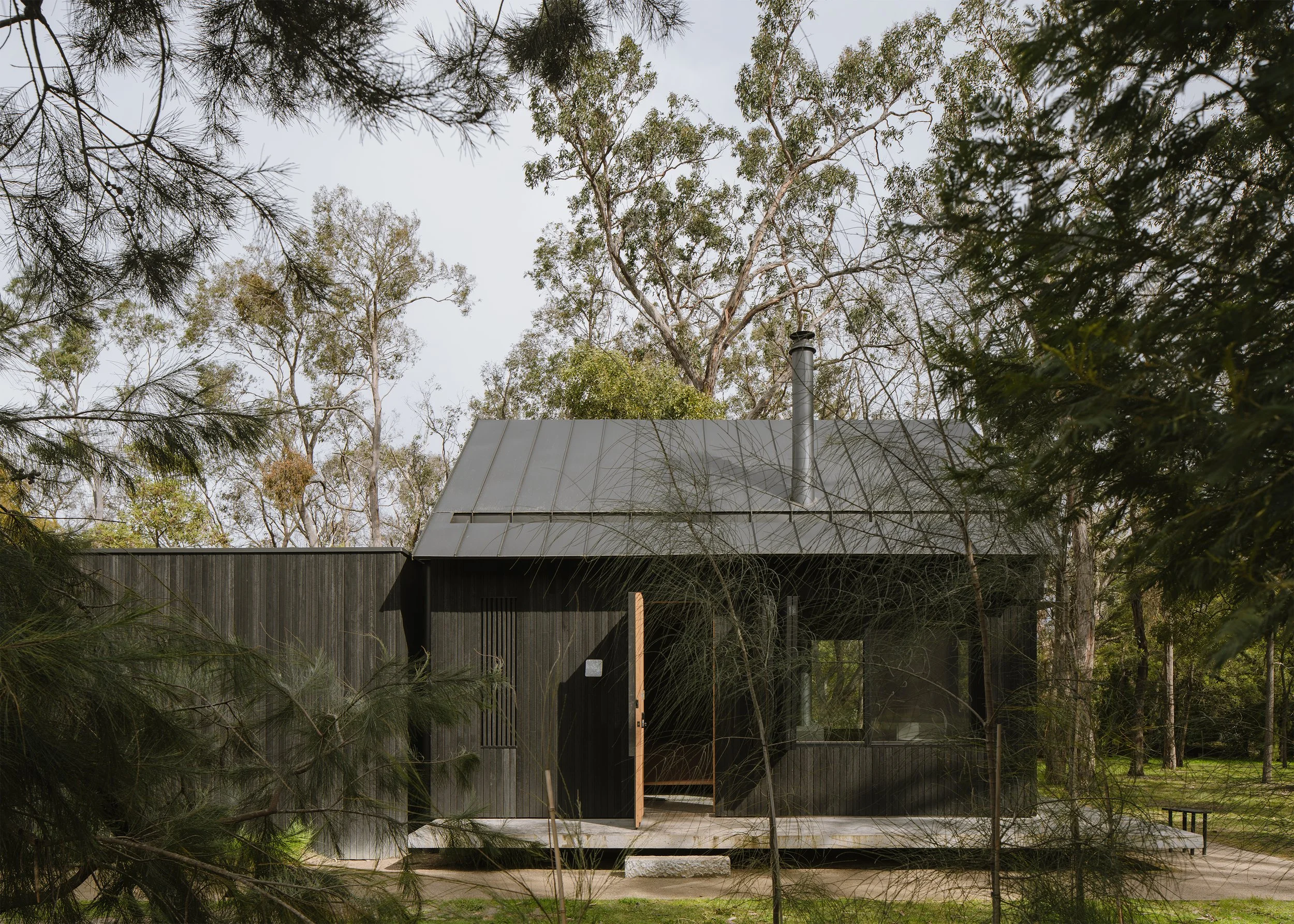
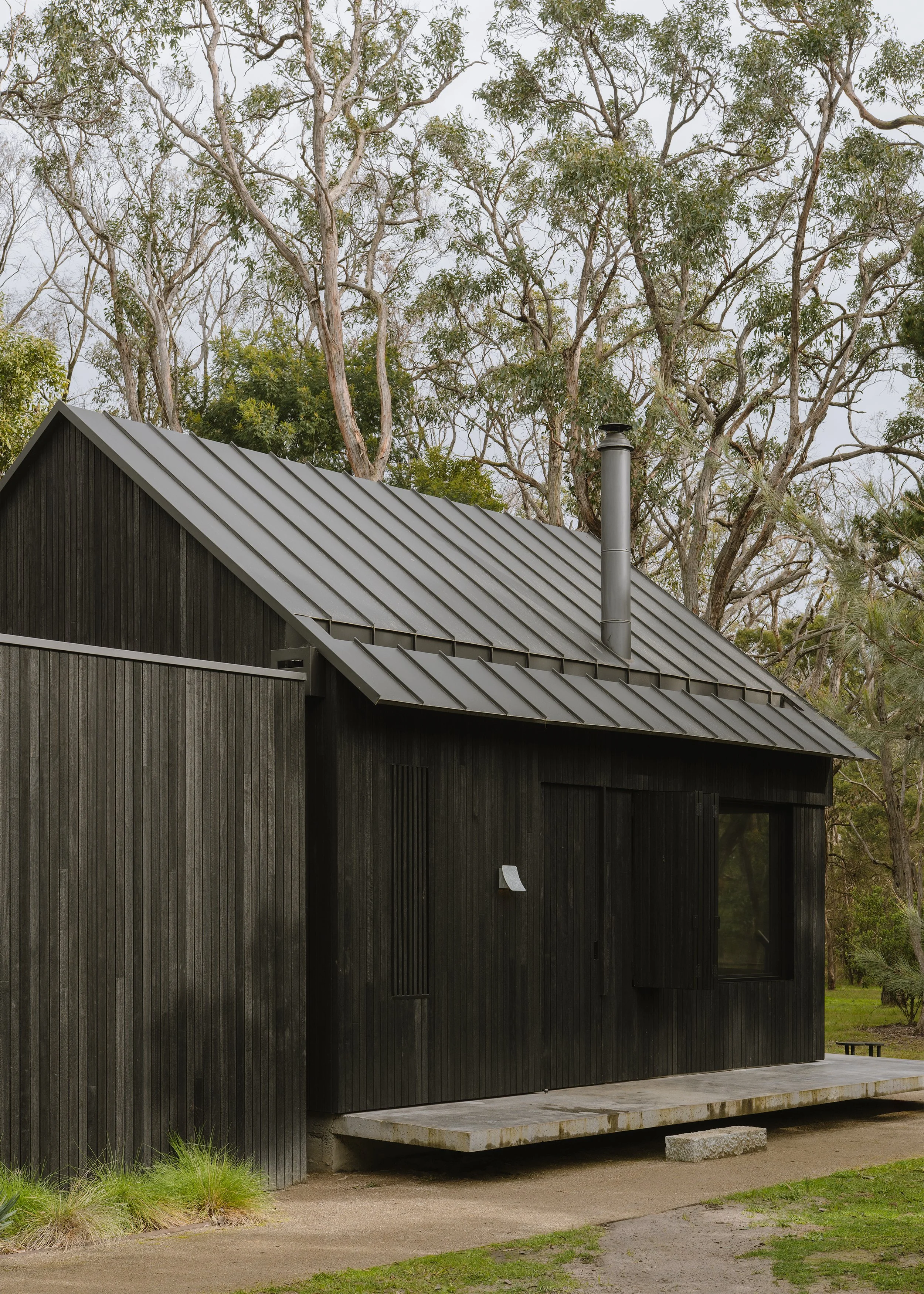
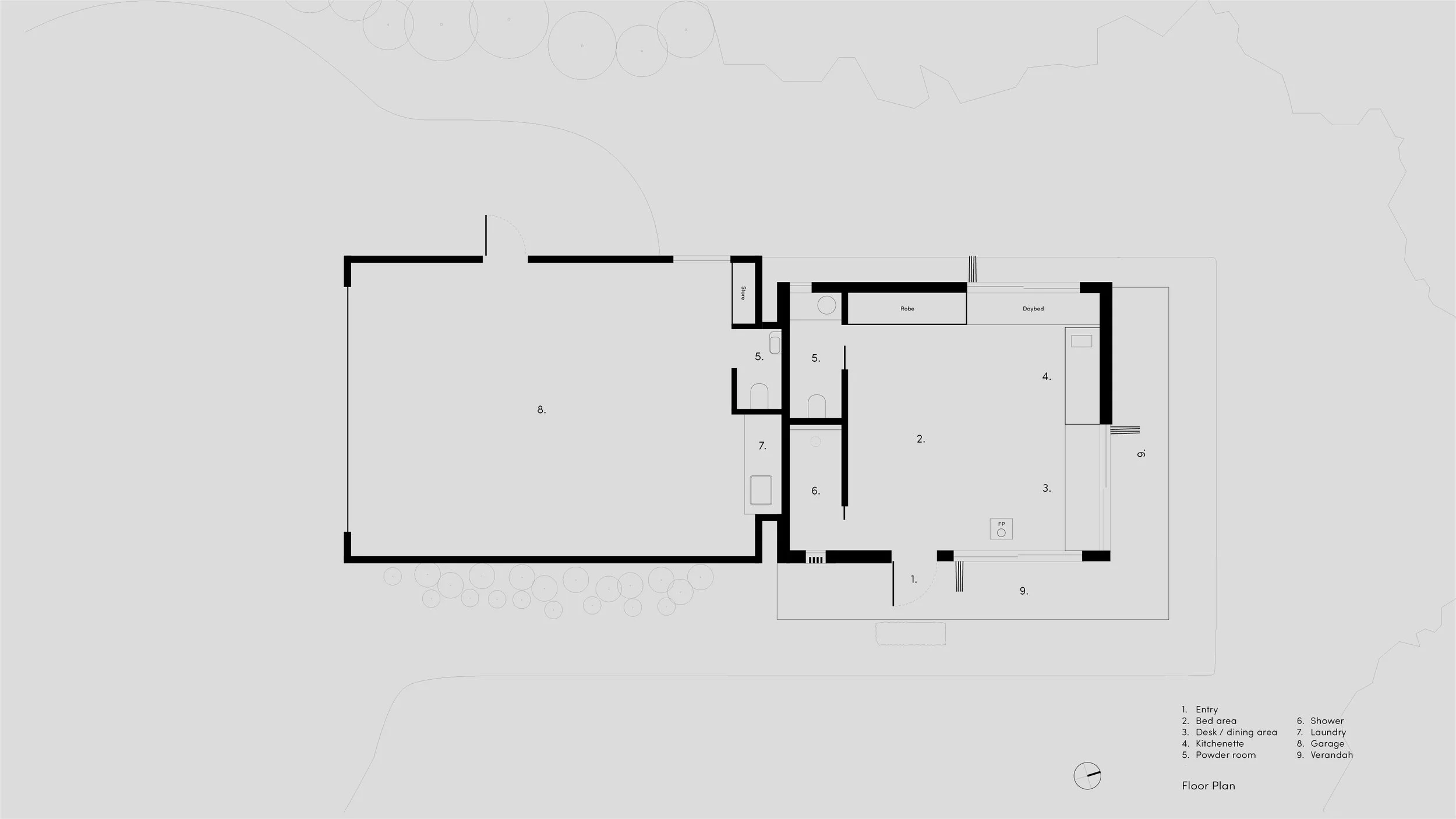
The cabin itself is raised above the ground. A cantilevered concrete verandah protects it from the swale running east to west across the site and establishes what Morgante describes as the point at which “the interference of the landscape stopped.” Beyond this constructed edge, the lowland forest is allowed to remain.
The idea makes the verandah more than an appendage to a small building. It is both platform and boundary: a protected place from which weather can be observed and a physical indication that the architecture does not need to continue farther into the site.
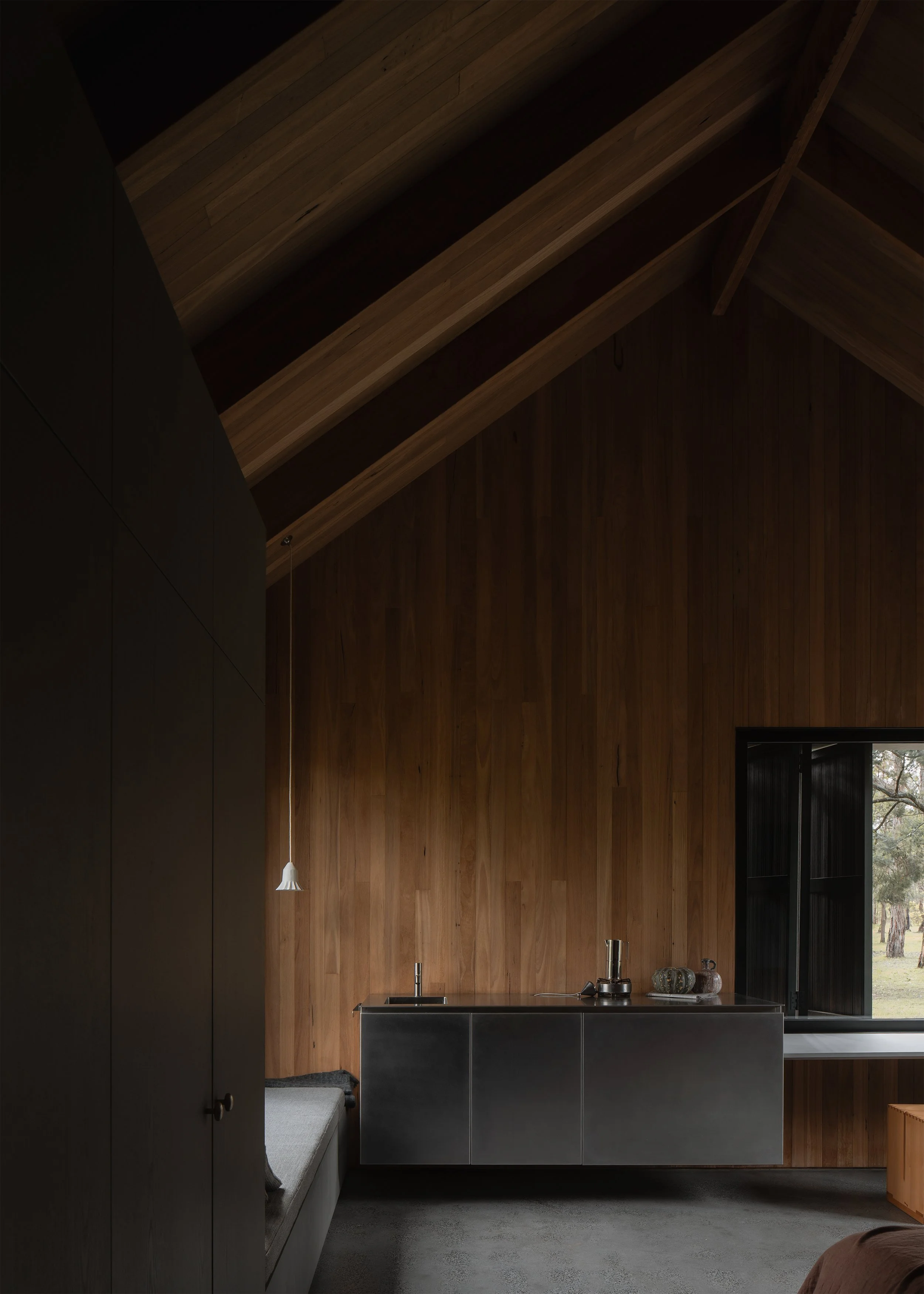
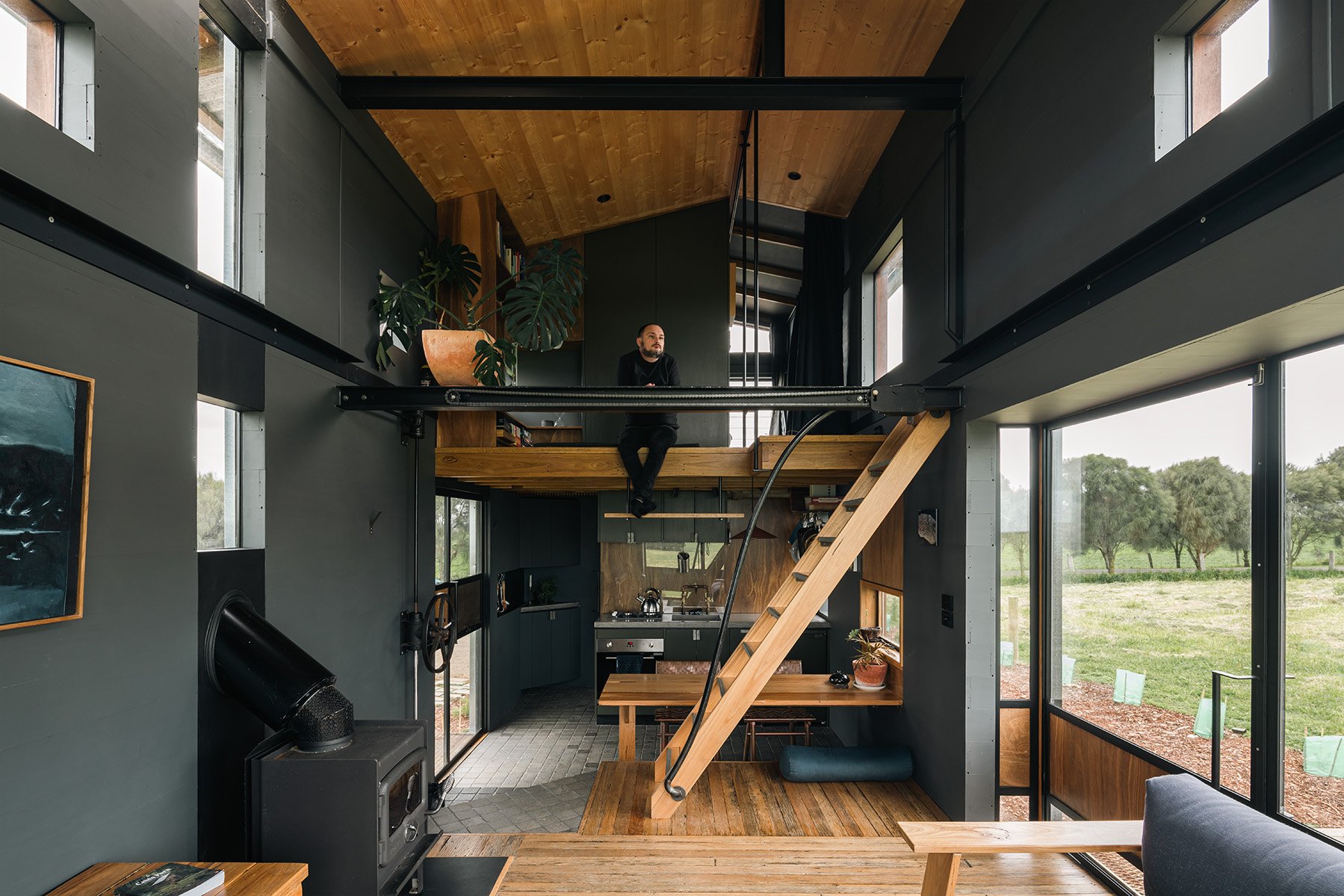
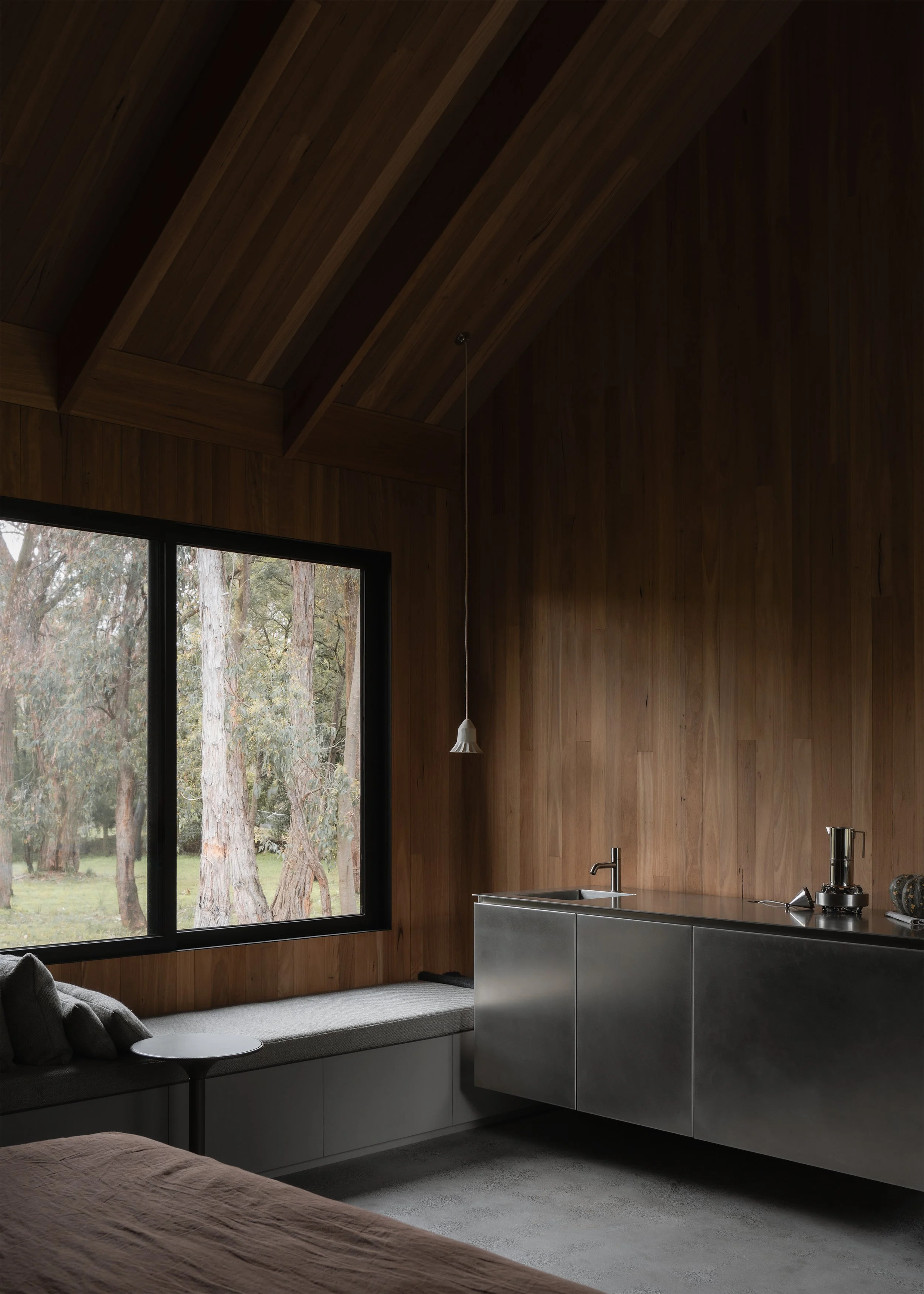
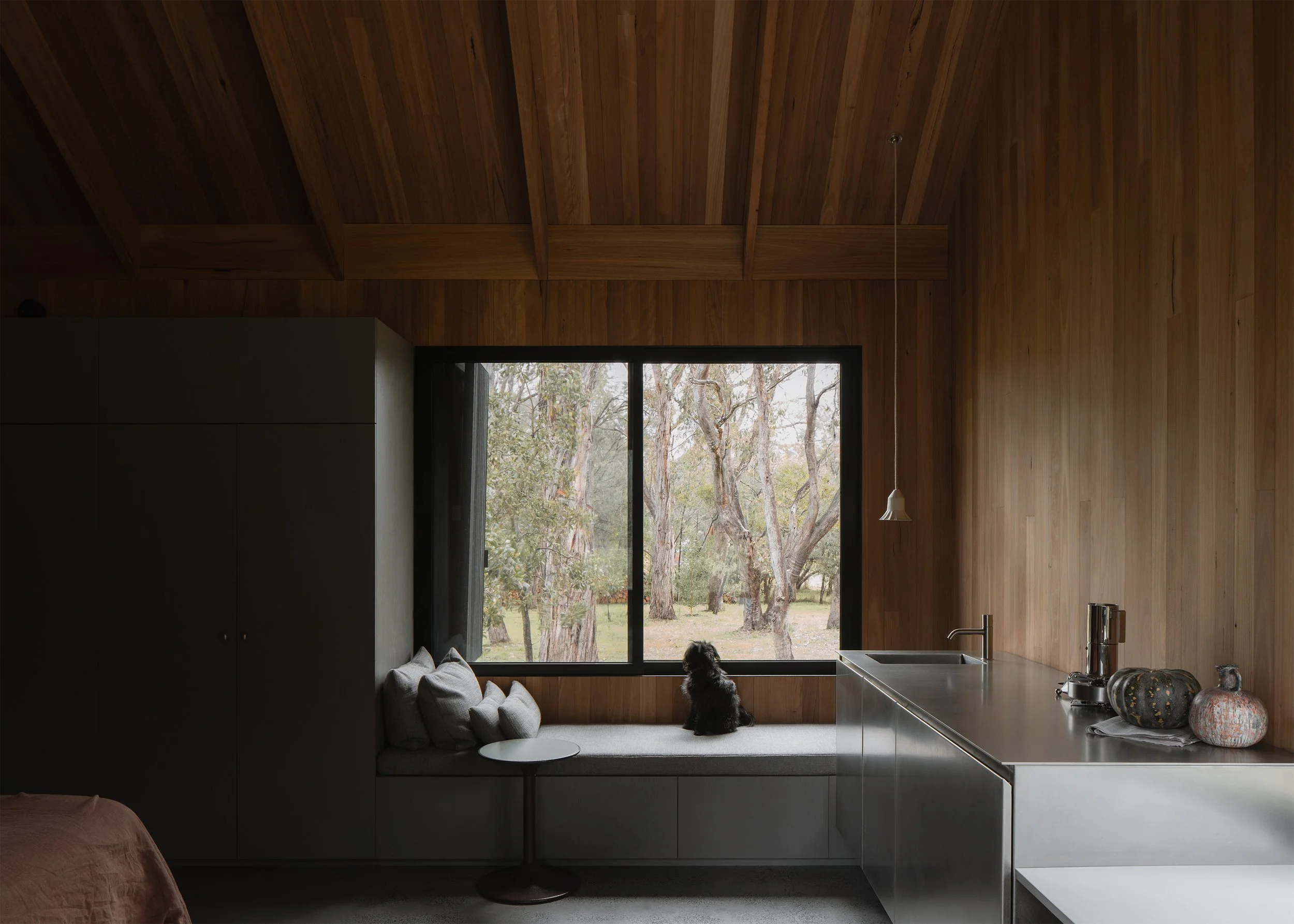
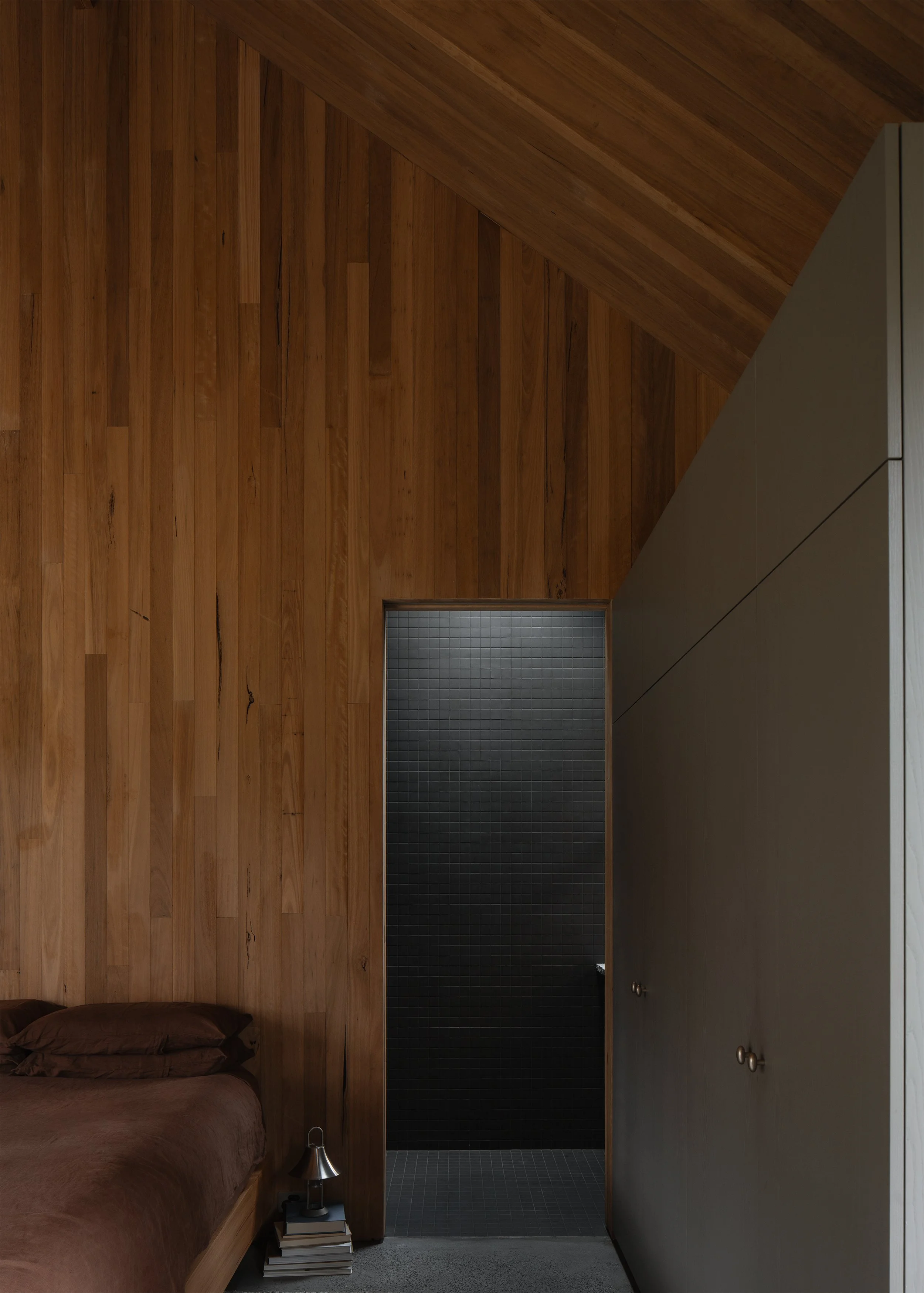
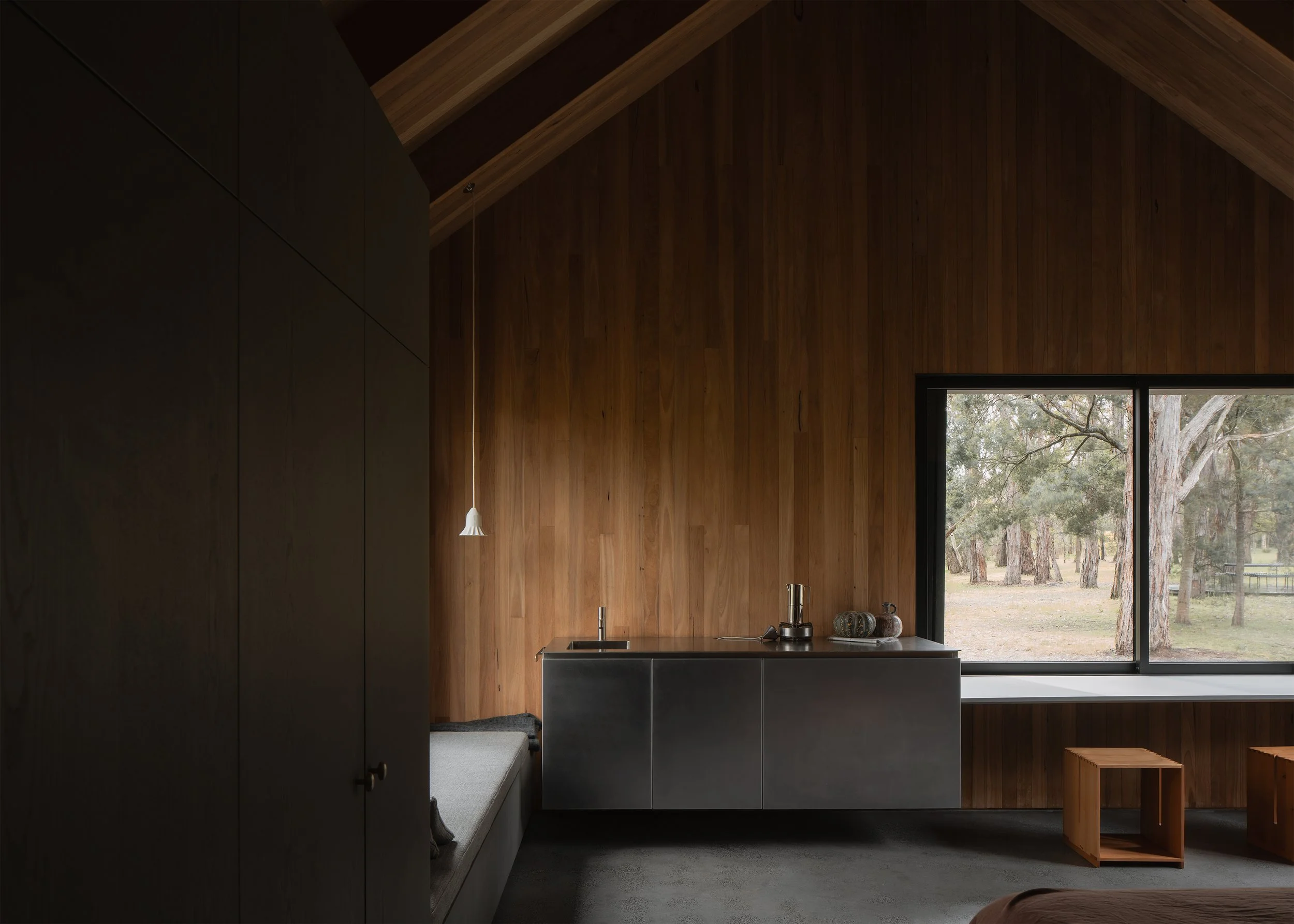
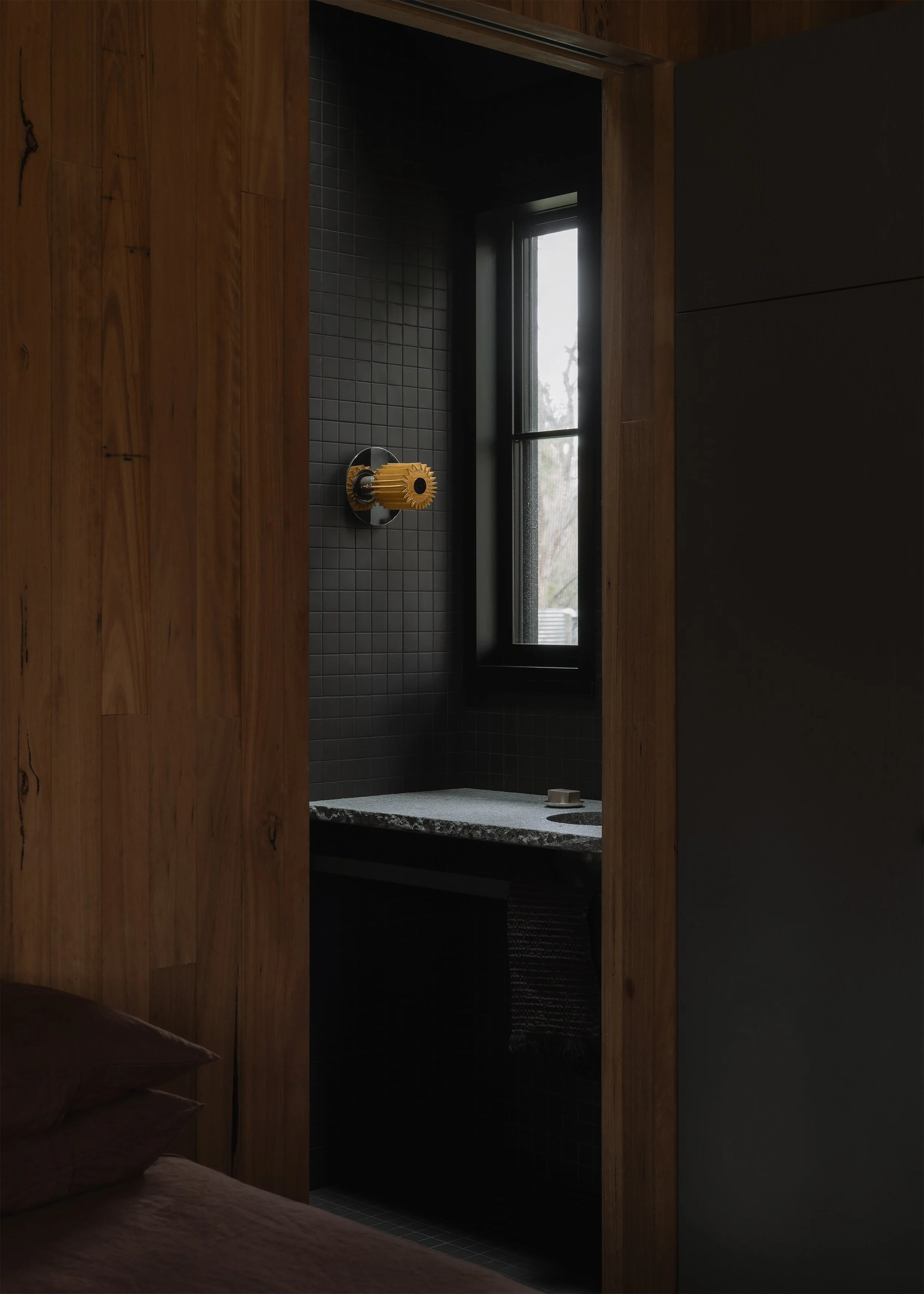
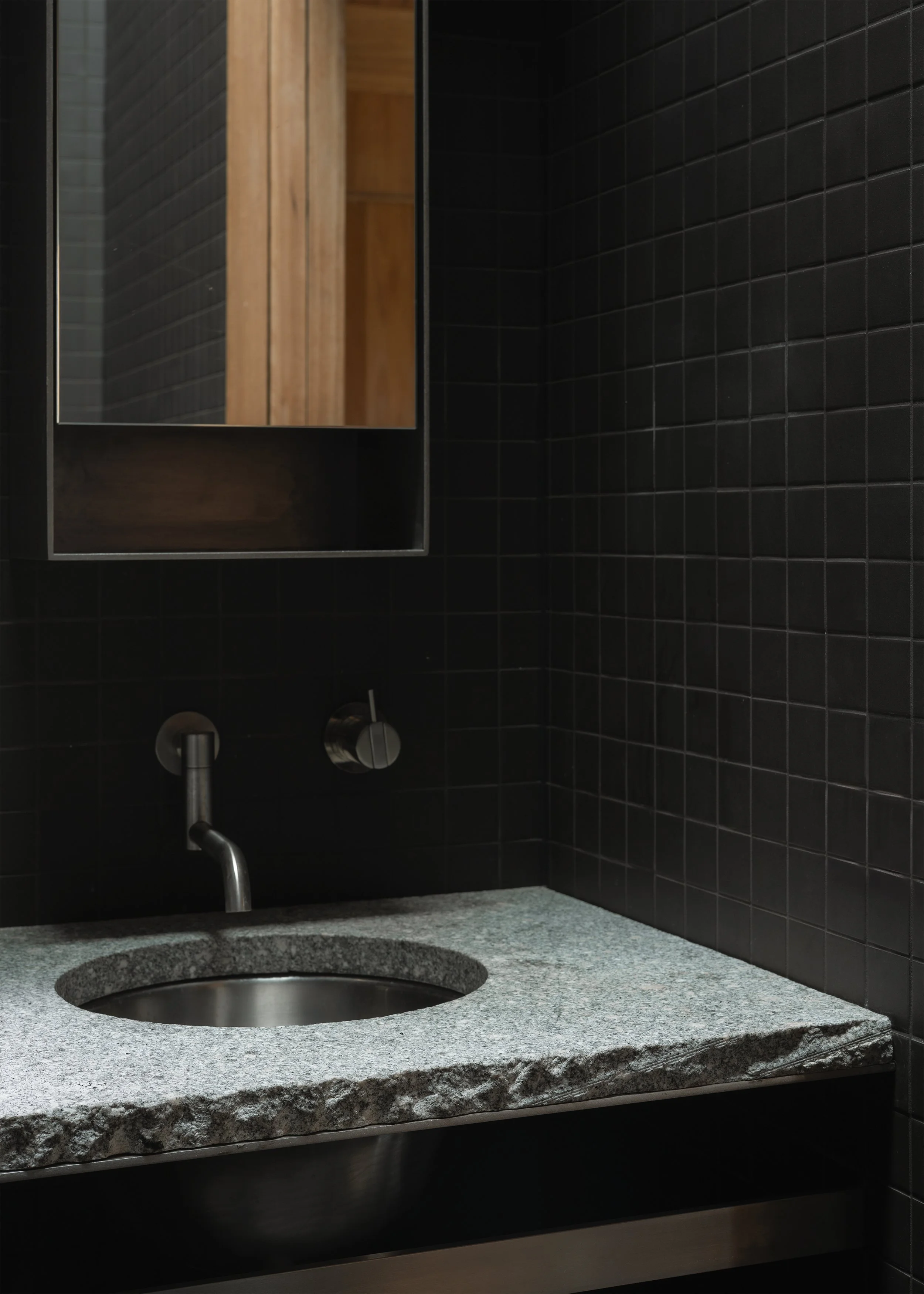
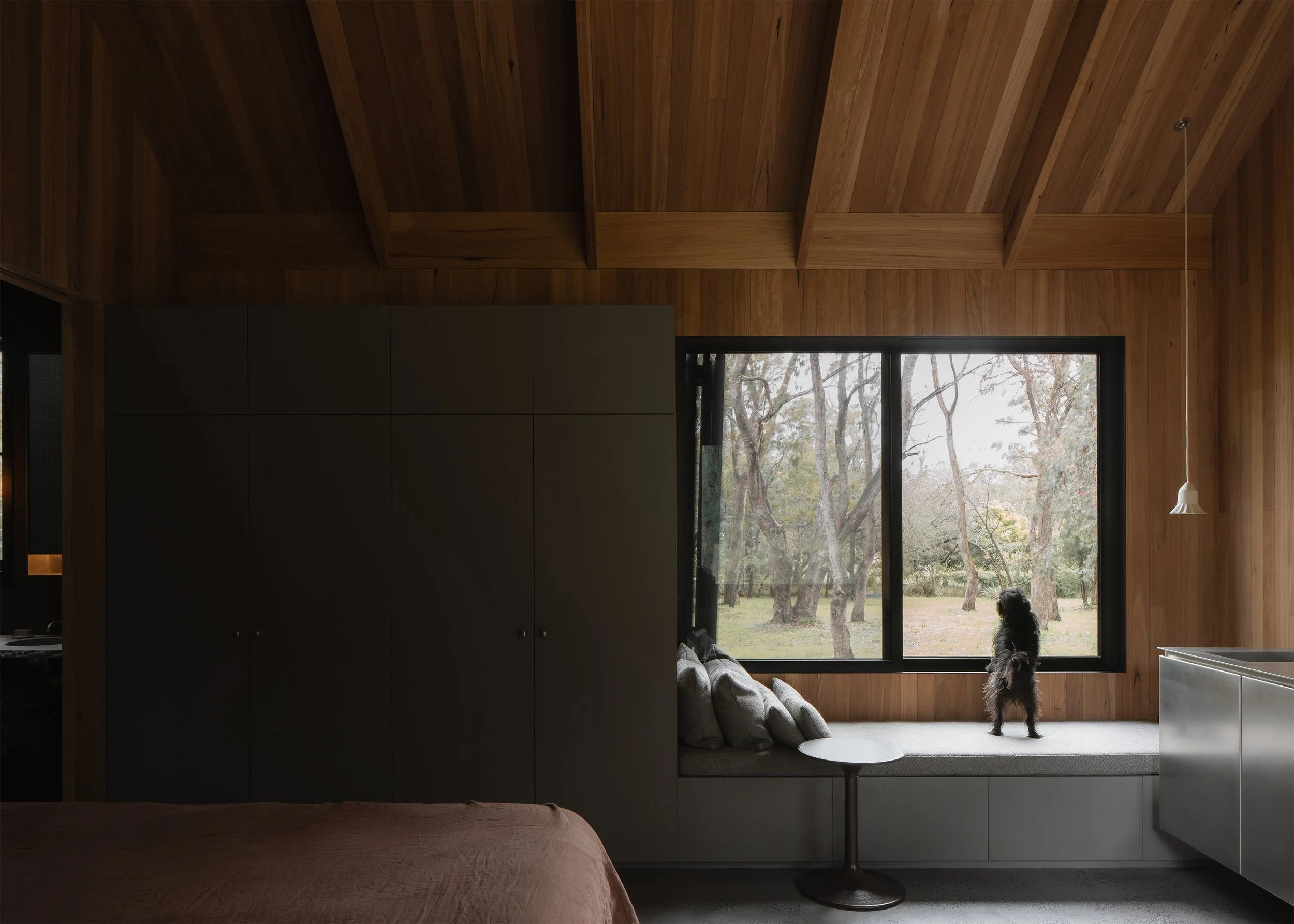
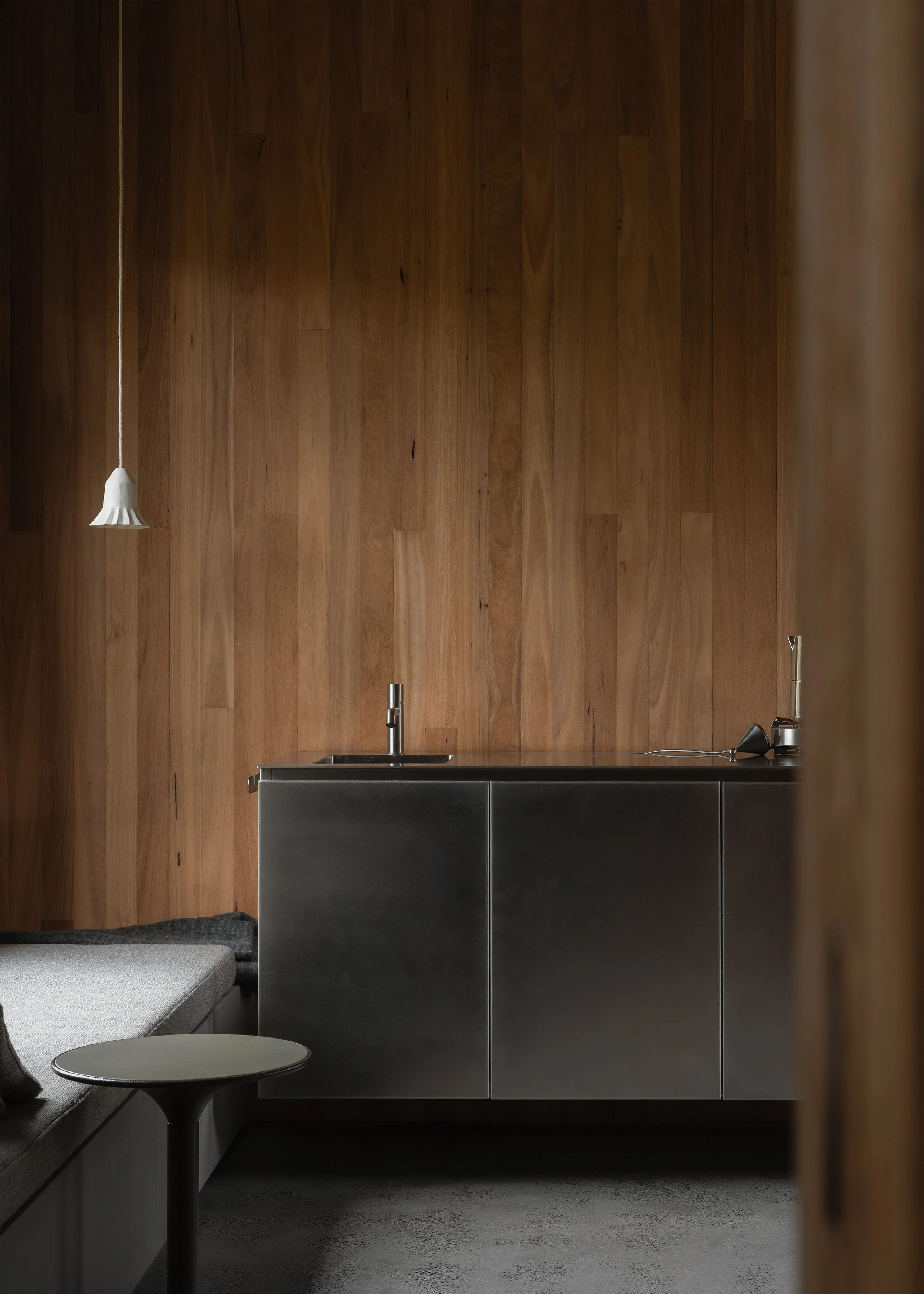
Within the gabled volume, compactness is managed by concentrating function around the perimeter. Robes, a daybed, kitchenette, desk and fireplace line the edges of the principal room. Behind the bed sit separate shower and powder-room spaces, while the adjoining garage contains laundry facilities, another powder room and equipment for maintaining the property. The garage can also accommodate additional guests when required.
This organisation leaves the centre of the small cabin comparatively unburdened. Rather than dividing limited floor area into a series of conventional rooms, service and storage functions become a thickened inhabited edge.
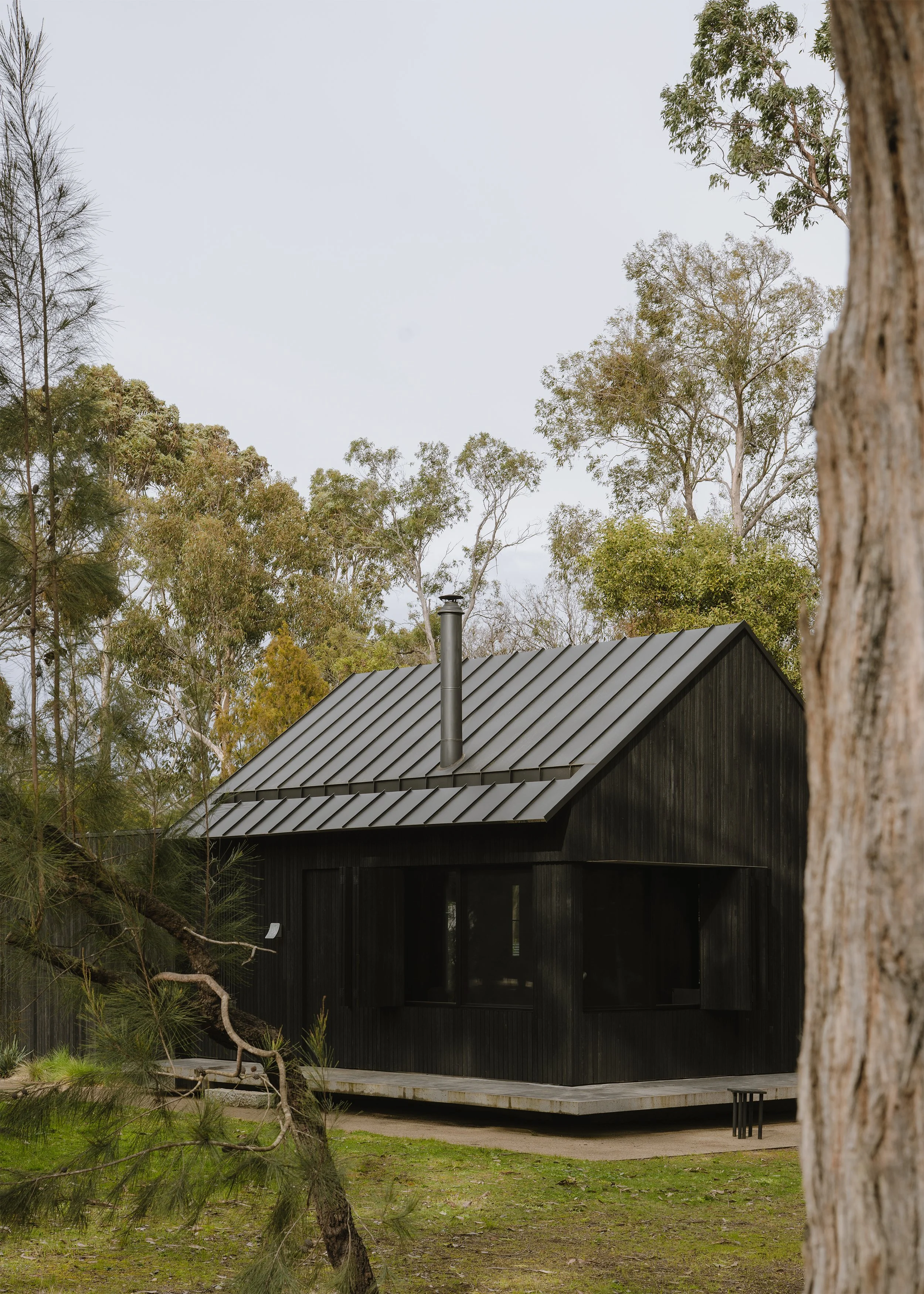
Another perimeter operates externally. Charred spotted gum wraps the building and continues across operable shutters so that, when closed, the cabin reads as a dark protective shell. Their importance, however, is less visual than operational.
“The simplicity is in the kind of analogue nature of the shutters, which is this kind of skin of the building that can respond to the site,” Morgante says. “As the light tracks through the trees, you can manage the light through the shutters.”
The shutters also work as blinds at night. Opening or closing them becomes a small daily act that makes changing conditions legible. Instead of using architecture to remove the variability of the forest, the building gives its occupants a simple mechanism for responding to it.
“It forces you to be in tune with your environment and gives you a mechanism to manage the building with your two hands.”
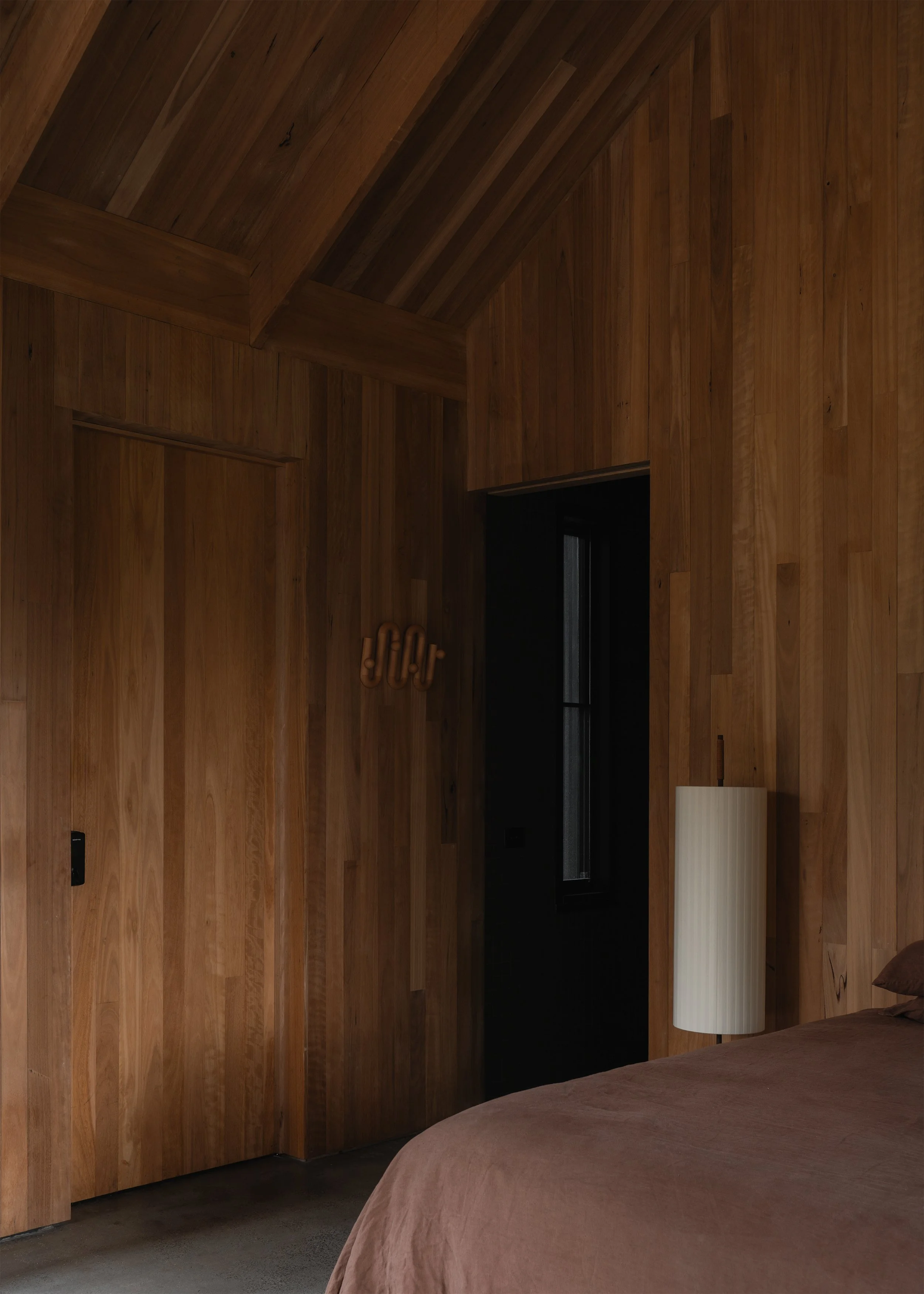
Internally, the character changes. The gabled volume is lined in honey-toned locally milled blackbutt, complemented by stainless steel and grey-stained oak. Against the darker charred exterior, the interior becomes warmer and more reflective, framing the trunks and foliage outside rather than competing with them.
The project’s relationship with landscape extends beyond the cabin itself. Two circular gathering spaces sit deeper among the trees: a deck beneath dense canopy and a gravel firepit positioned within a natural clearing. Their circular forms take a cue from the large water tanks elsewhere on the property, but their placement is the more consequential decision. They deliberately require occupants to leave the building.
“The reason they were placed deeper into the site was to encourage a bush walk and an experience that wasn’t necessarily right near the building,” Morgante explains.
Landscape therefore operates at Bittern Cabin not as scenery surrounding an architectural object but as part of the project’s spatial structure. The building is compact because everything does not need to happen within it. The verandah creates one threshold, the shutters repeatedly adjust another, and the remote outdoor rooms expand occupation without expanding enclosed floor area.
This is where the project’s simplicity becomes most convincing. It is not simply the appearance of one gabled volume or a restricted palette of timber, concrete and steel. It lies in determining how much building is required, where that building should stop and how a few direct mechanisms can keep those inside attentive to what remains beyond it.
For a cabin intended to support stays of different lengths, the result is modest in footprint without being deliberately austere. Laundry, kitchenette, heating and other familiar amenities remain available. What changes is their concentration. Architecture occupies less of the site so that occupation can involve more of it.
At Bittern Cabin, the forest is not something the building attempts to reproduce internally. It is allowed to remain outside, uninterrupted beyond a carefully drawn edge, while the architecture provides a compact and responsive place from which to inhabit it.
Related
The Cutting by Small Not Tiny and Ample
This off-grid tiny house situated in the rolling hills of Illowa in Victoria proves that less can be more.
Related Features