The Cove by Wolveridge Architects
The Cove by Wolveridge Architects
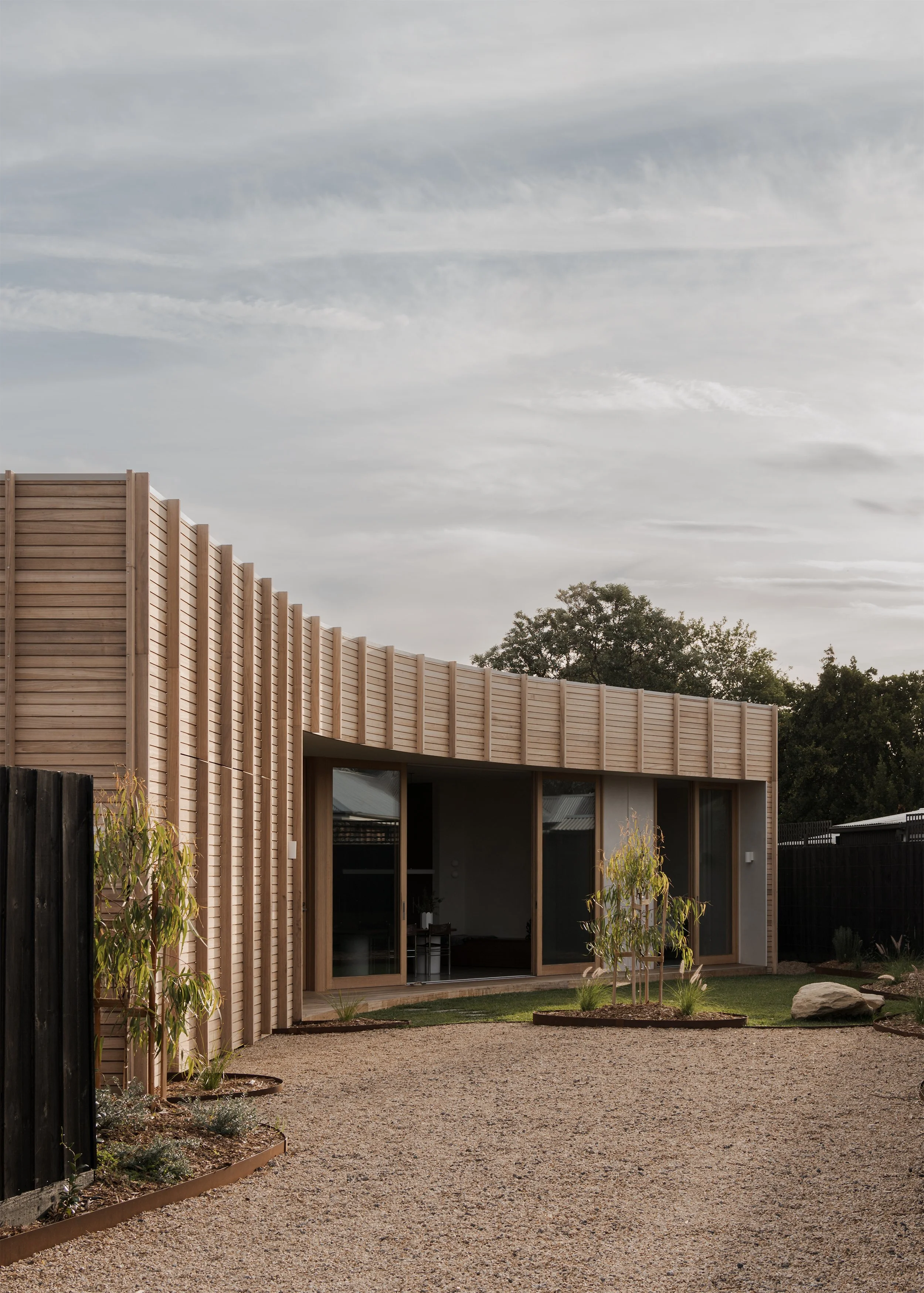
In the back streets of Torquay, The Cove by Wolveridge Architects uses spatial and material restraint to make an architect’s own family home feel generous without relying on unnecessary rooms or finishes.
Location
Torquay, Victoria, Australia
Architecture
Wolveridge Architects
Build
Doherty Building Group
Engineer
Paramount Structural Engineers
Building Surveyors
Ledger Consulting
Cabinetry
Fogarty Consulting
Hyrdonic
Peninsula Hydronic
Electrical
MA Electrical Solutions
Energy Modelling
Fisher & Paykel
HVAC
Middletons
Painting
Flexi Painting & Decorating
Windows
Pickerings / Empire
Plumbing
TMI Plumbing
Stainless Steel
Penny Royal
Garage Door
Geelong Garage Doors
Film & Photography
Anthony Richardson
Production
Simple Dwelling
In Partnership With
This project was about, right from the start, this word that came to mind was enoughness, and for our family, what is enough?’
– Will Smart, Wolveridge Architects
Family houses frequently grow by accumulation. A guest bedroom is added for visitors, another living room for children, a study for work and additional floor area to anticipate futures that may or may not arrive. At The Cove in Torquay, Wolveridge Architects director Will Smart approached his own family home from the opposite direction. Rather than asking what else could be included, he and his wife Ash repeatedly asked what was enough. The resulting 180-square-metre house uses overlapping program, clear zoning and selective moments of spatial generosity to accommodate family life without providing a separate room for every possibility.
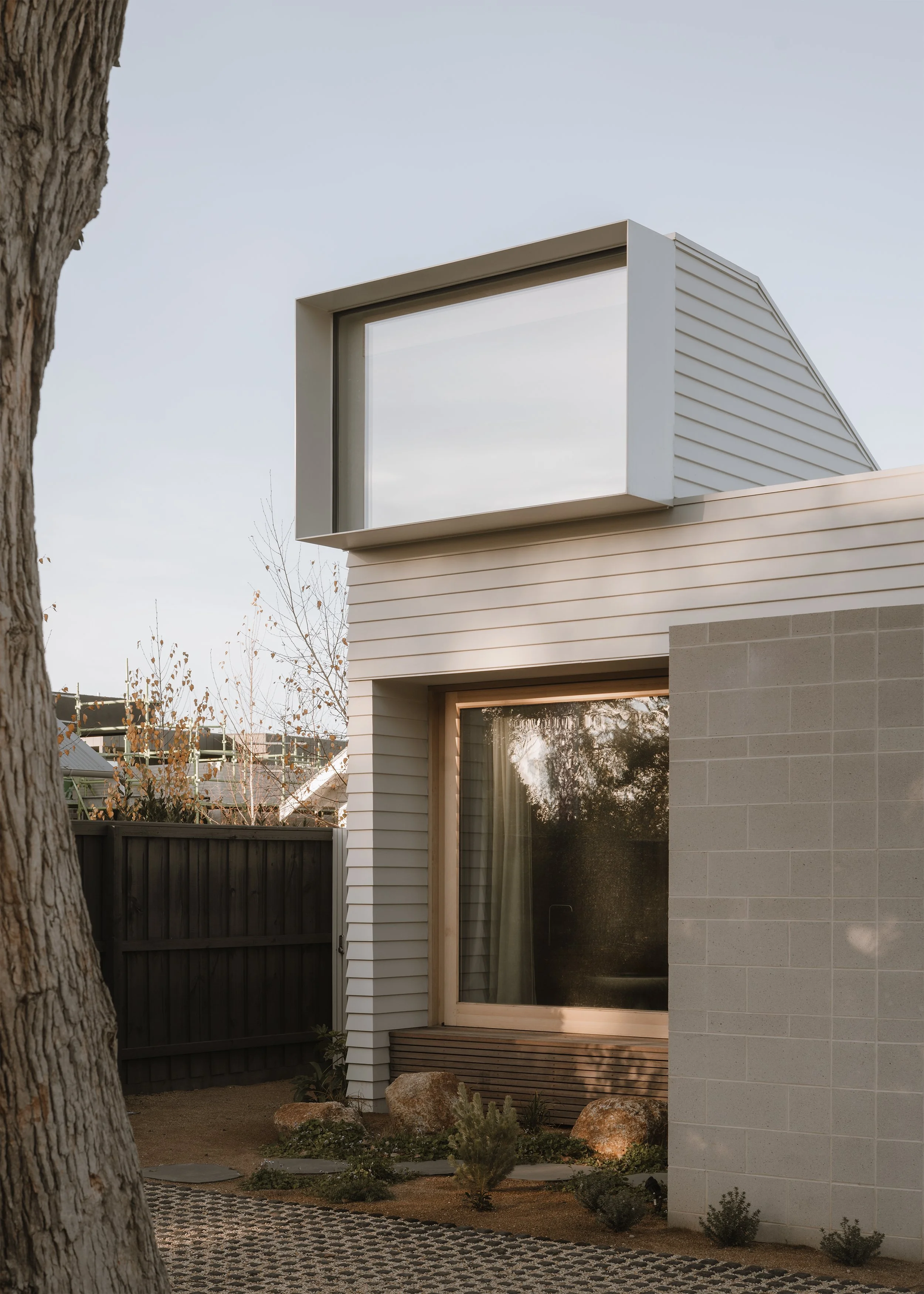
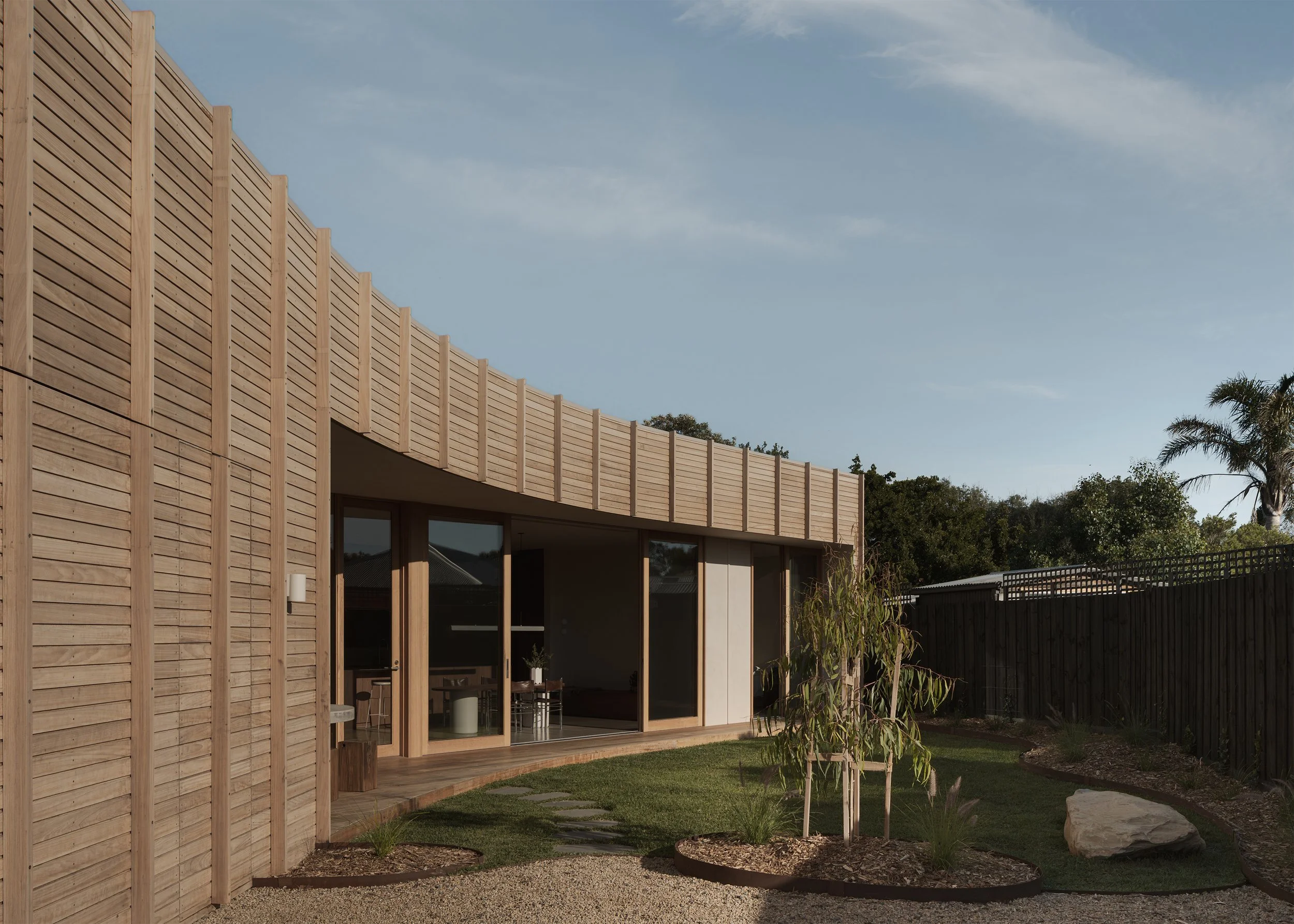
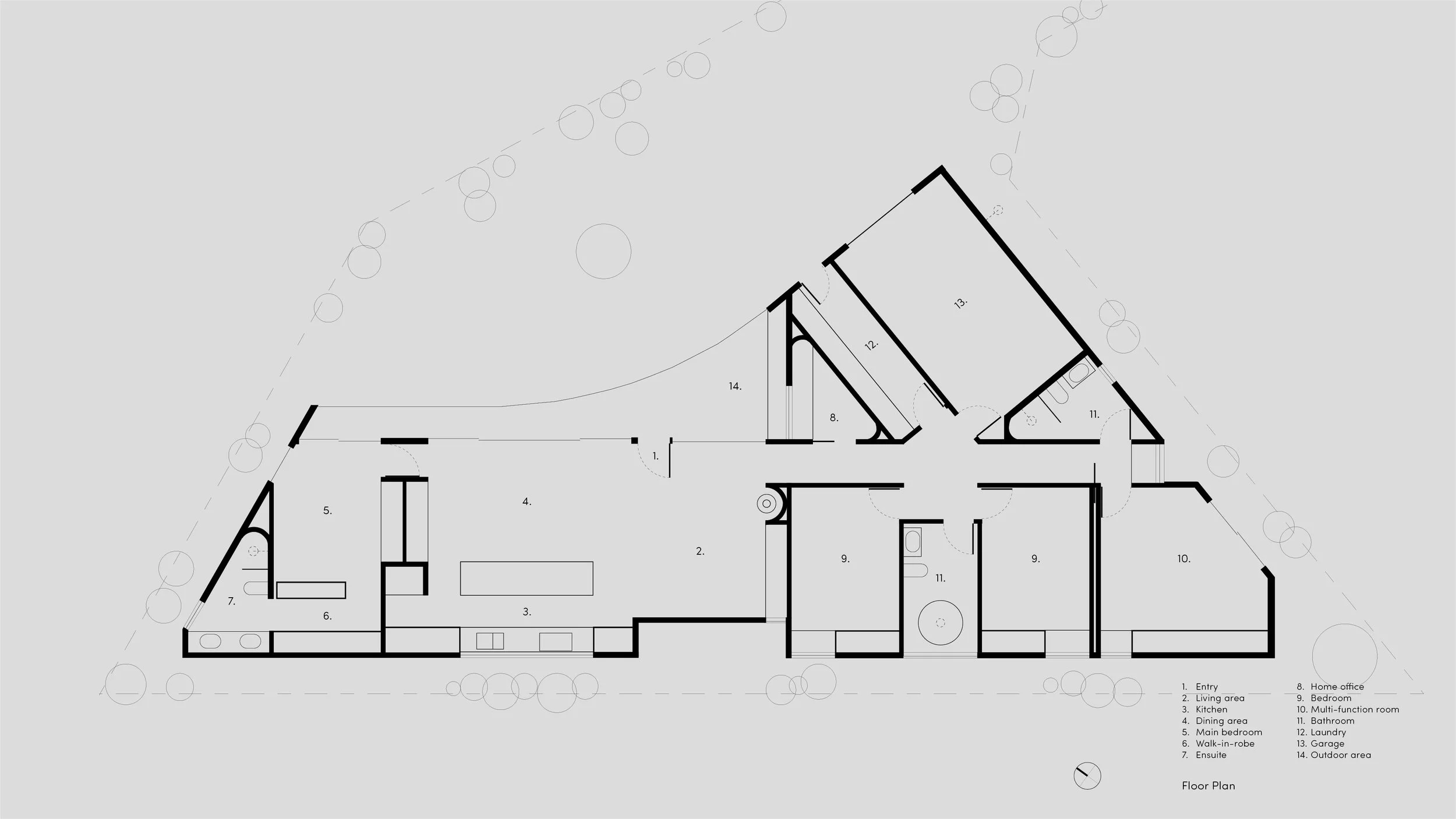
The site itself encouraged precision. Its battle-axe geometry, close neighbours and restricted width meant the plan could not simply expand outward. Smart describes the arrangement as a sequence of relatively direct decisions: garage toward the arrival; parents’ bedroom toward the western end; children’s rooms toward the east; shared kitchen, dining and living spaces between them.
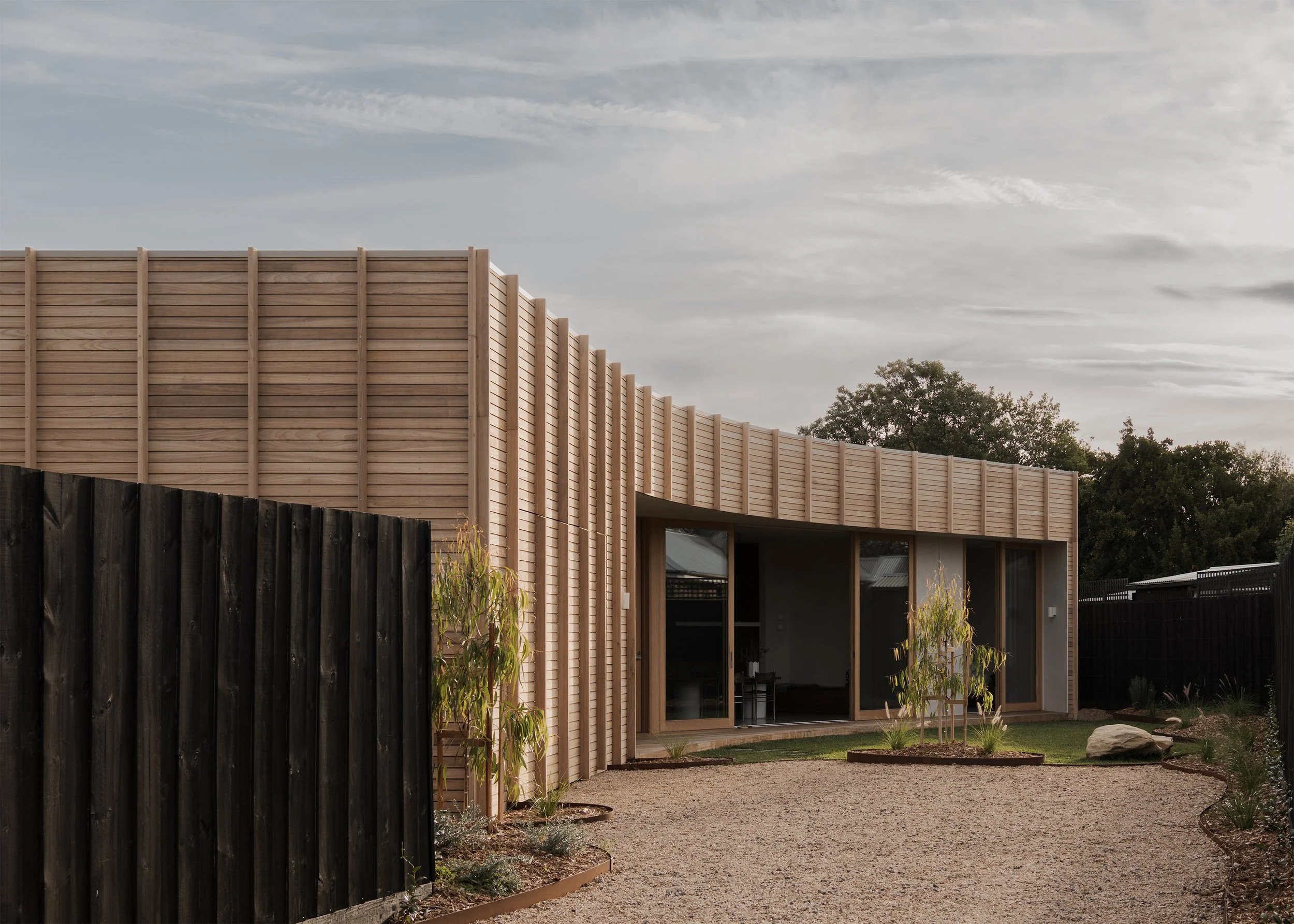
“The shape and the geometry and size of the site led to some pretty quick and efficient design decisions in how we lay out the spaces,” Smart explains.
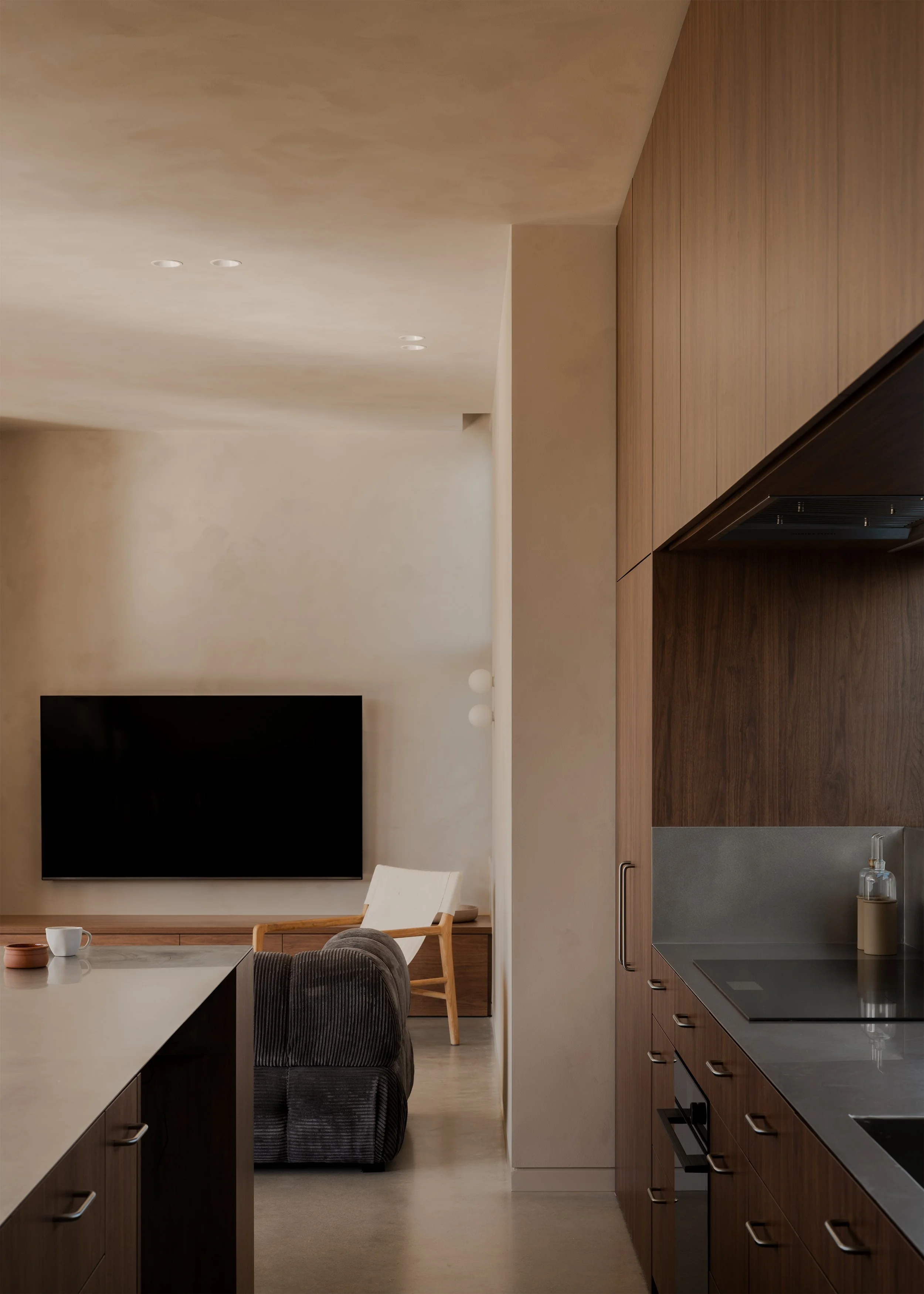
The plan consequently anticipates separation as the children become older while keeping the shared spaces central to everyday family life. It is compact, but not compressed into a universal open room. Privacy and togetherness are given distinct places.
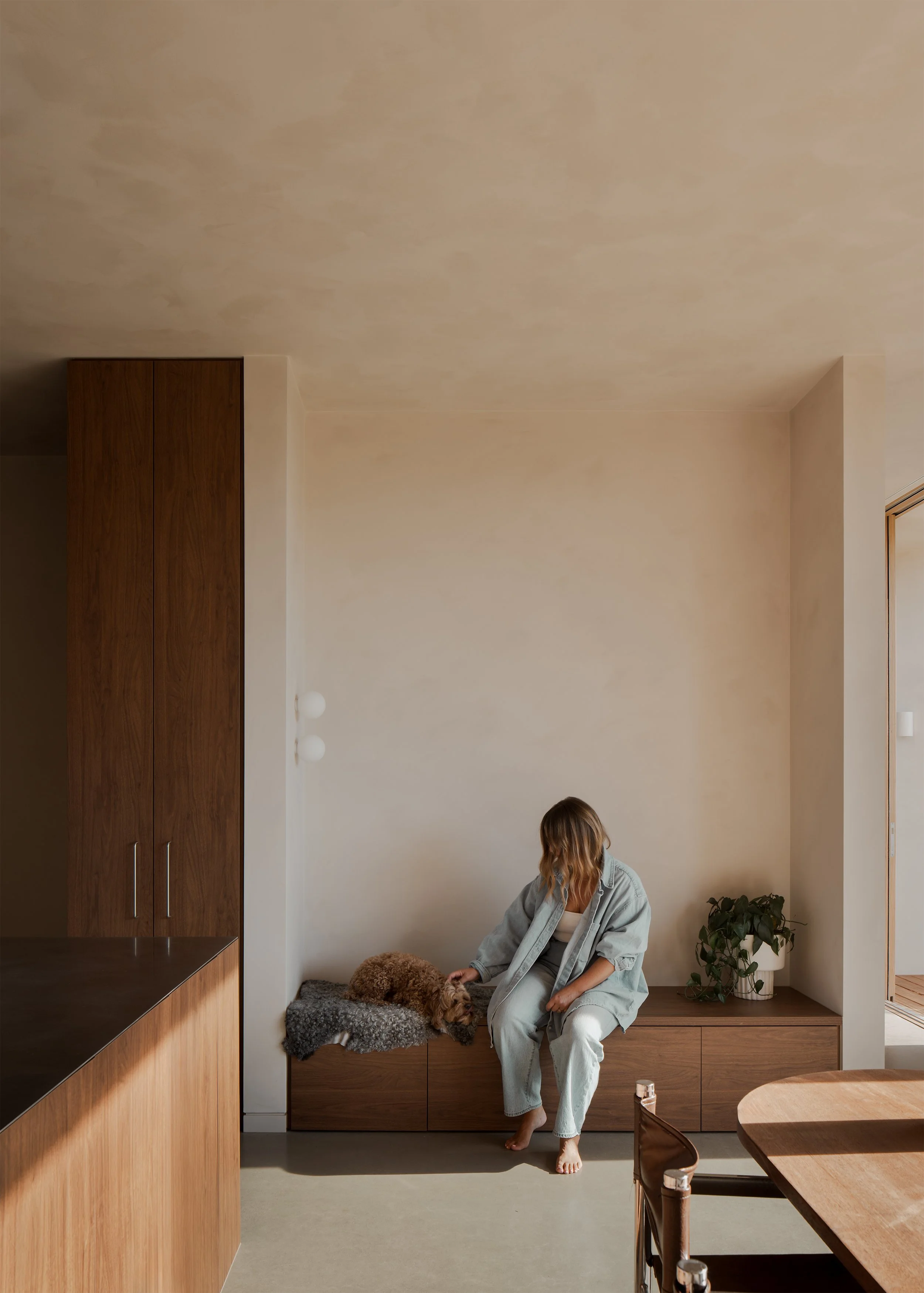
The more significant reduction occurs in how those places are defined. The house has four bedrooms because Smart and Ash wanted family and friends to be able to stay. It also does not have a dedicated rumpus room. Instead, the fourth bedroom changes role when there are no guests.
“That fourth bedroom, when it’s not being used as a guest space, that’s the kids’ rumpus space. That’s where they play games. That’s where they hang out with their friends.”
The decision is small in isolation. Across a project, however, similar decisions begin to alter what a family home needs to be. Smart describes breaking down “hundreds, if not thousands” of choices and asking the same question of each: what is enough for us?
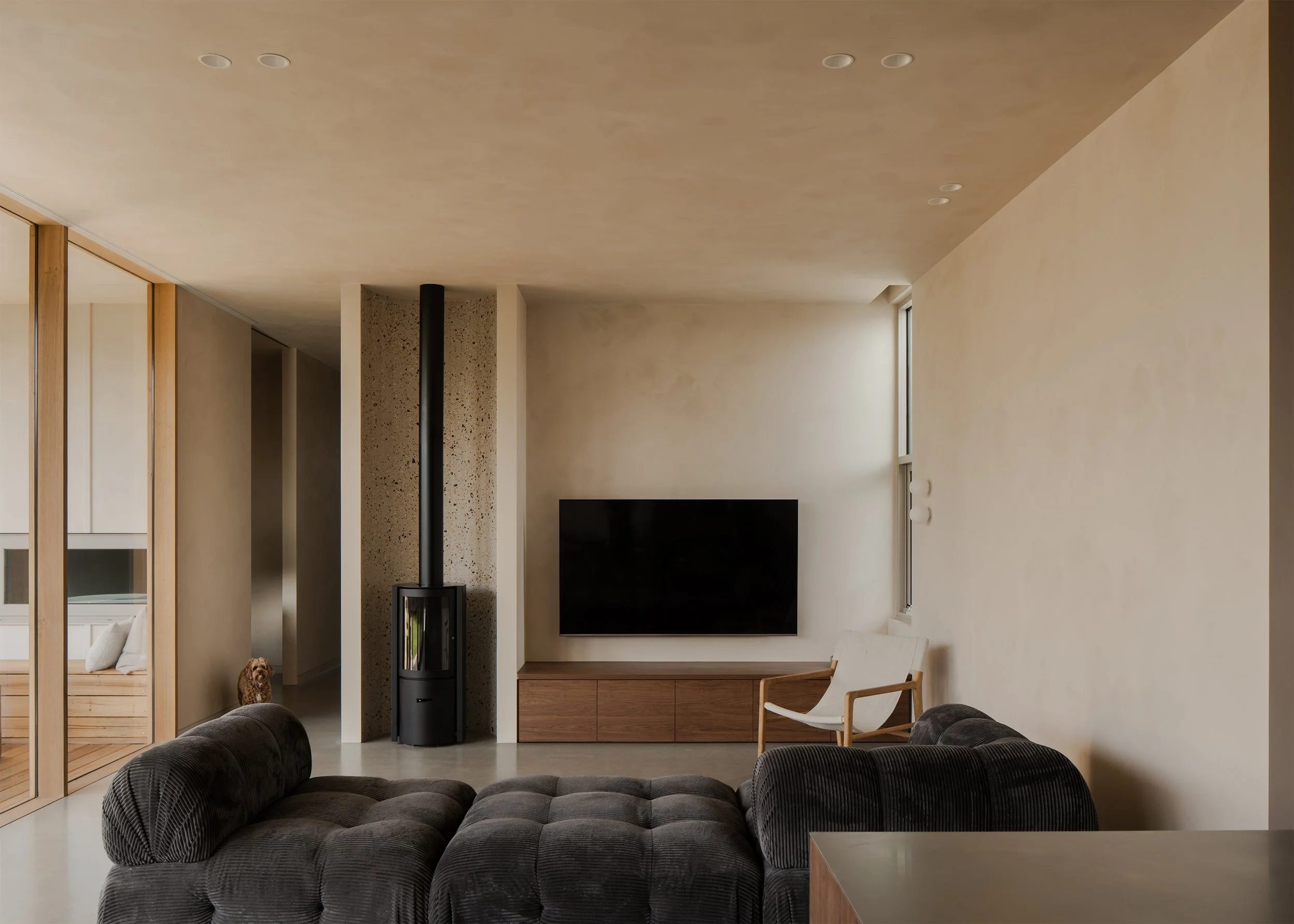
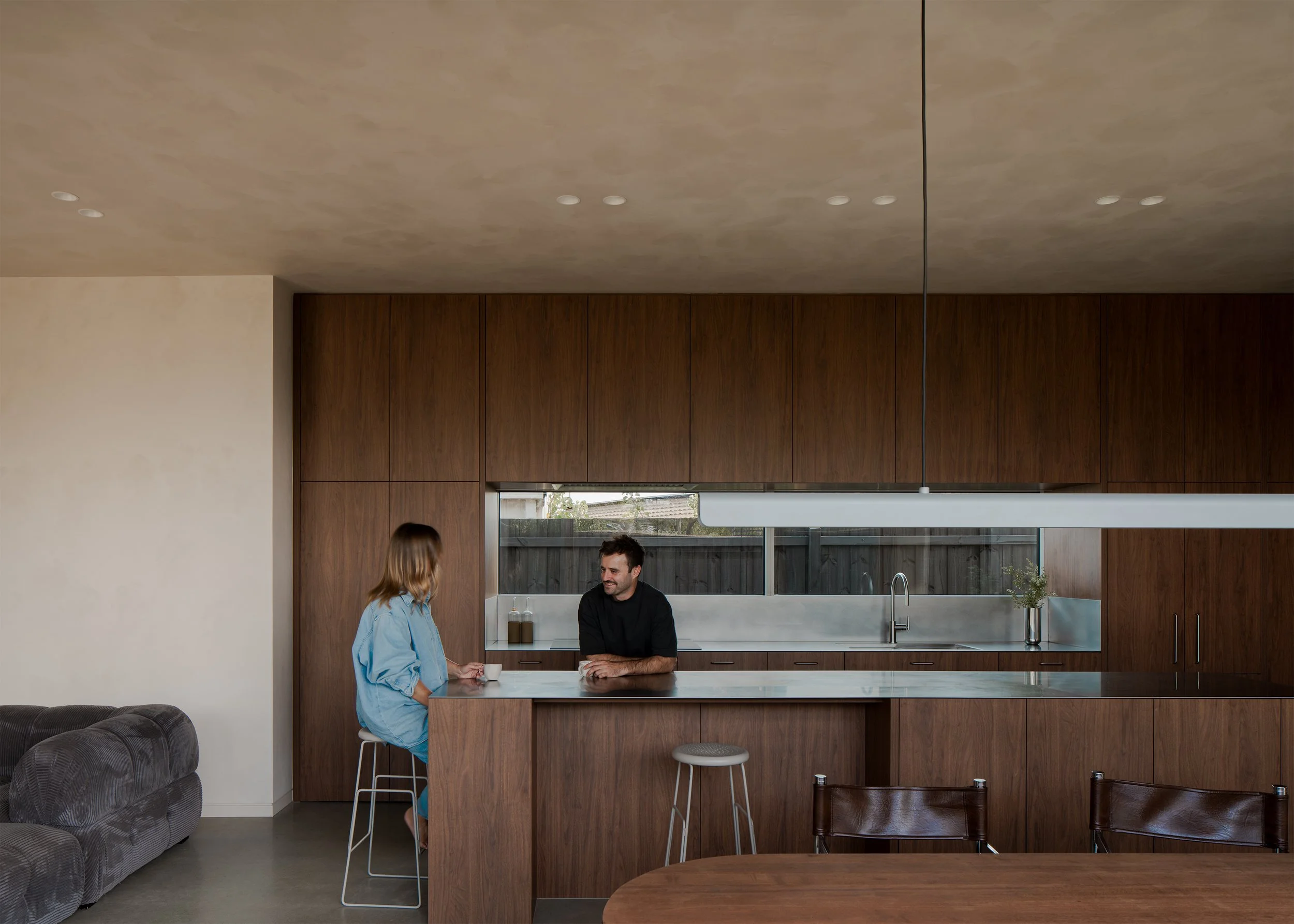
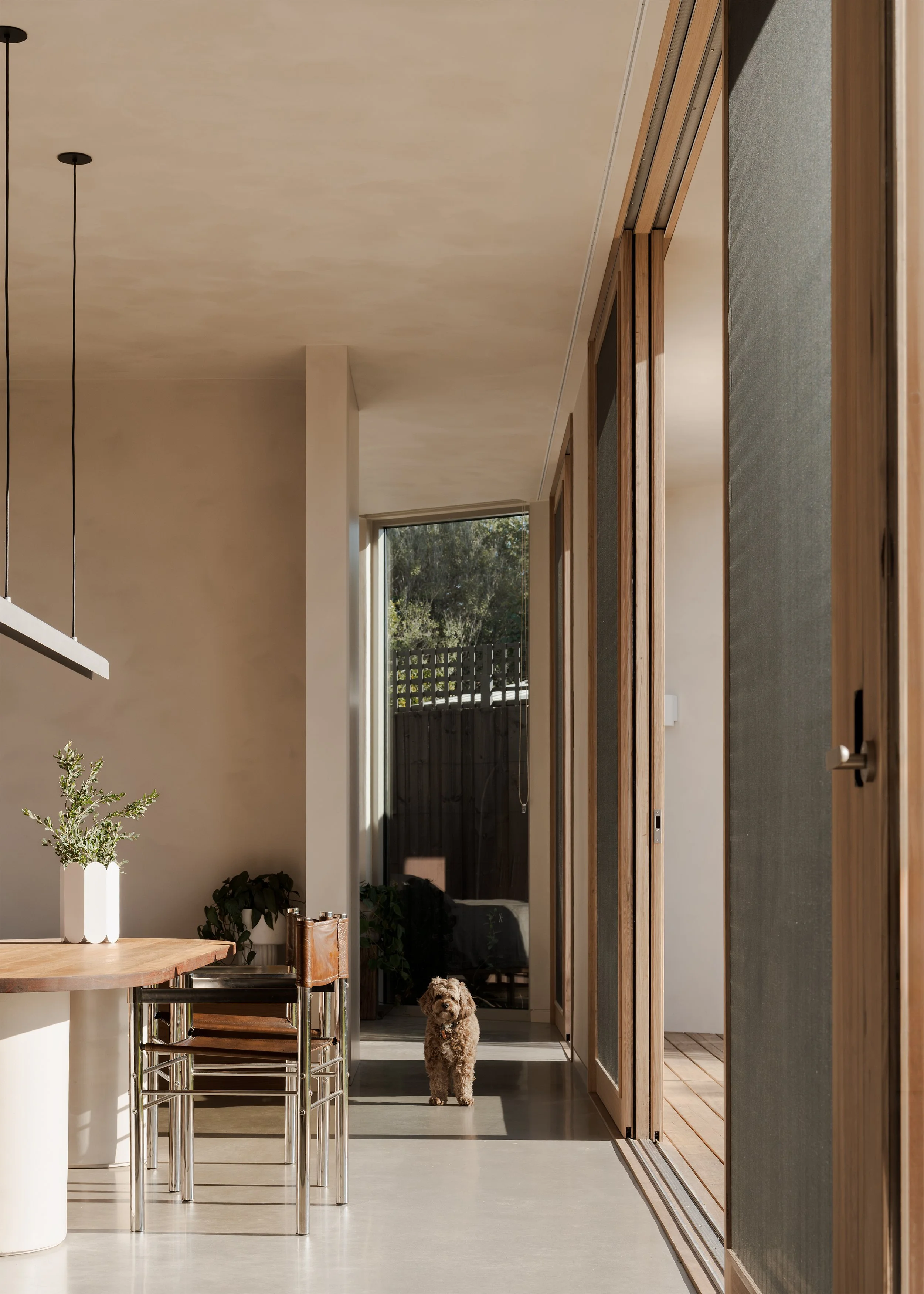
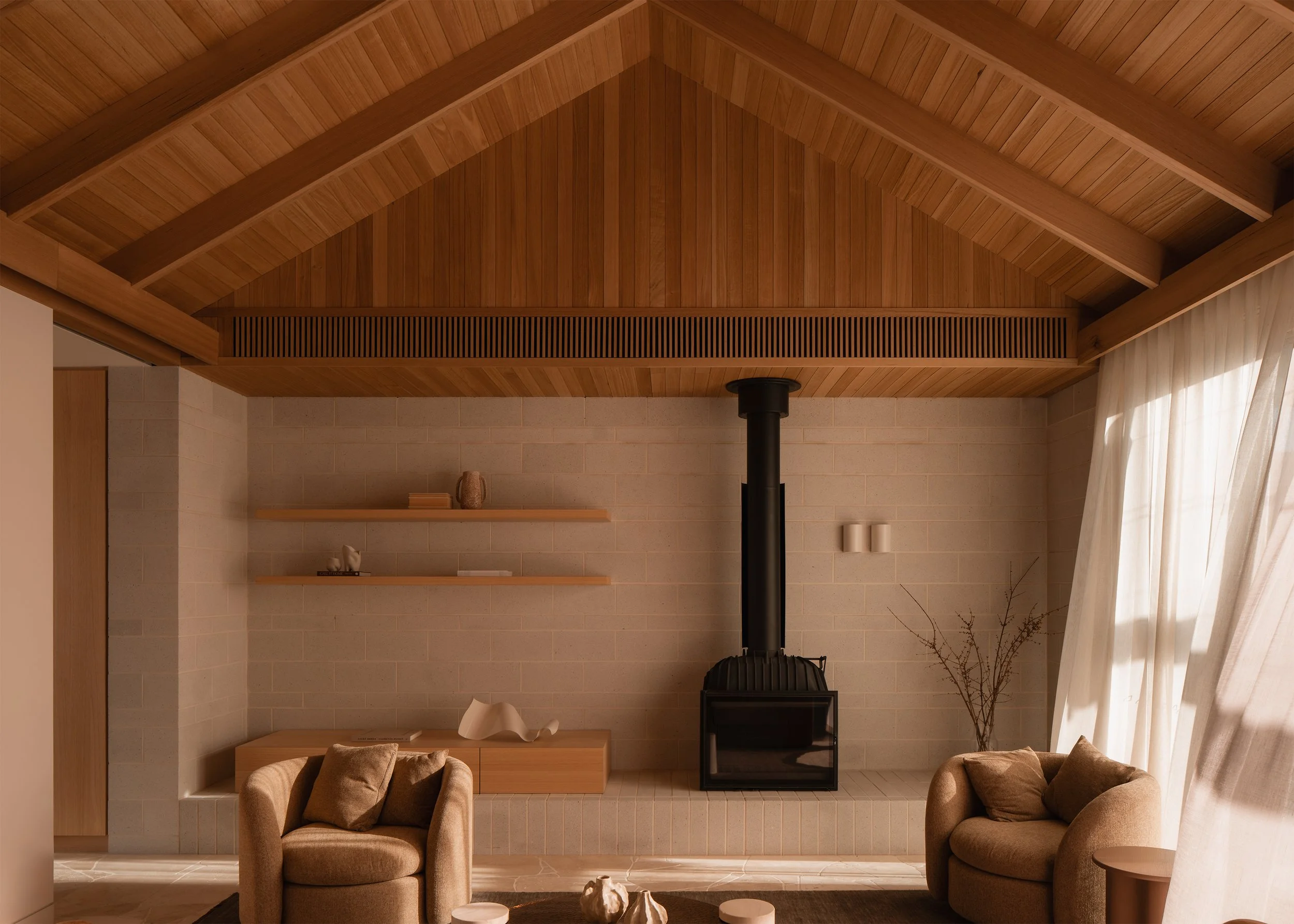
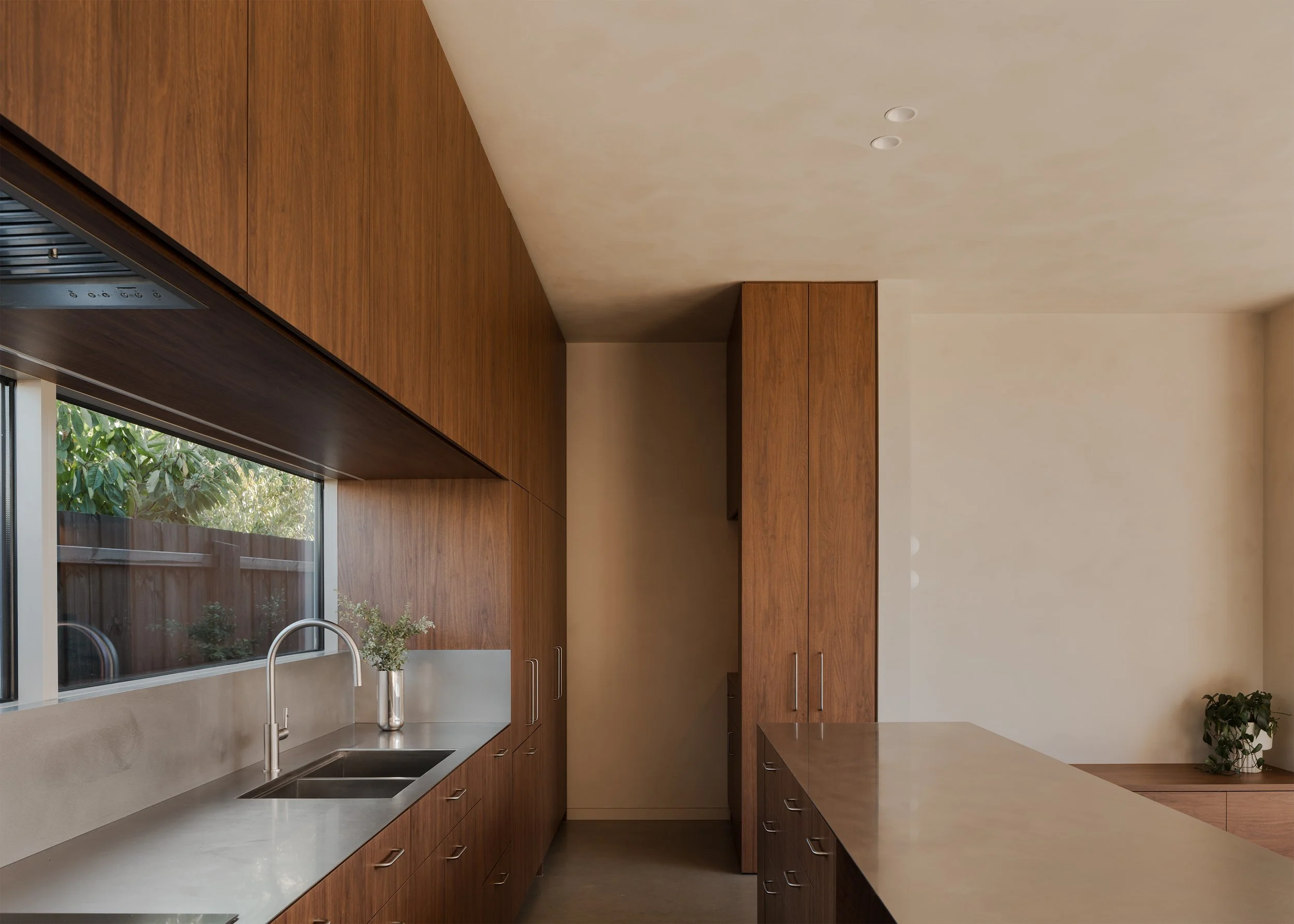
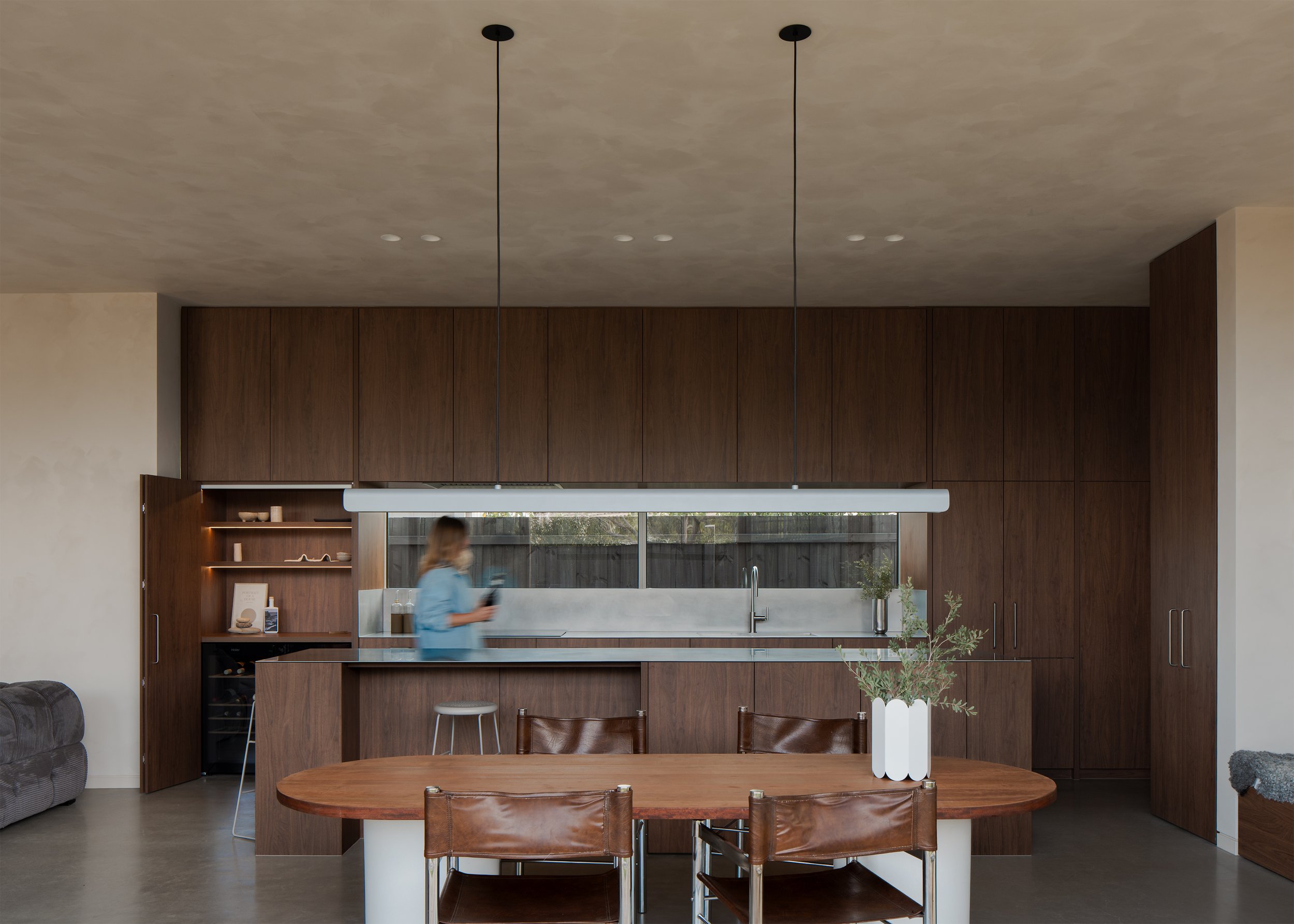
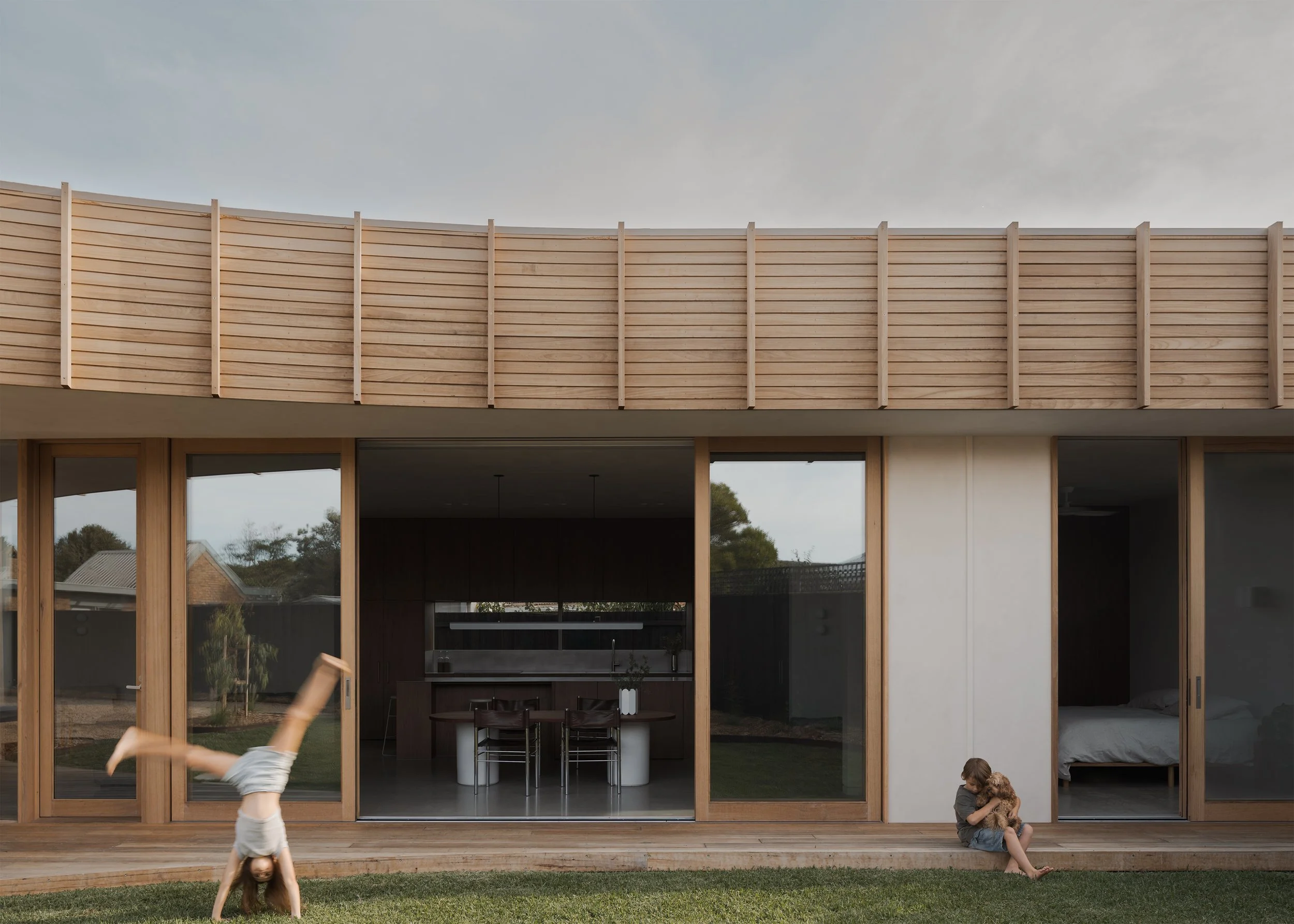
This restraint is most convincing because the areas retained are not treated parsimoniously. The primary living spaces gain height where horizontal expansion was unavailable. Full-height glazing opens the long side of the room to light and outlook. At the ends of the corridors, glazing prevents movement through the house from concluding against blank walls. The eye is continually permitted to travel beyond the immediate dimensions of the plan.
“How do we make it feel bigger than 180?” Smart asks. “We’re not limited by height here. So we are limited horizontally, but vertically, let’s maximise that.”
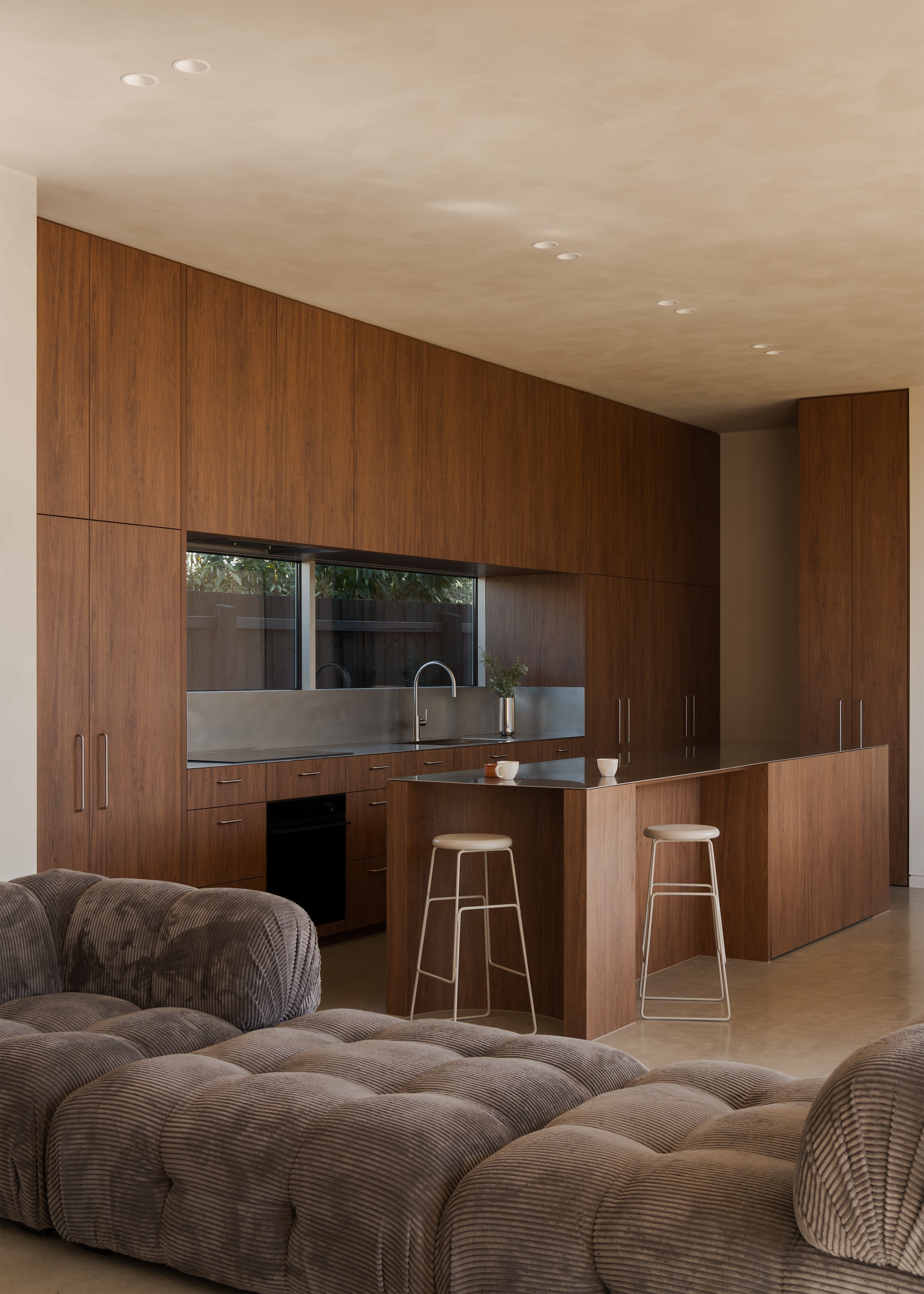
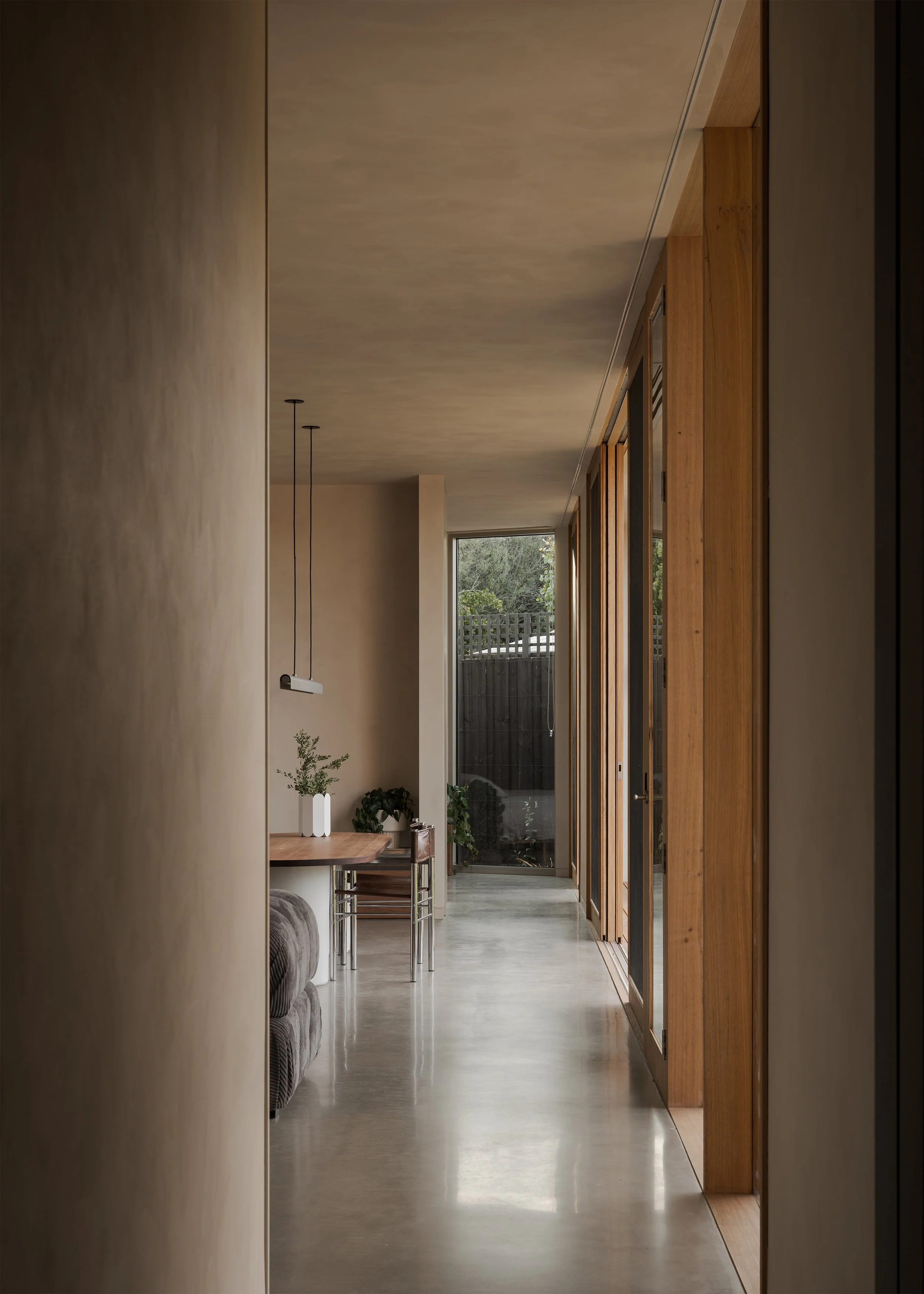
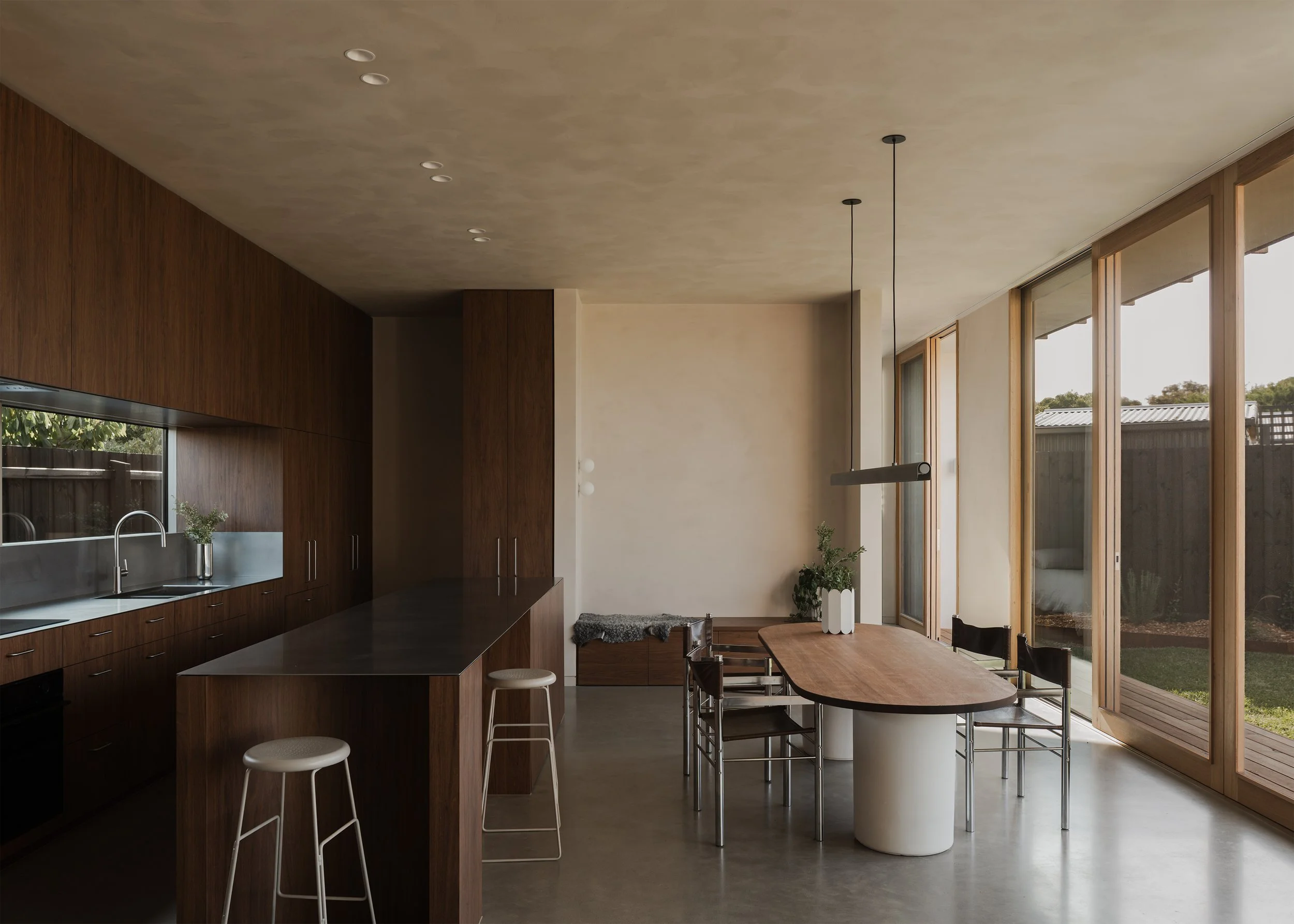
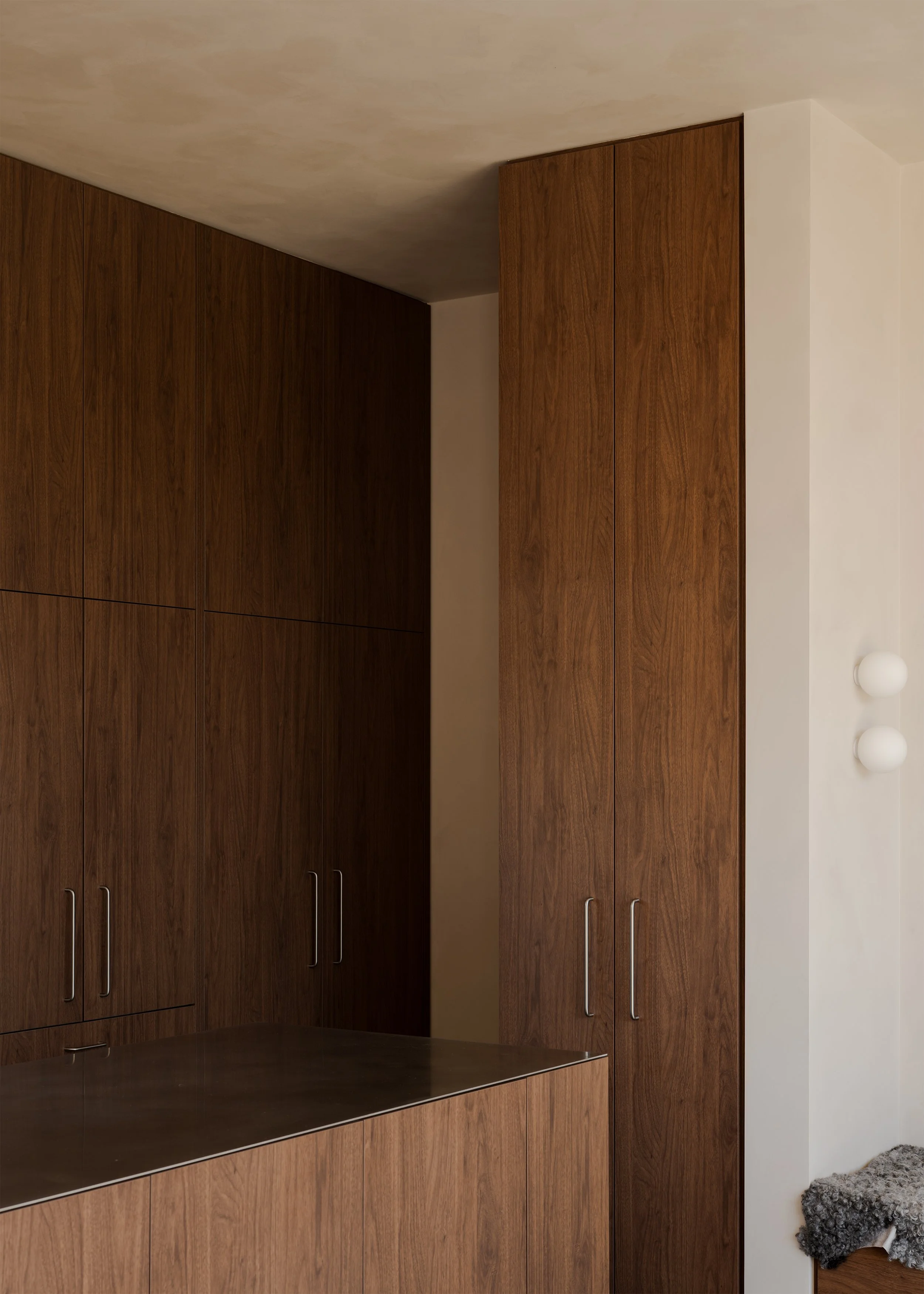
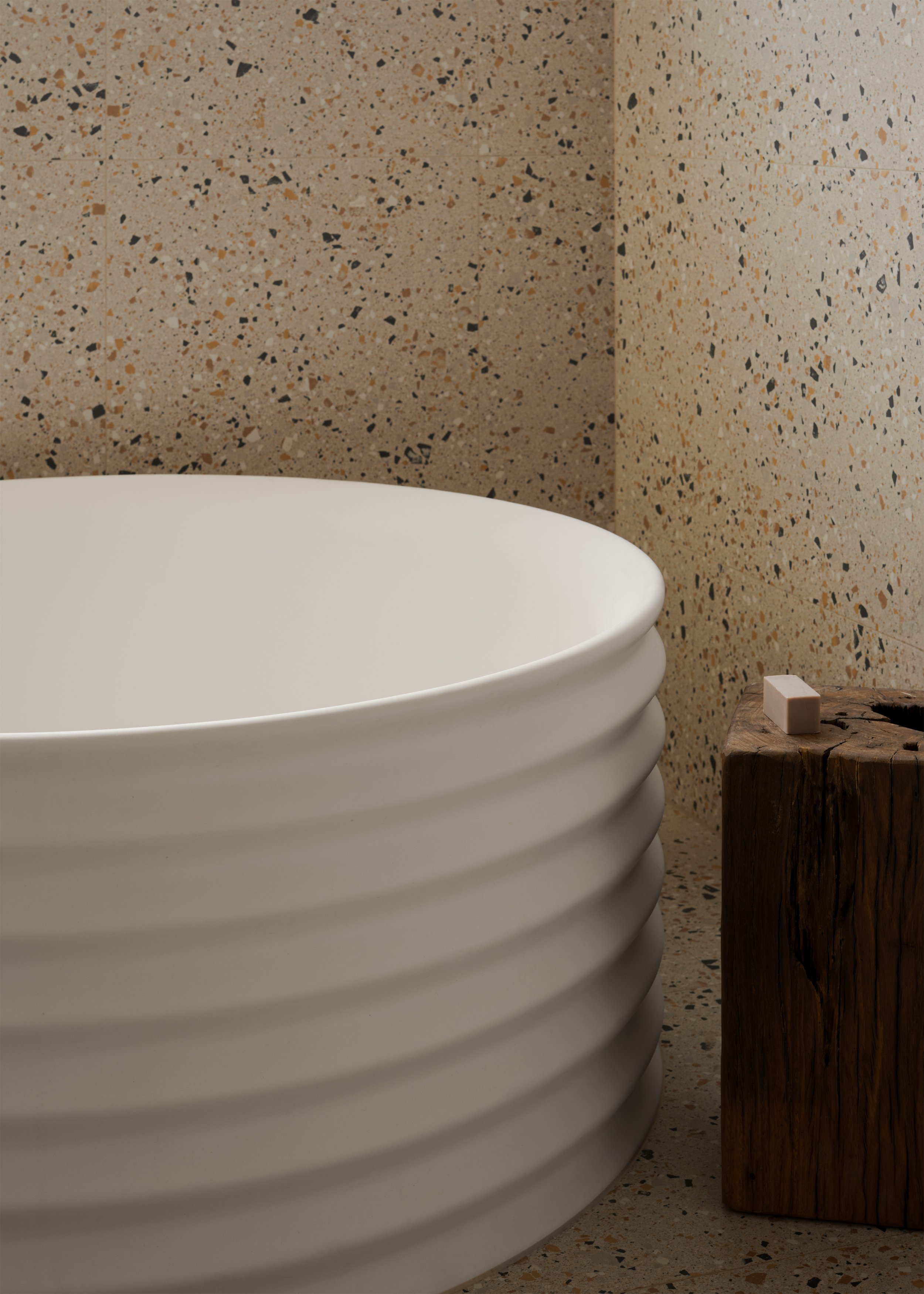
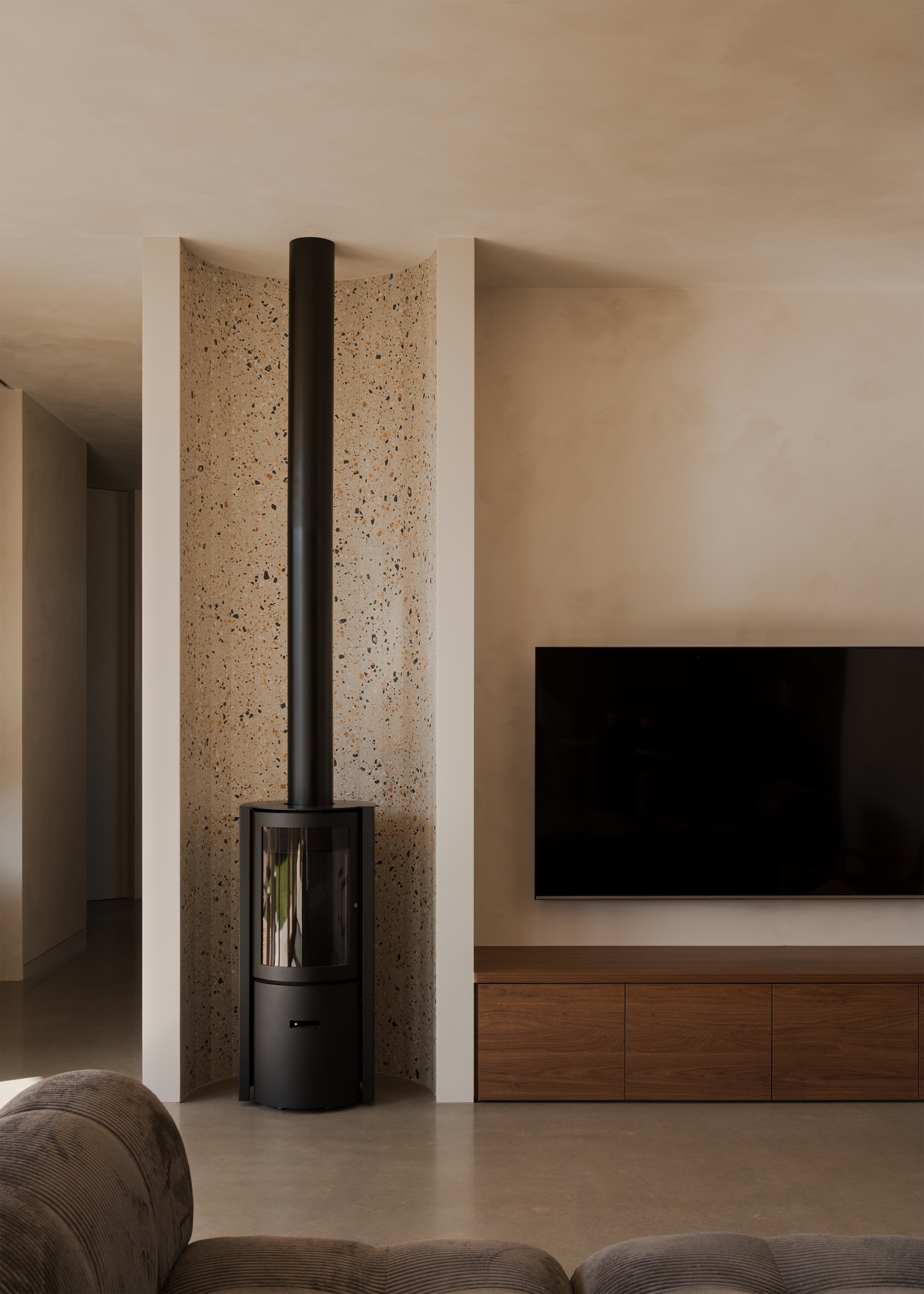
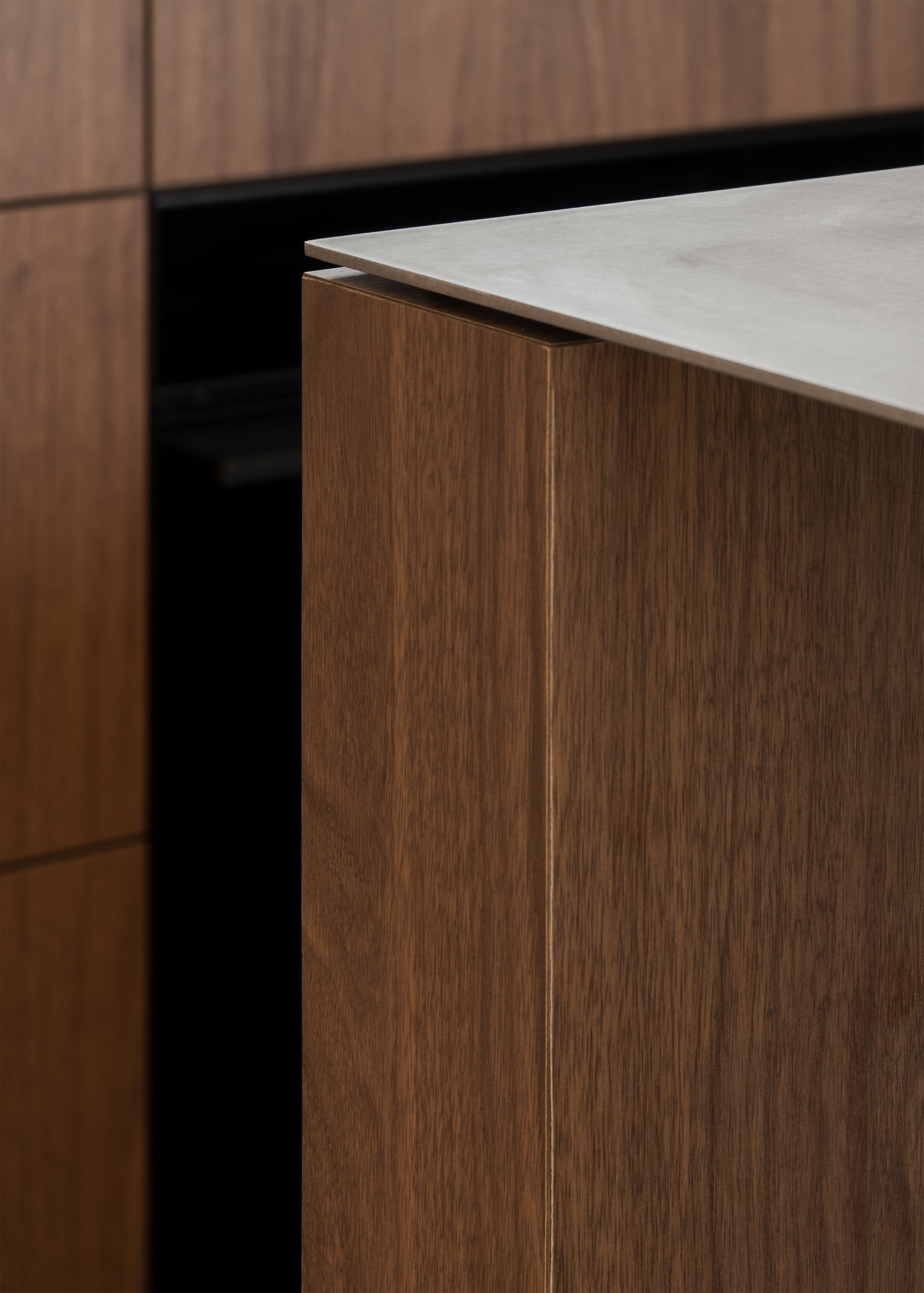
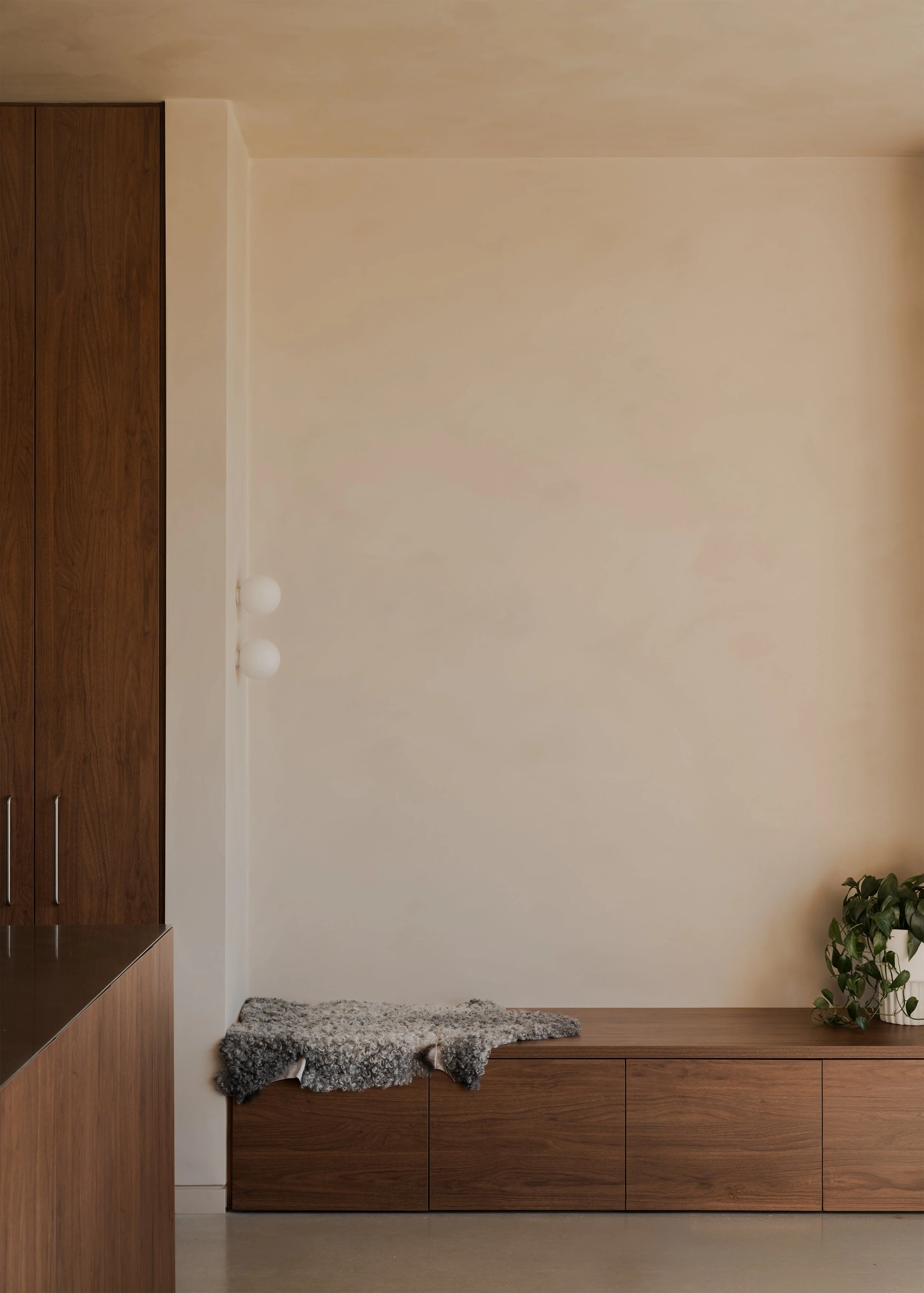
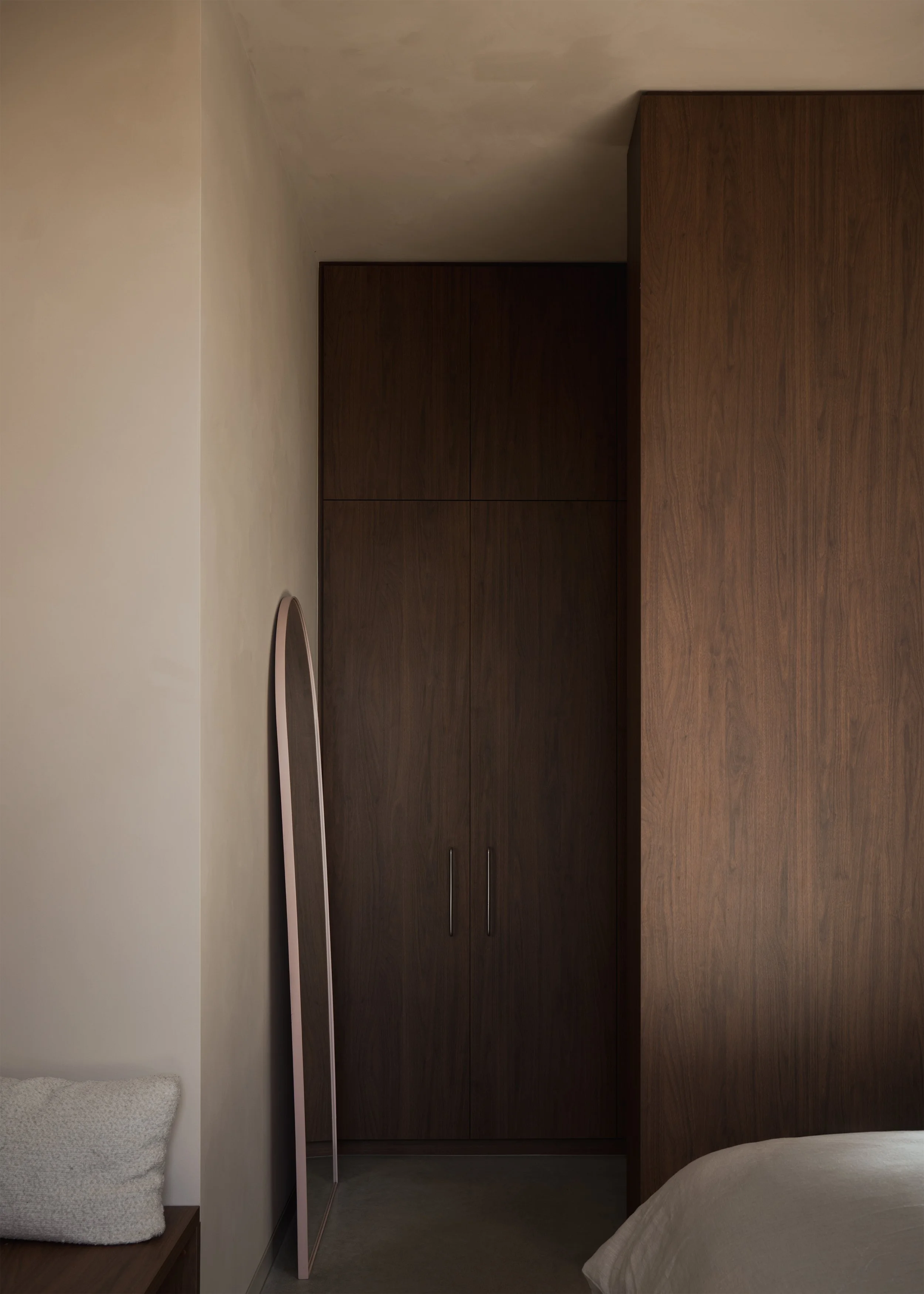
Material continuity extends the same strategy. Walnut joinery, textured paint, concrete flooring and a single principal tile recur internally. The reduced palette is not merely a minimalist preference. Smart explicitly links it to the way the rooms are perceived: fewer material transitions mean fewer visual boundaries.
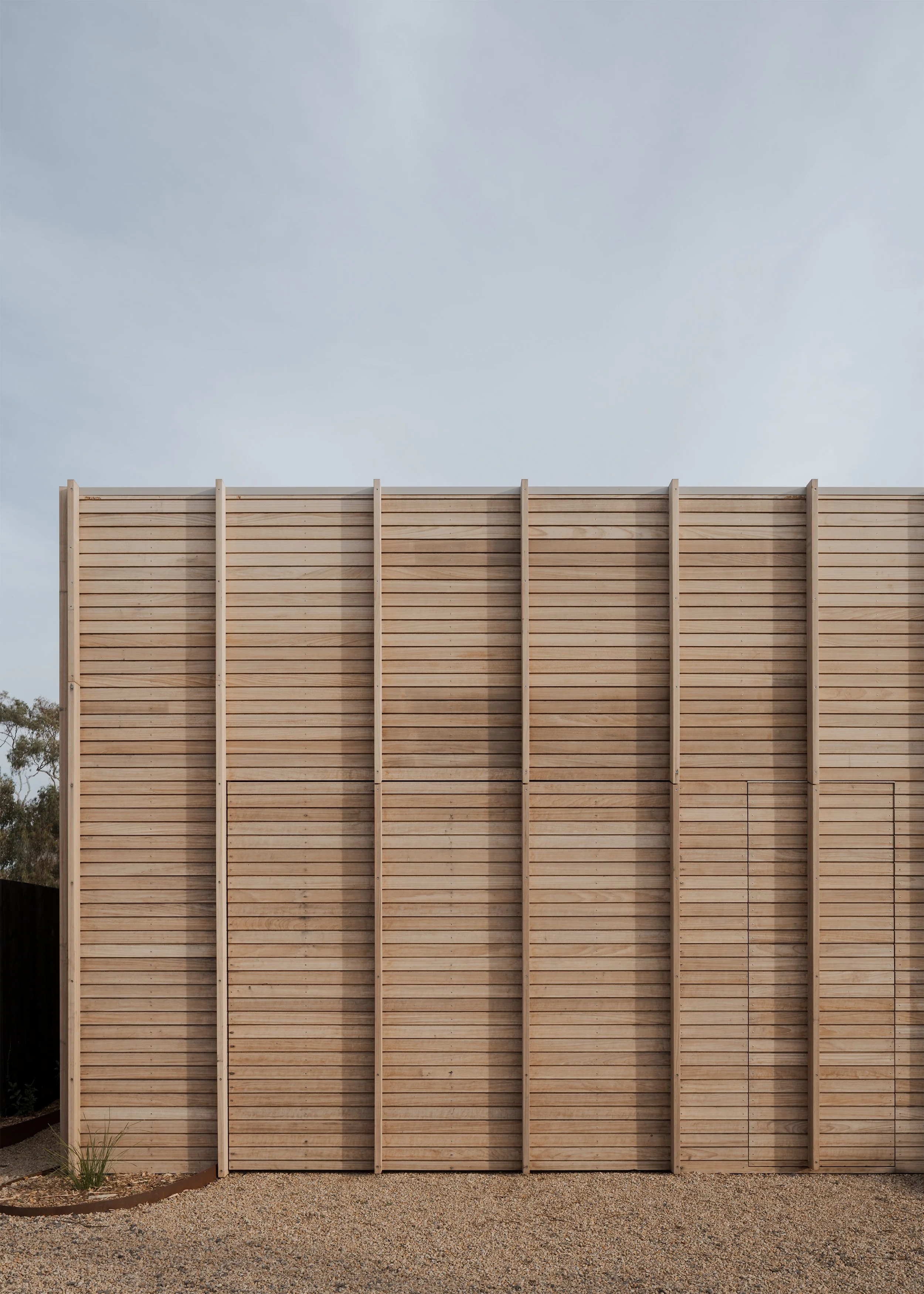
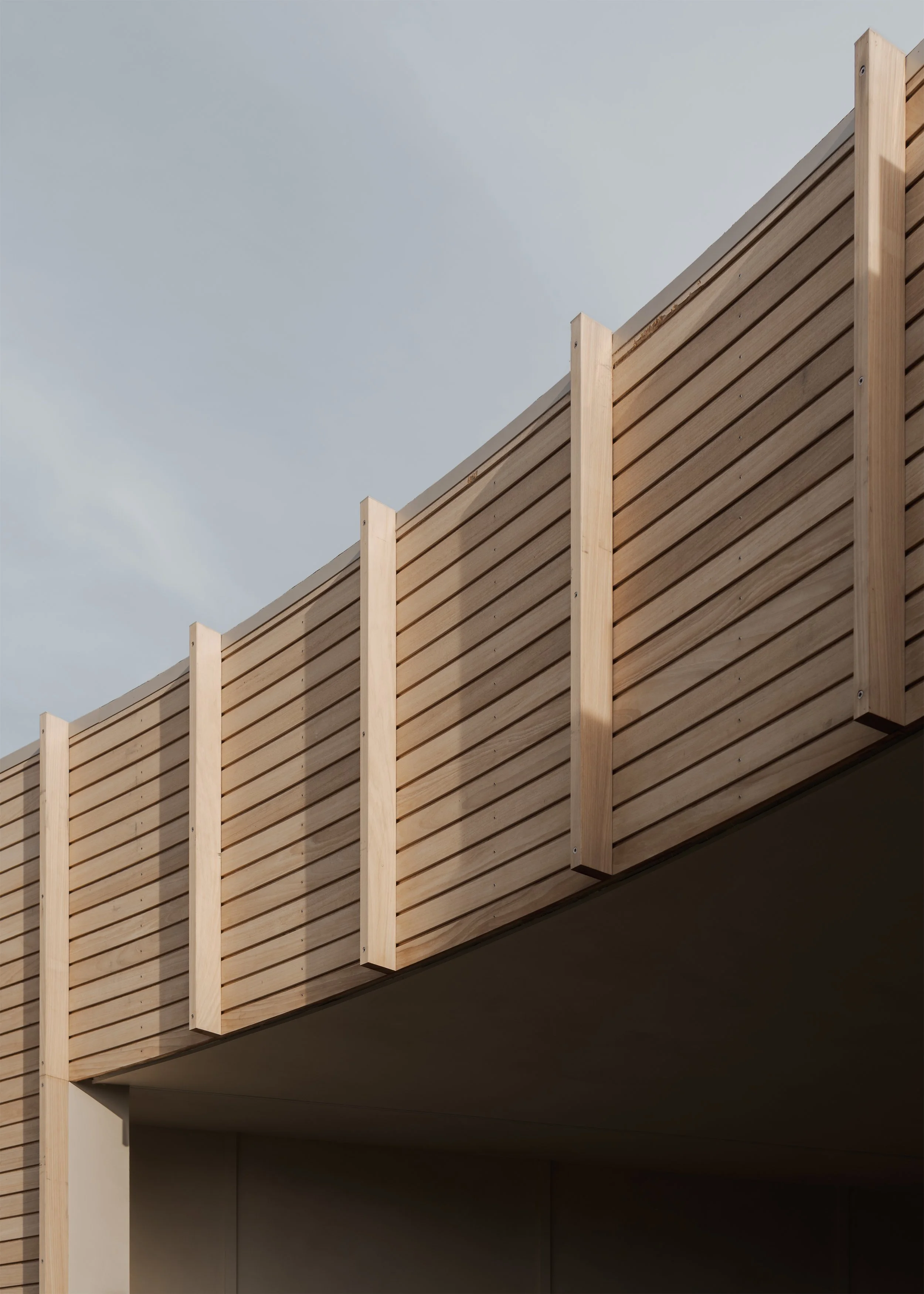
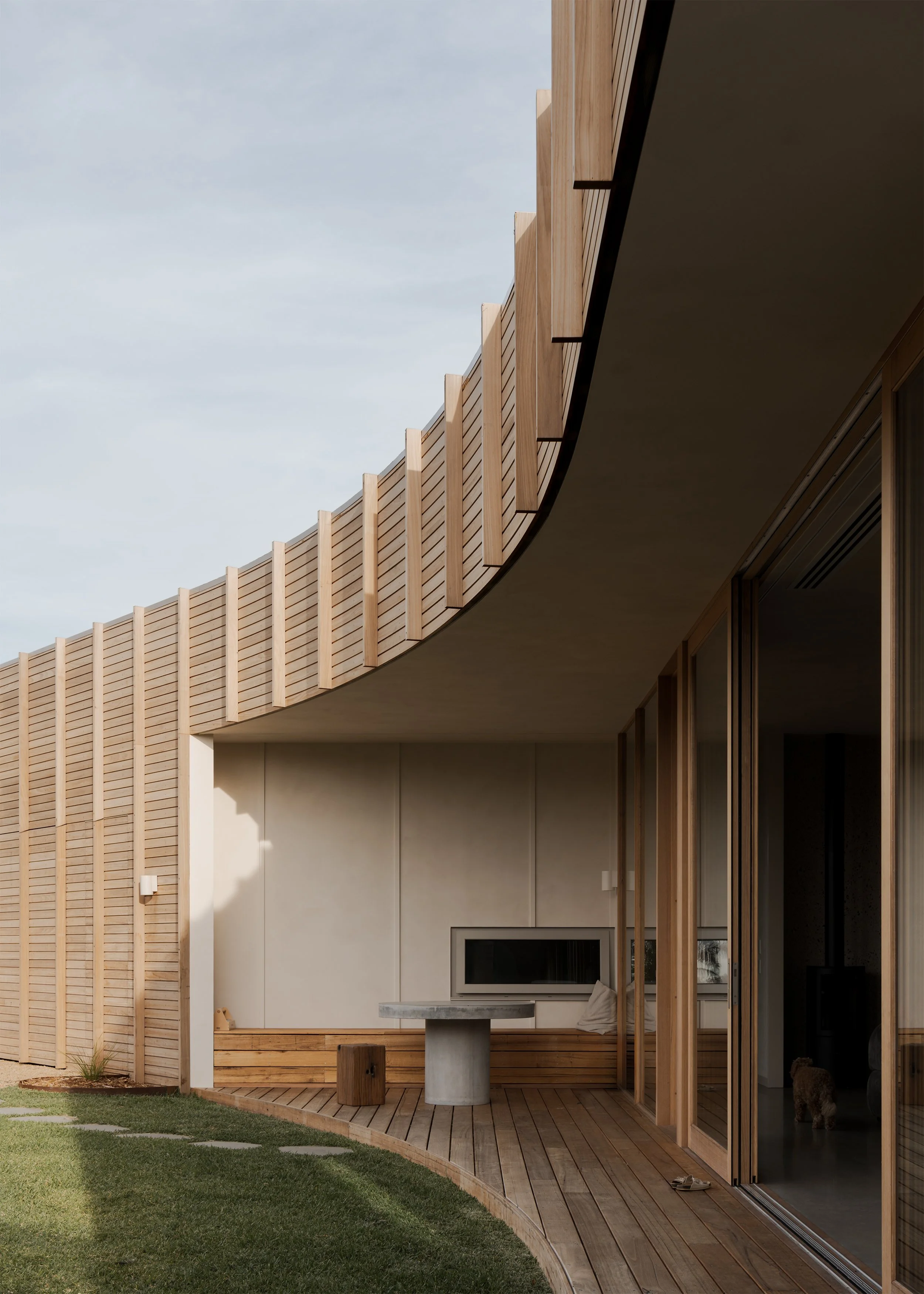
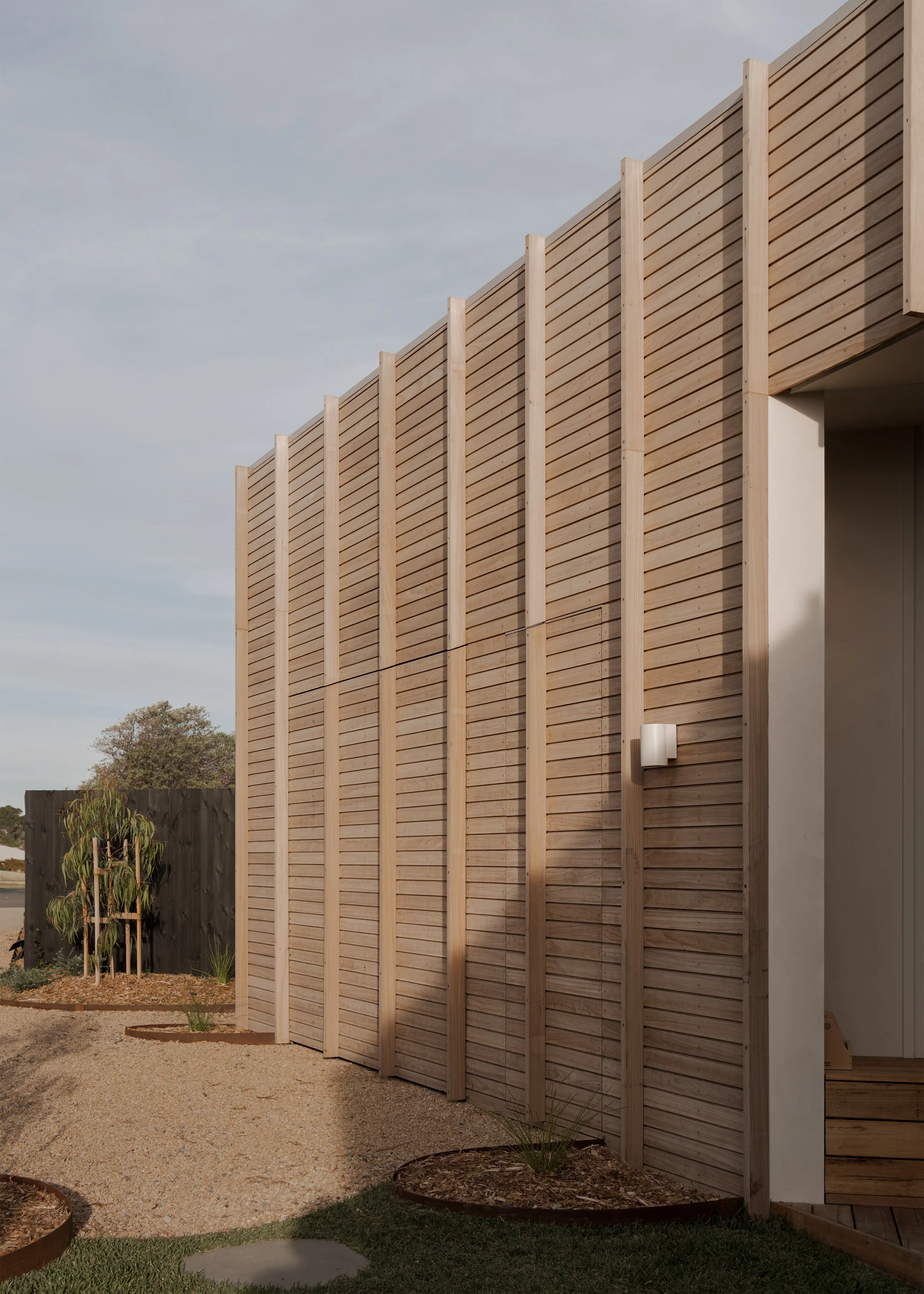
Externally, the Smartdeck thermally modified timber cladding provides a consistent envelope that Smart considered appropriate to a permanent home intended to retain the relaxed character of a beach house. Added timber battens introduce depth and rhythm without introducing another facade material. Over time, he expects the cladding to grey, gradually altering the character of the exterior rather than requiring the building to retain a fixed appearance.
This material economy is secondary to the plan, but the two strategies reinforce one another. Both reduce unnecessary differentiation. A room can have more than one use; a material can continue across several spaces; an opening can provide both daylight and greater perceived depth.
The budget imposed another form of discipline. From early sketches, Smart worked closely with the builder to test decisions against real construction costs. This allowed elements to be refined before they became embedded in the project.
“How do you do high-quality architecture for a lot less money?” he asks. “The challenge here was how do I get all of the feeling of these amazing homes but limit the decisions, limit the finishes, limit the materials?”
The answer is not presented as cheap architecture, and no cost figure is offered. The house remains a custom architect-designed home. What changes is the relationship between ambition and quantity: design effort is concentrated rather than distributed across more floor area, more finishes and more specialised spaces.
That logic defines The Cove more clearly than its coastal material language or compact footprint alone. Restraint is not an absence of architecture. It is the act of deciding what deserves room.
Smart is careful not to turn the result into a universal rule. “I can’t say in five or 10 years if it’s still going to be enough, but right now it is.”
For a family house, that may be the more useful position. The Cove does not attempt to insure itself against every imagined future through excess. It makes the present work well, leaves rooms capable of changing use and accepts that enoughness is not a fixed measurement but a relationship between a household and the spaces it actually occupies.
Follow Simple Dwelling through email
Receive new films and features on Australian homes shaped by restraint, place and daily life.
From the archive
Honey House by Wolveridge Architects
A courtyard home that replaces ocean views with calm and connection.
Related Features