Eyrie House by Matt Williams Architects
Eyrie House by Matt Williams Architects
On an exposed mountain site east of Hobart, Eyrie House uses enclosure, masonry and a carefully staged outlook to create refuge without retreating from the landscape.
Location
Mount Rumney, Tasmania, Australia
Architecture
Matt Williams Architects
Build
Dean Scurrah Builders
Engineer
JSA Engineers
Energy
RED Sustainability
Bushfire
EnviroDynamics
Filmed and Edited
Anthony Richardson
Photography
Anthony Richardson
Production
Simple Dwelling
In Partnership with
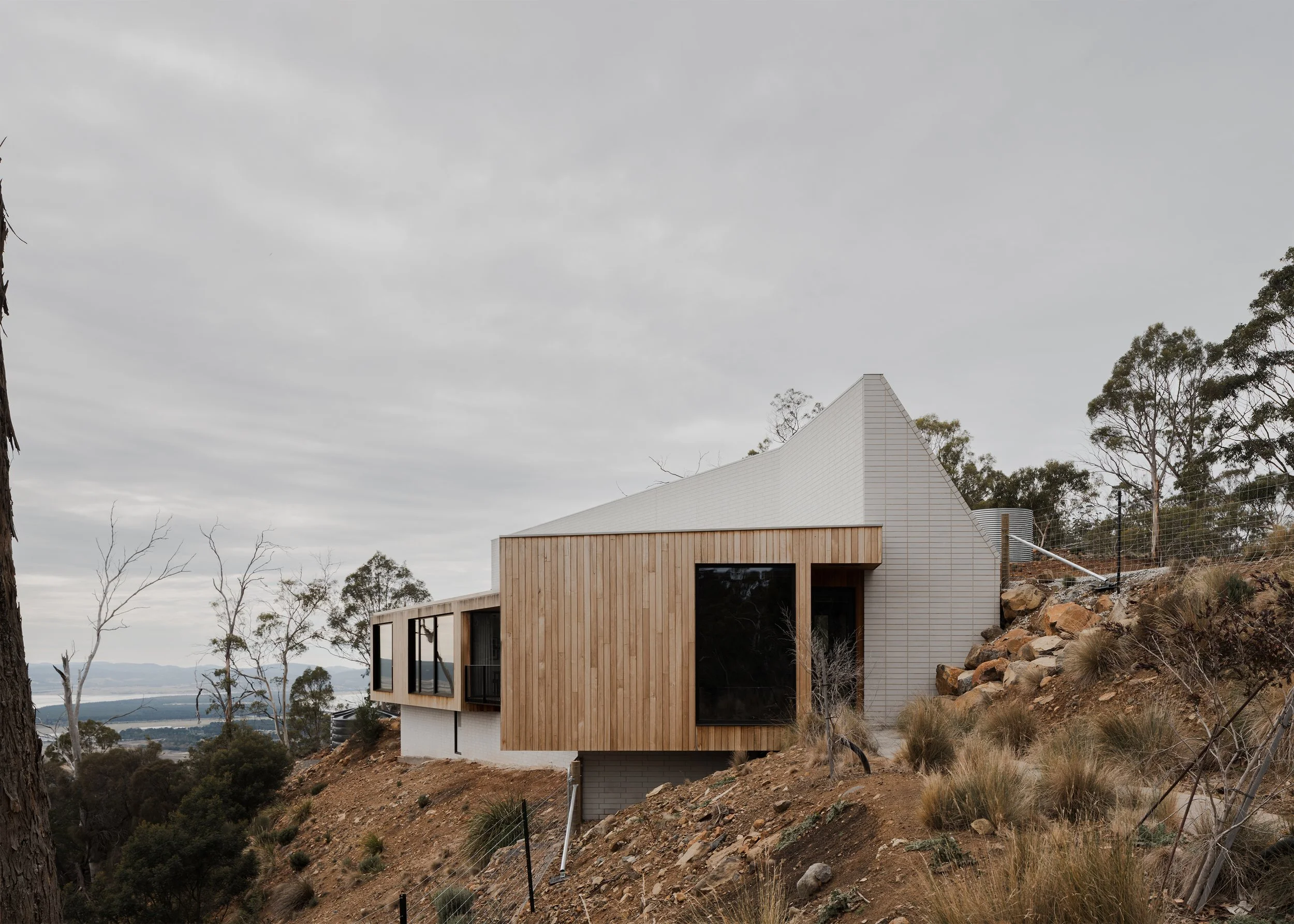
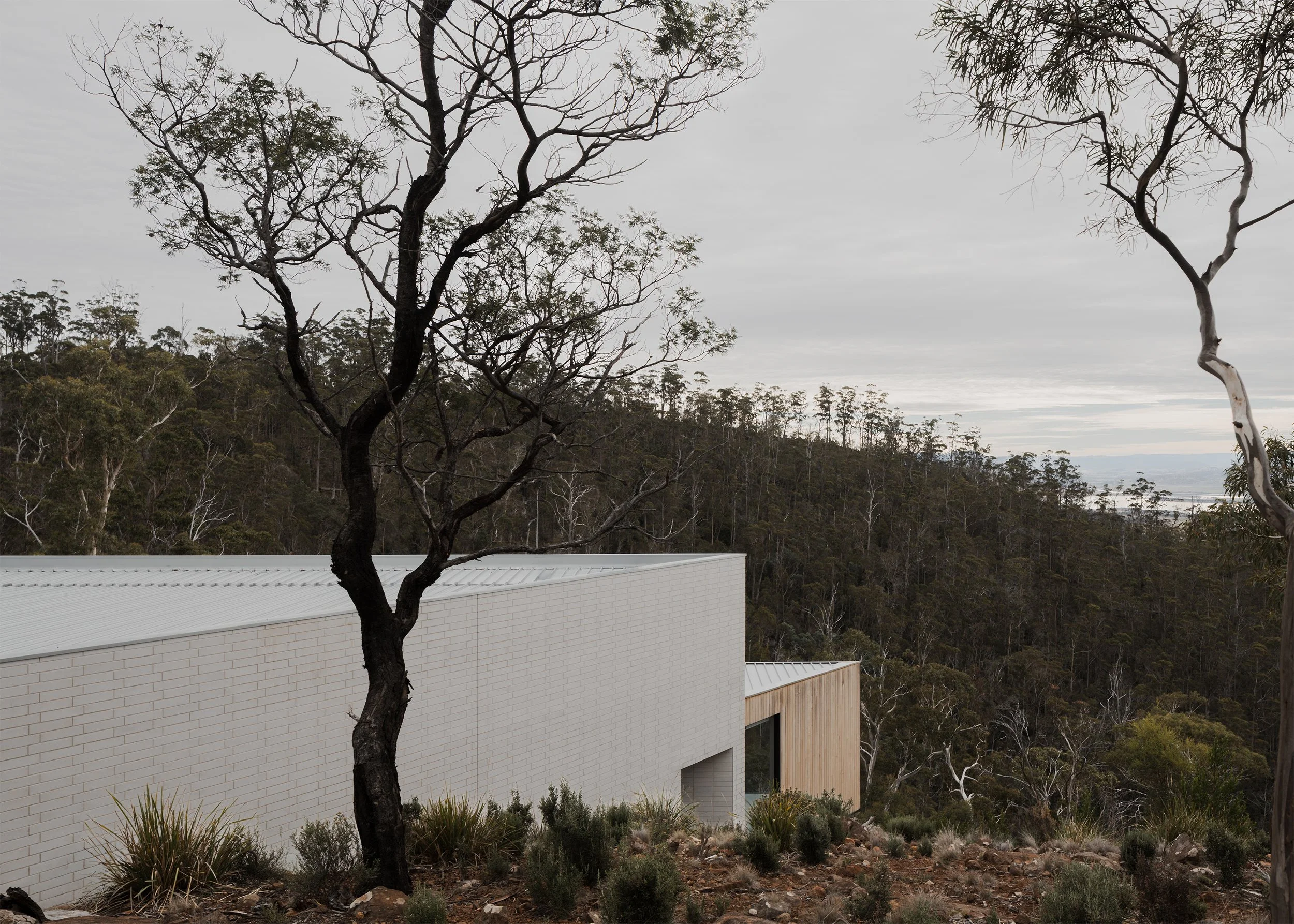
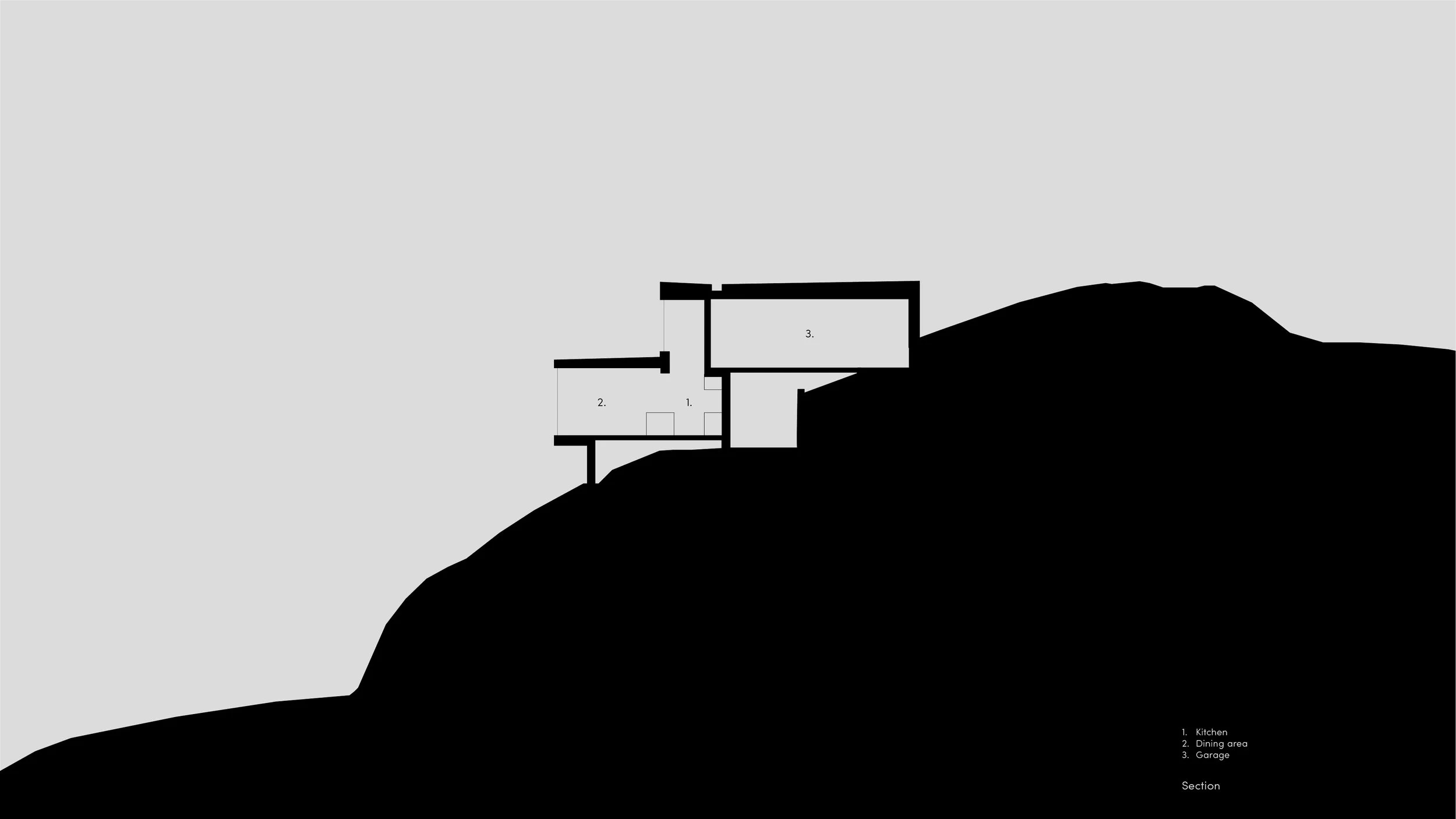
‘The house nestles into the side of the hill to provide protection, but then the lightweight structure projects out to take in the view.’
– Matt Williams, Matt Williams Architects
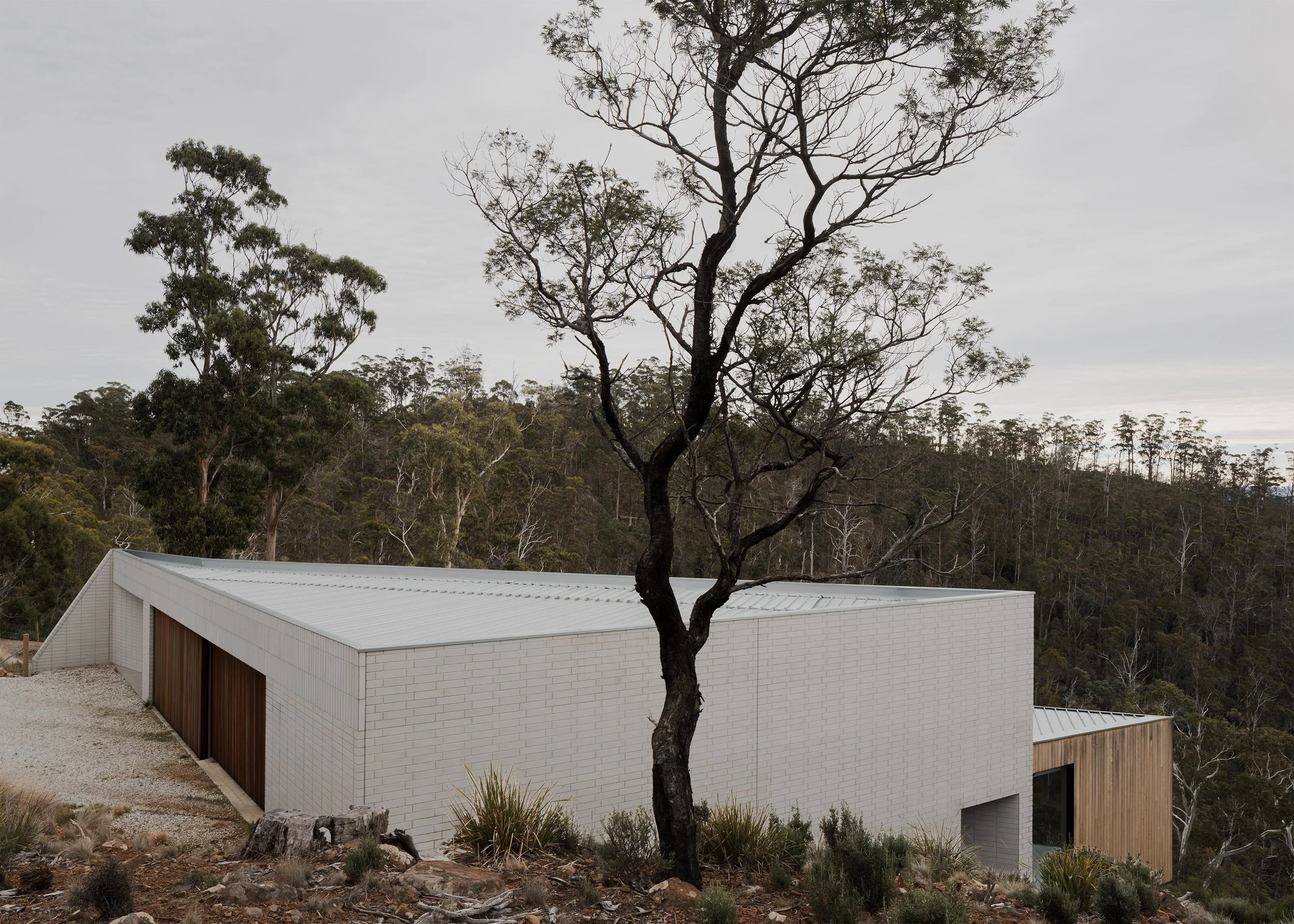
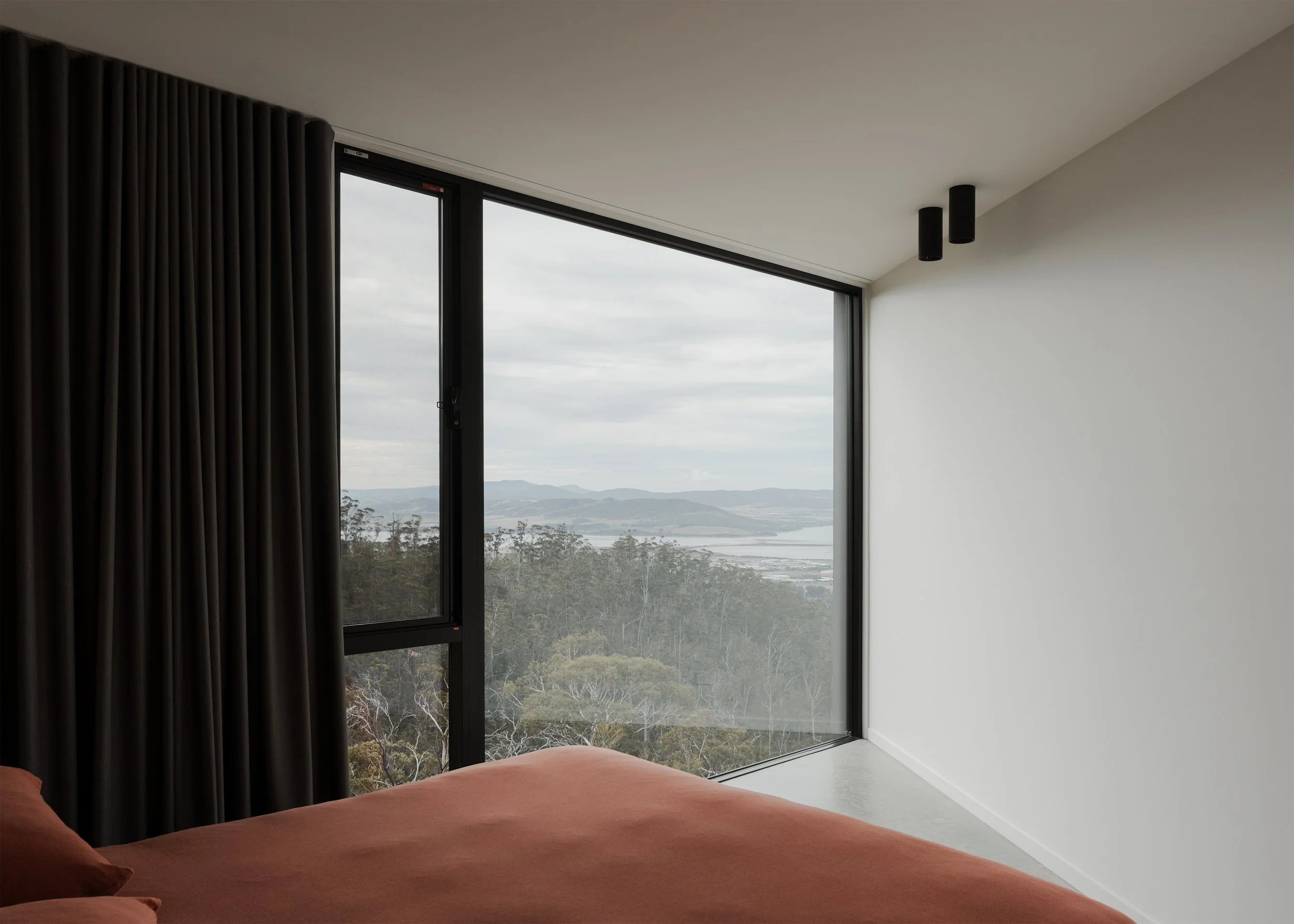
Eyrie House by Matt Williams Architects is a house on Mount Rumney, east of Hobart, shaped by a contradiction inherent in its position. From high on the mountain the site opens to Pittwater and south-eastern Tasmania, yet that same elevation leaves it exposed to strong winds, strong sun and Tasmania’s rapidly changing weather. Rather than resolve this tension through maximum transparency, the architecture establishes different degrees of enclosure and exposure. Matt Williams describes the idea simply: “The simplest way I can describe the house is prospect and refuge.”
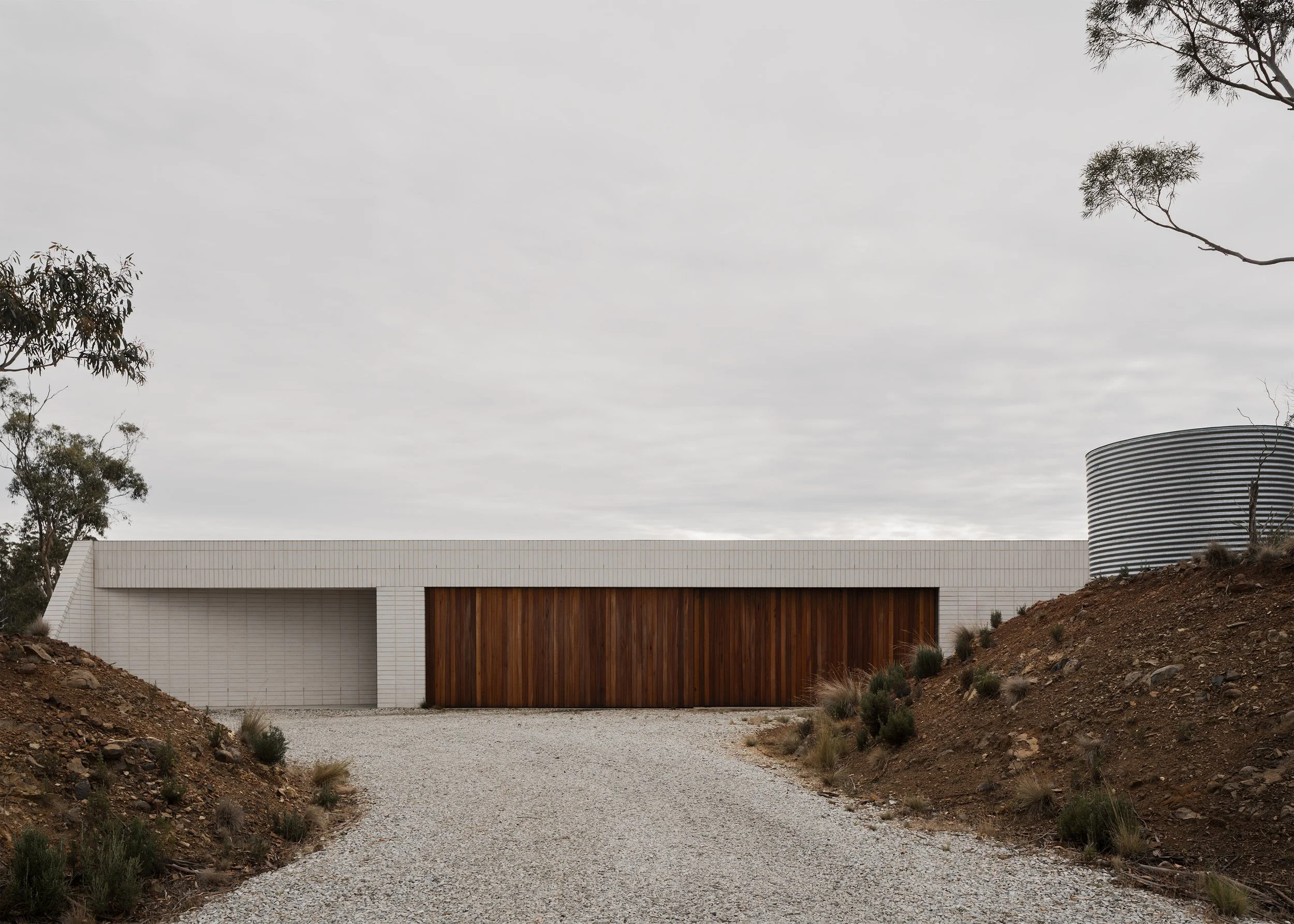
The steepness of the land complicated the proposition further. An existing cut lower on the slope initially appeared to provide an obvious place to build, and the architects tested it early in the process. It proved too far down the site to provide the access the owners required. One of them is a bricklayer whose 11-metre-long work ute needed secure daily parking, while the surrounding forest introduced additional requirements around bushfire access and vehicle movement.
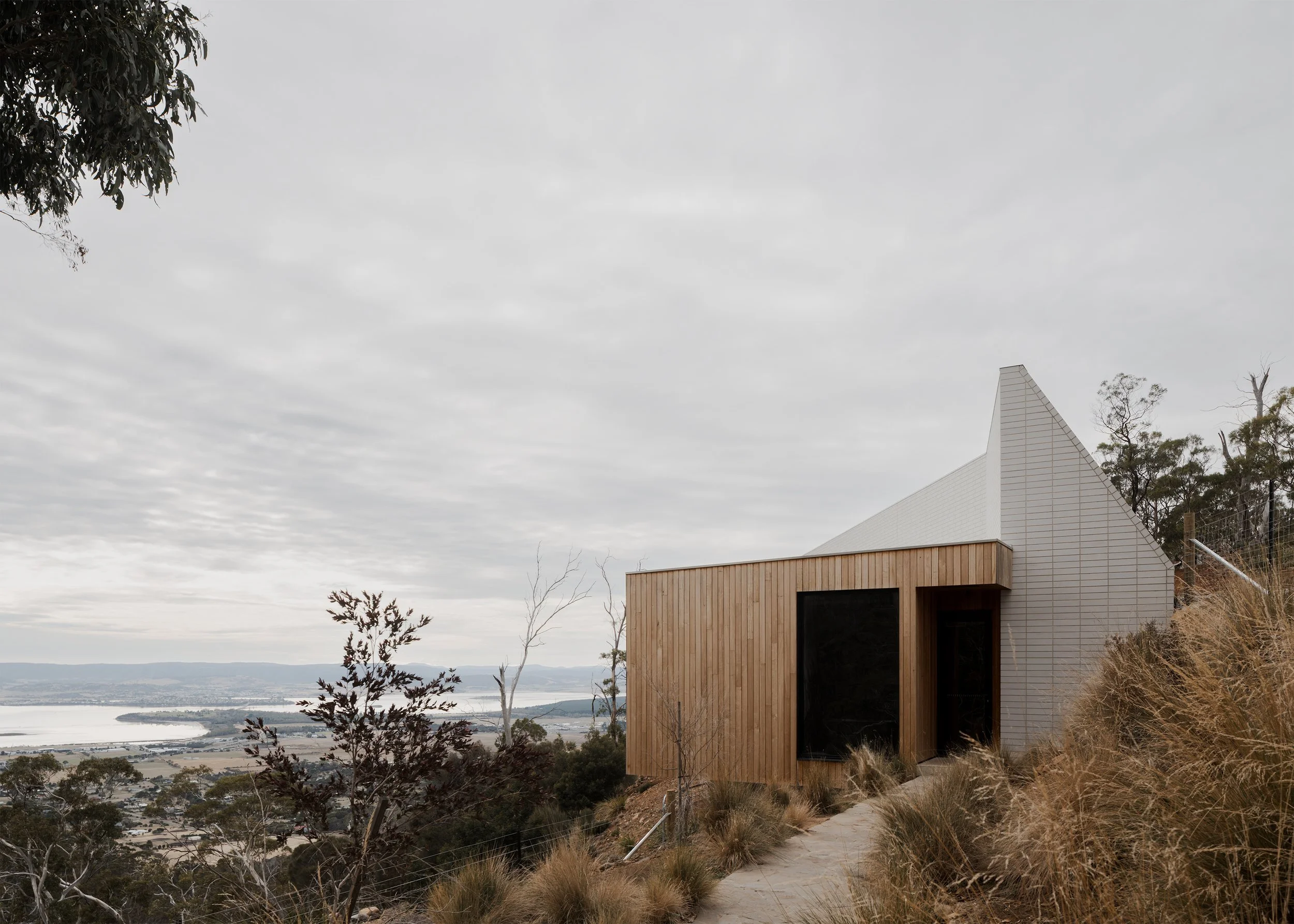
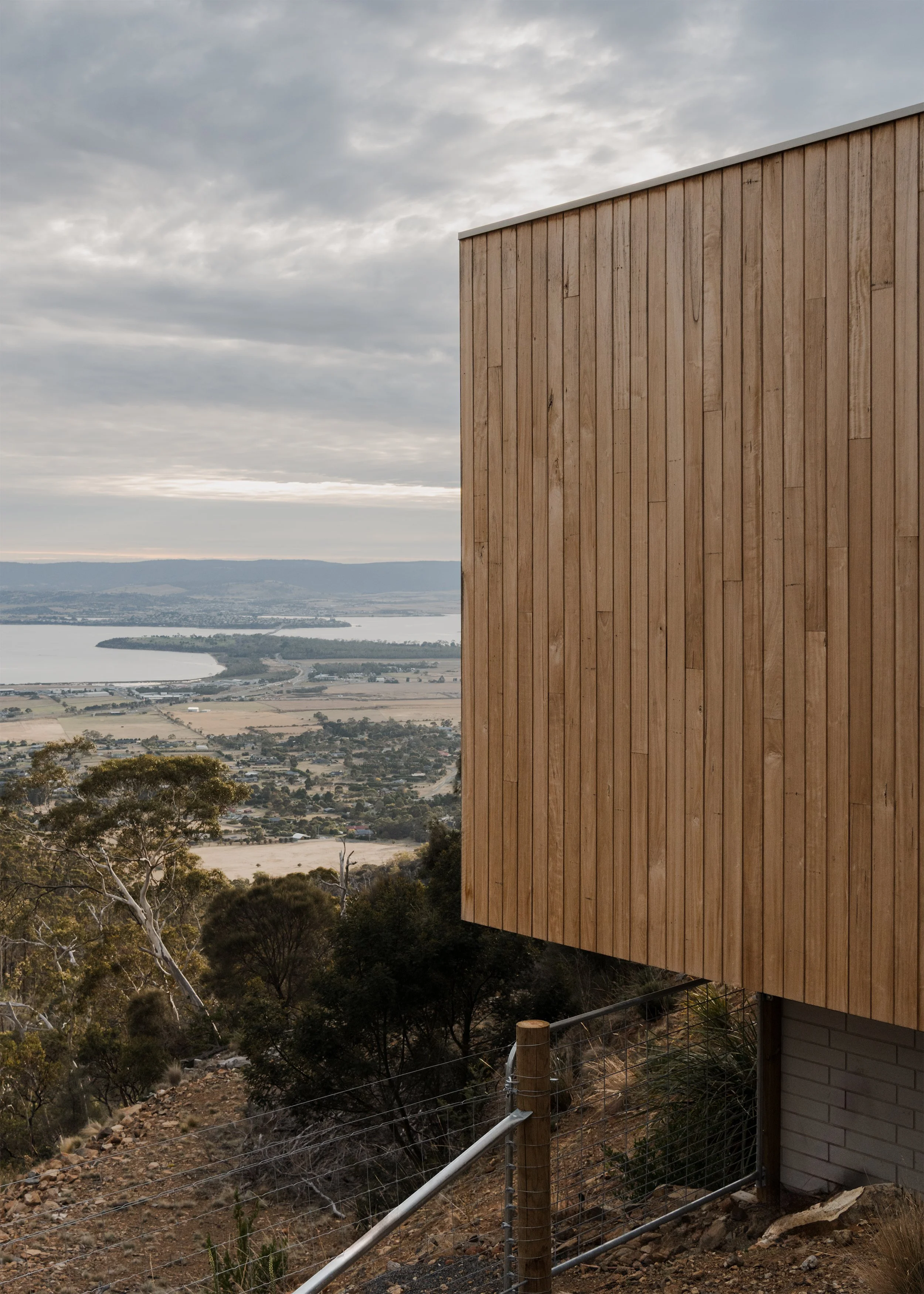
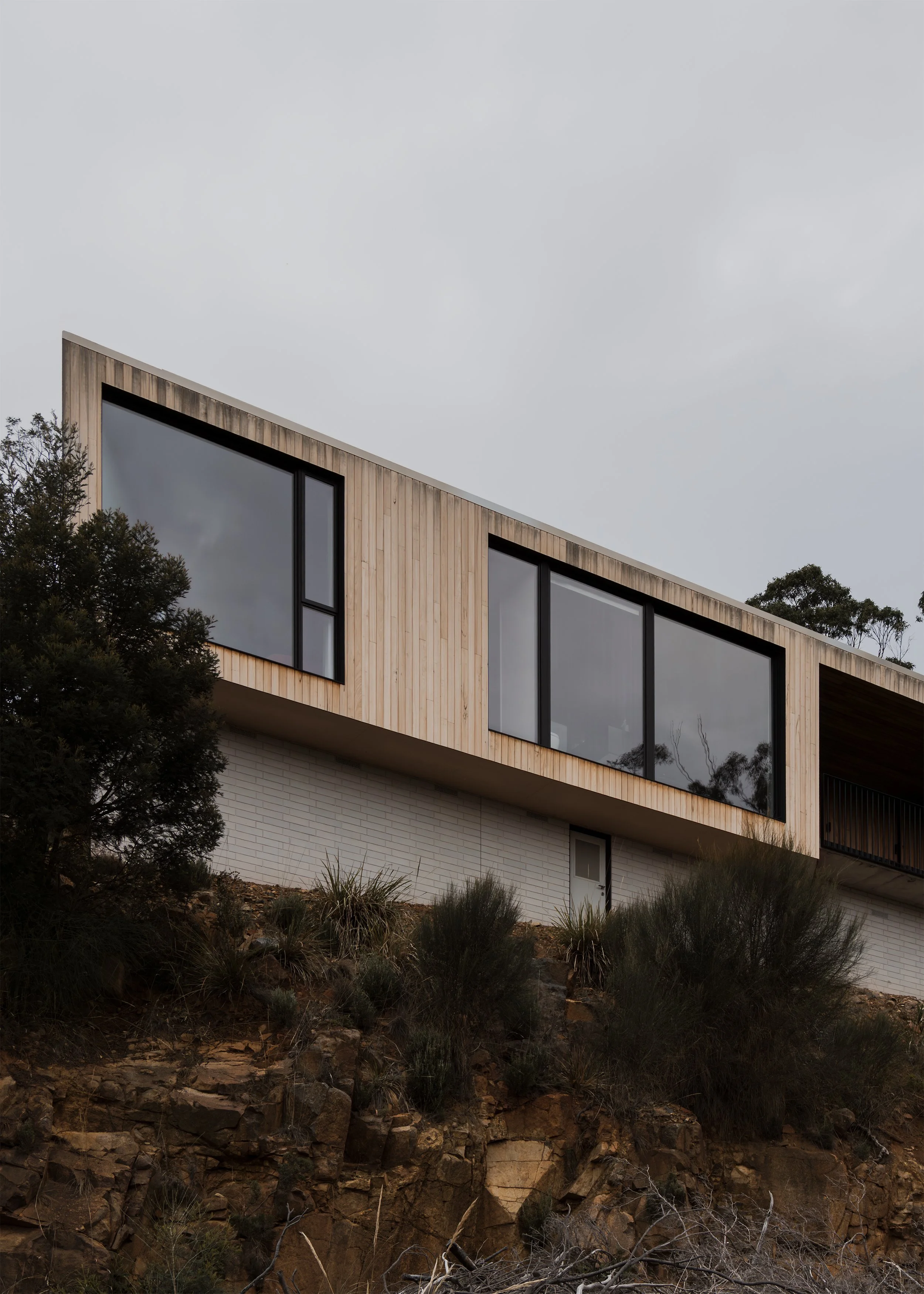
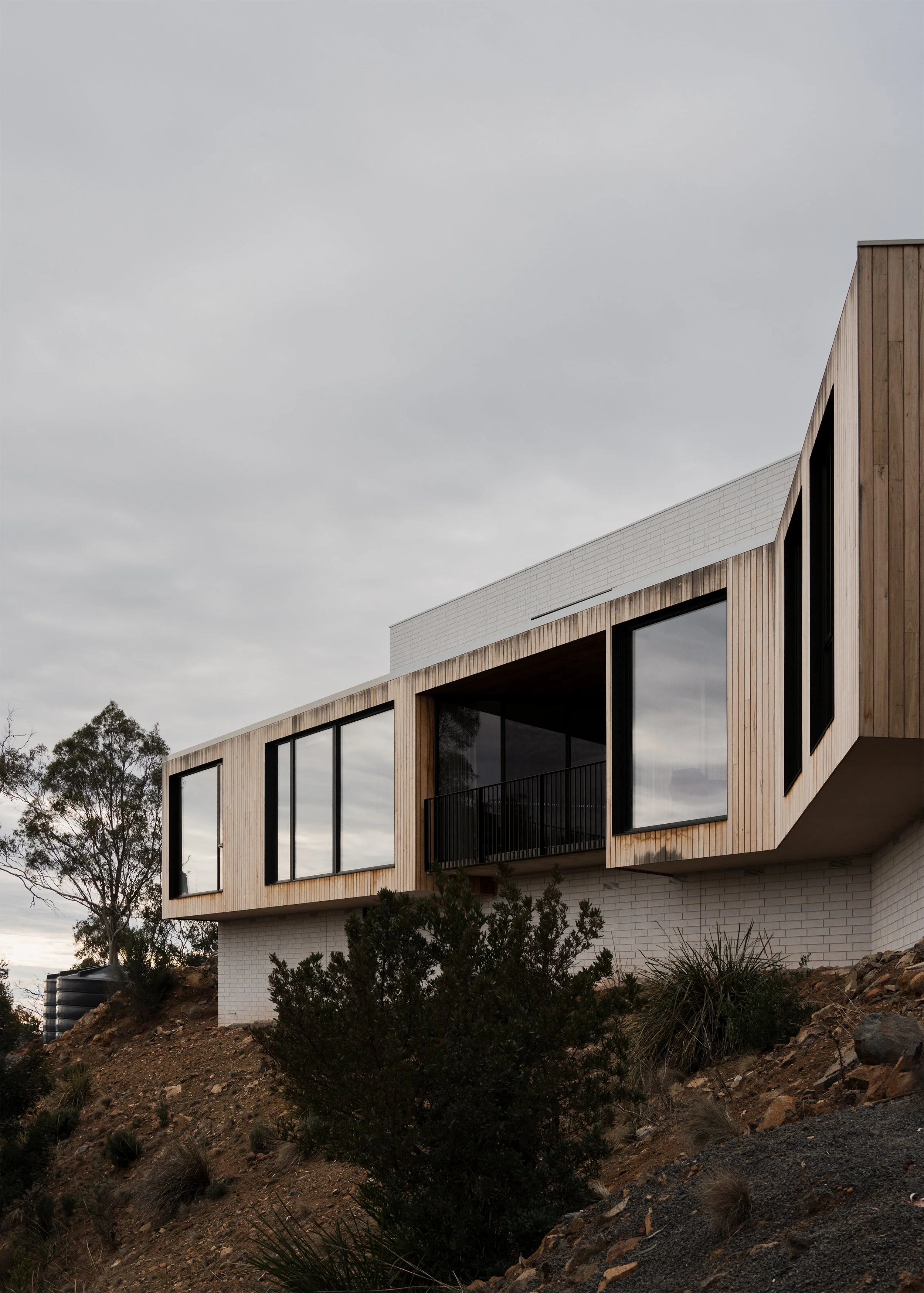
Moving the house uphill resolved much of this problem. Rather than undertaking the extensive clearances that turning areas for fire vehicles could have demanded lower on the slope, the new position gave the owners easier access from above. It also separated the garage from the primary living level. What began as a practical consequence became a spatial opportunity: a vertical volume interrupts an otherwise strongly horizontal house and makes the descent into the dwelling part of the arrival.
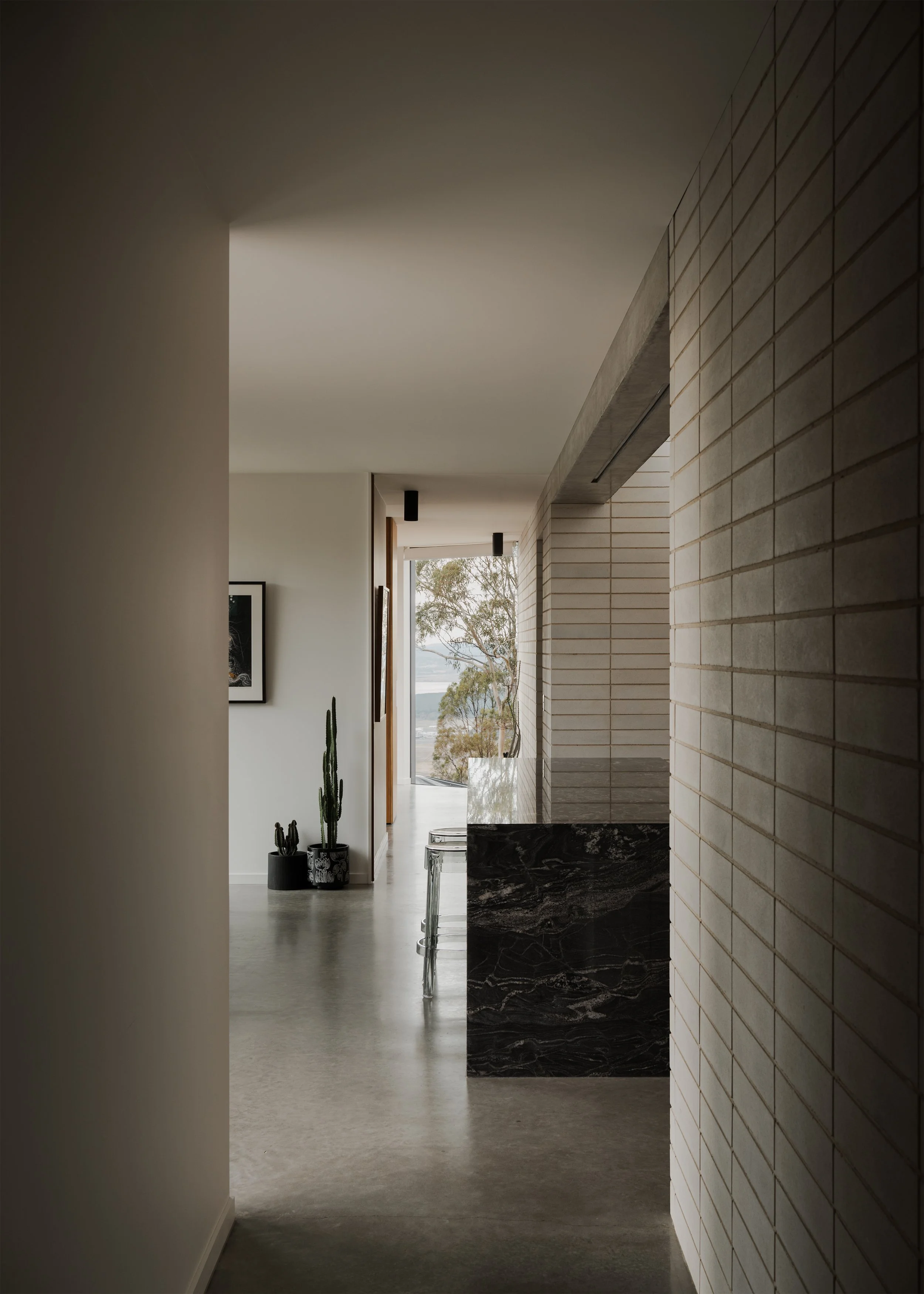
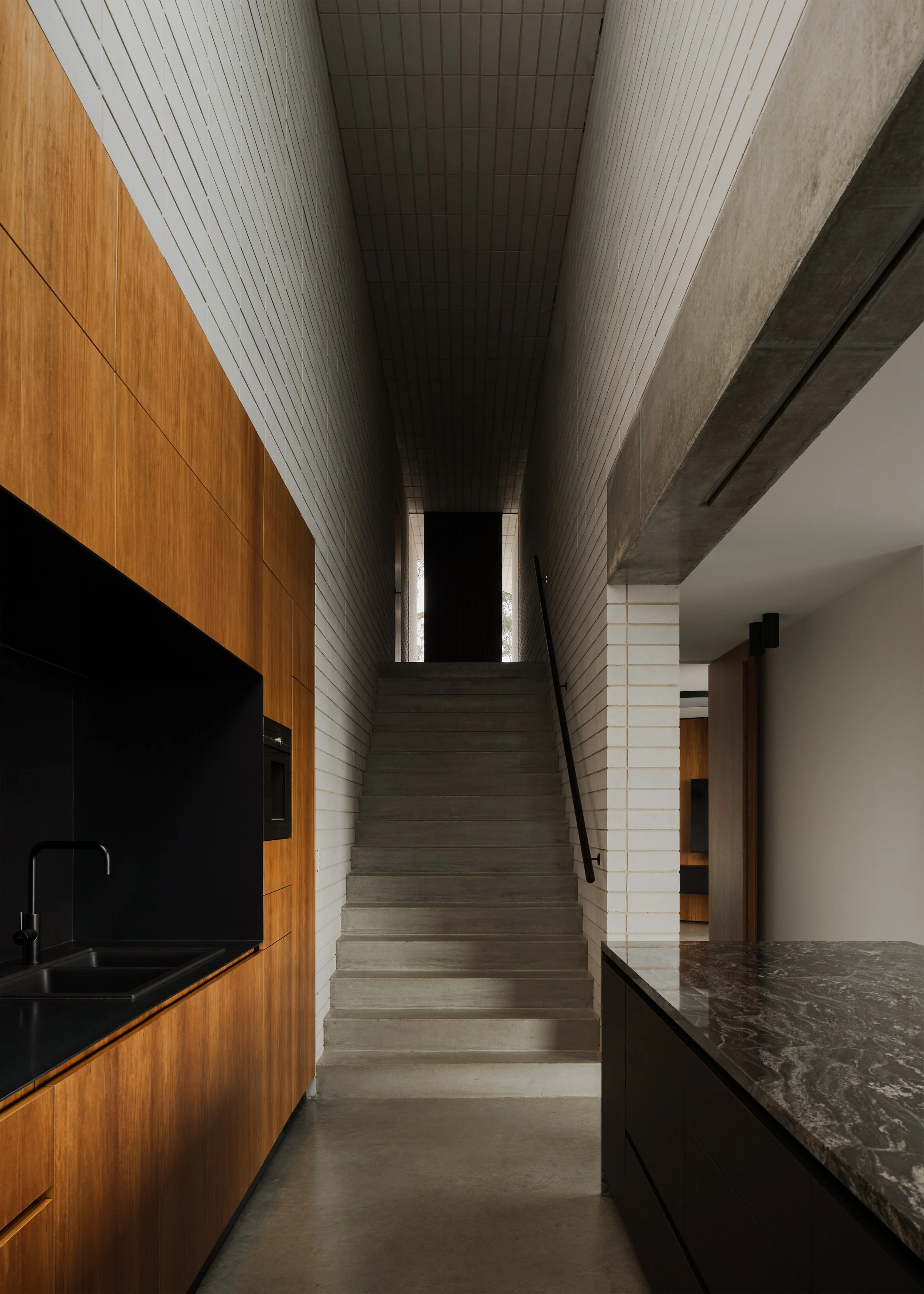
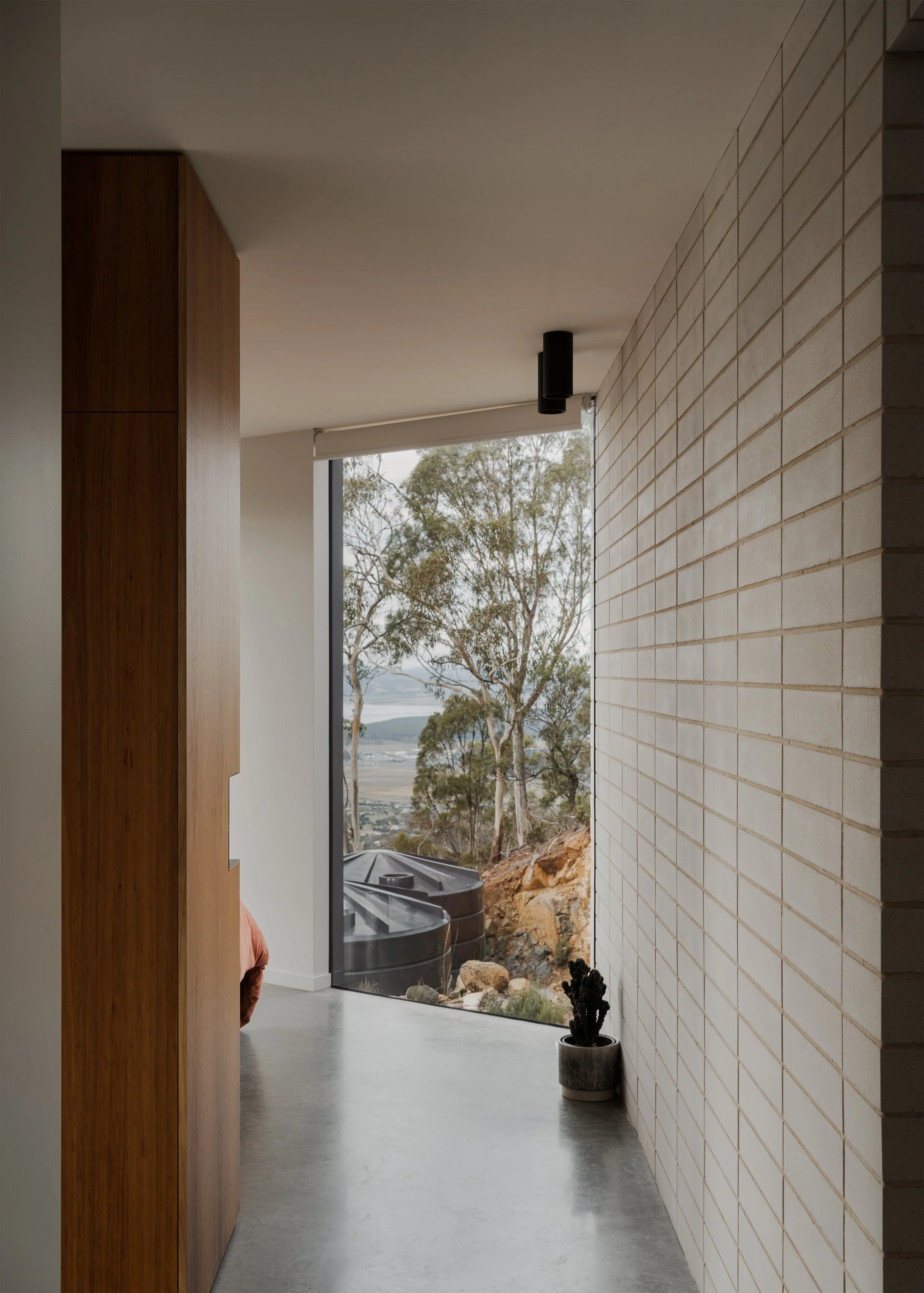
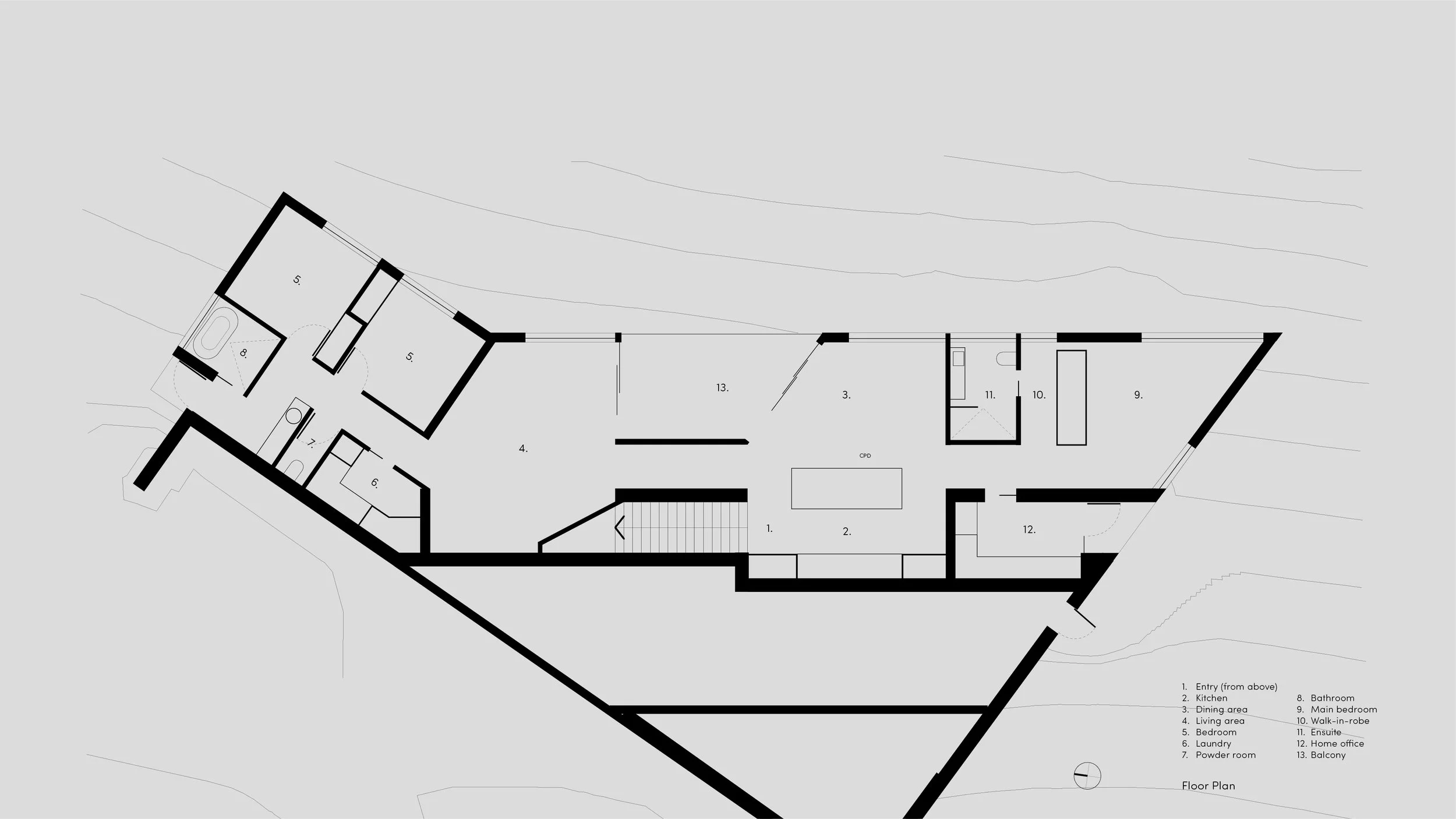
The architecture initially withholds what the site appears to promise. From the road, the arrival elevation is deliberately closed for privacy. Inside, the entry void remains enclosed, its blockwork surfaces illuminated by a single opening at the far end. Only after descending does the main kitchen, dining and living space open across the landscape.
“This enclosure in the entry heightens the experience of the view opening up as you arrive on the main level,” Williams explains.
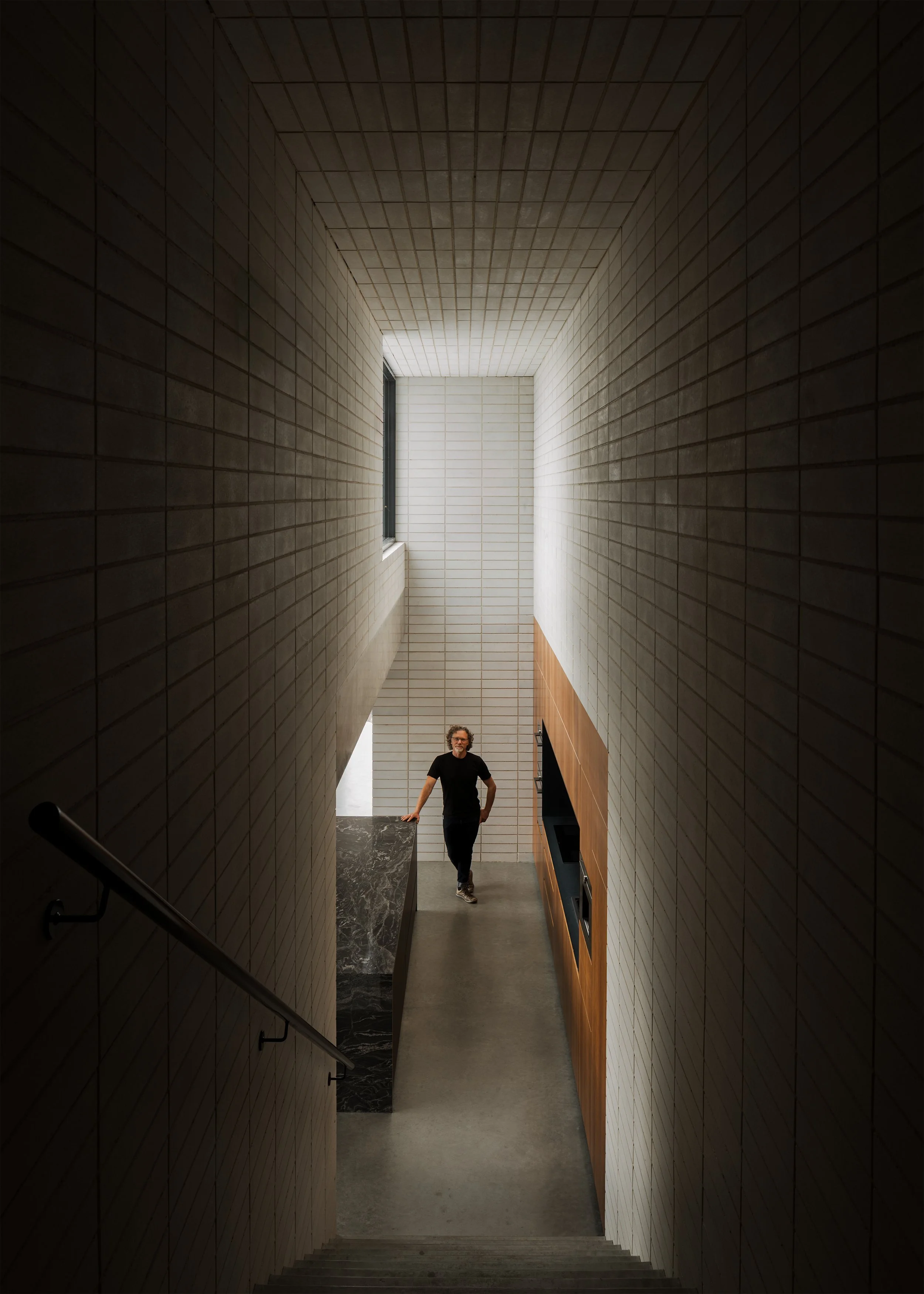
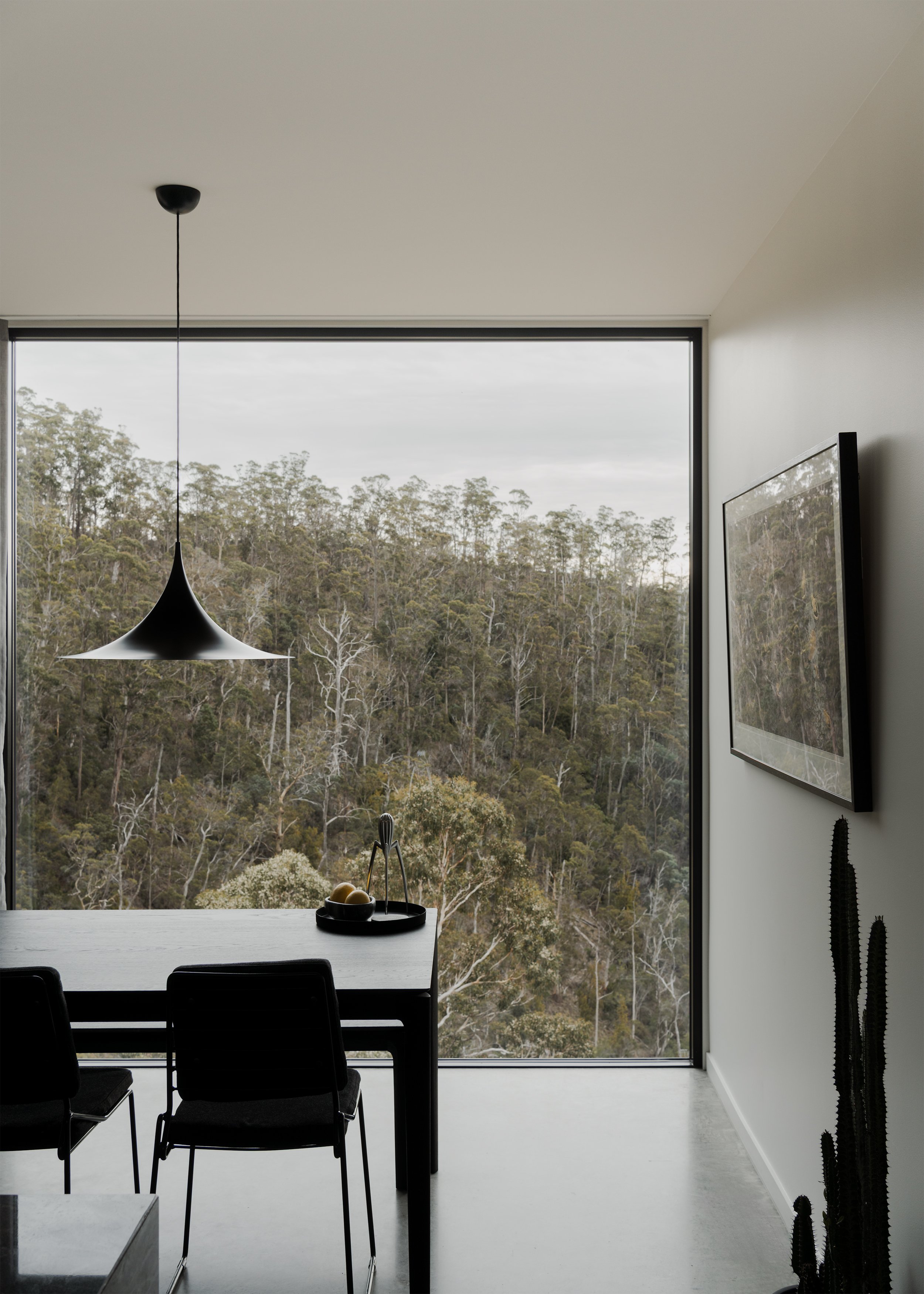
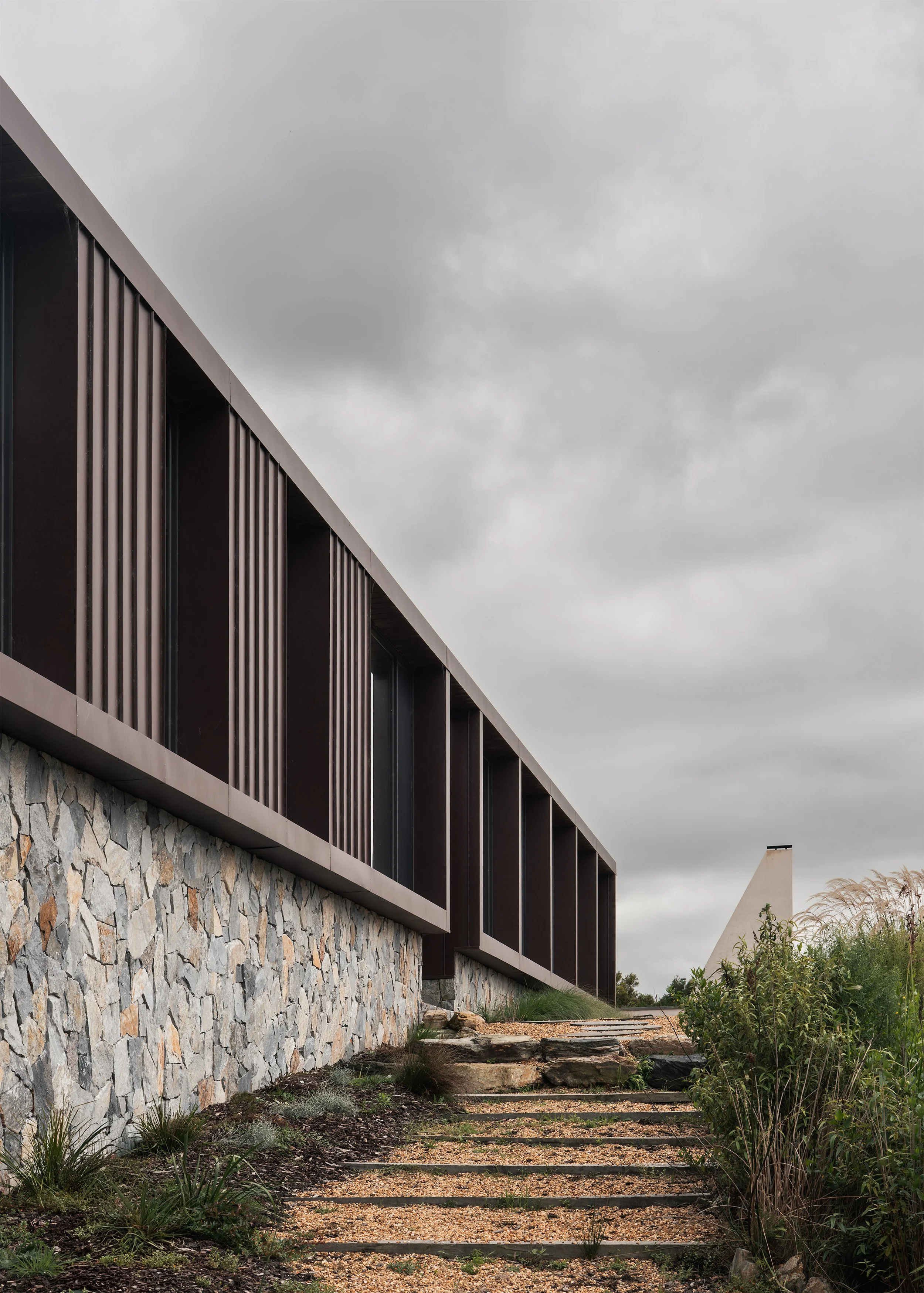
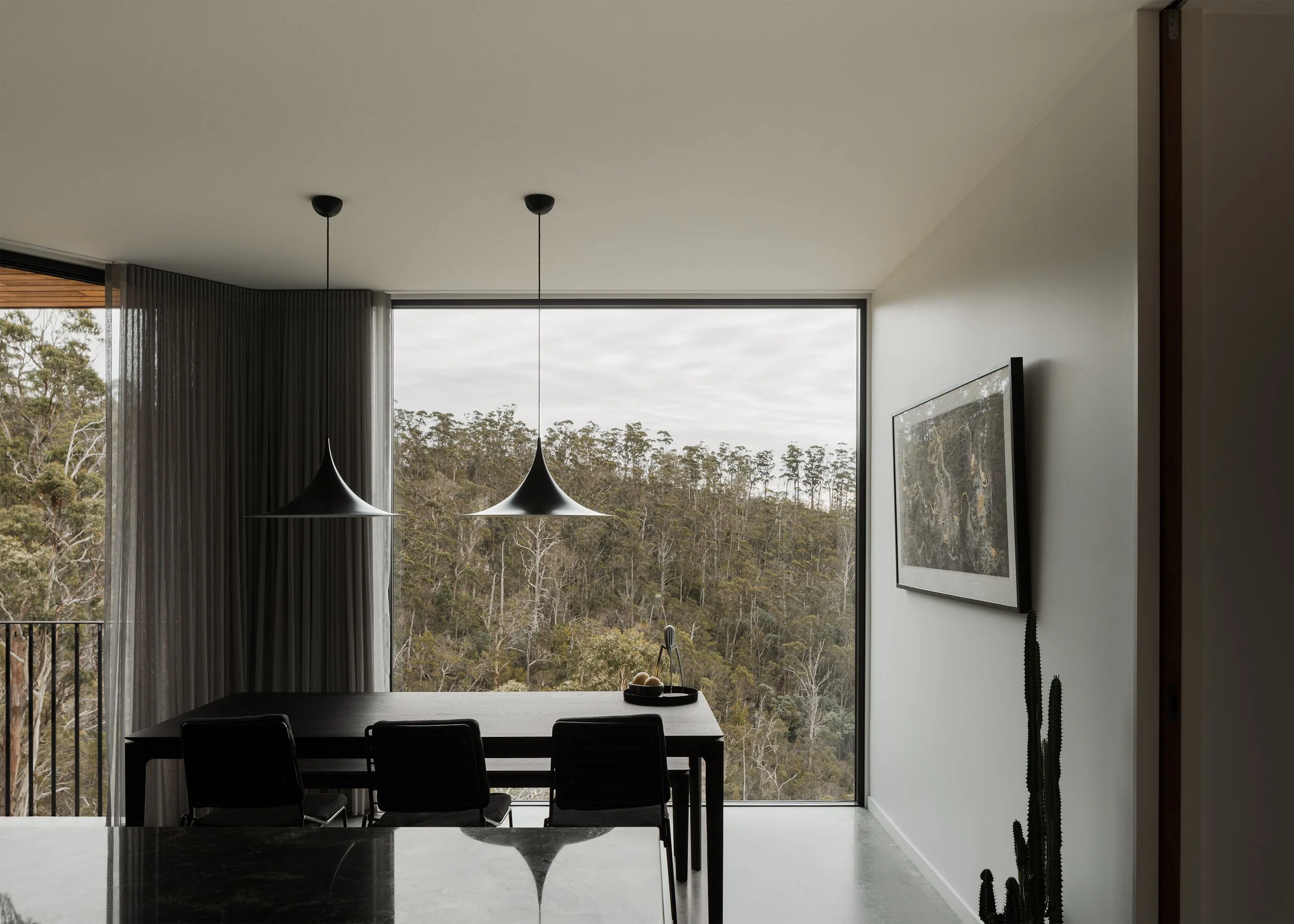
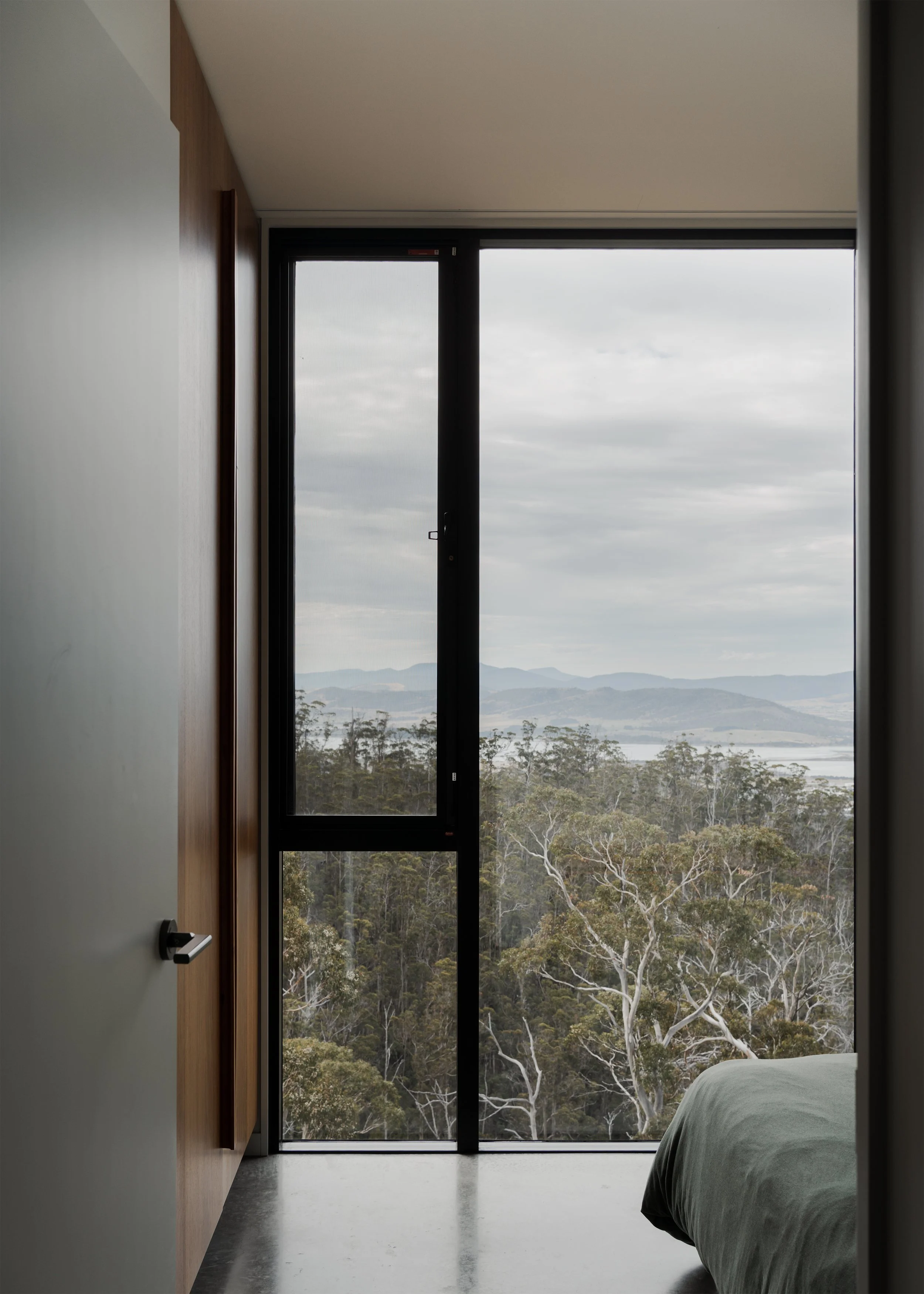
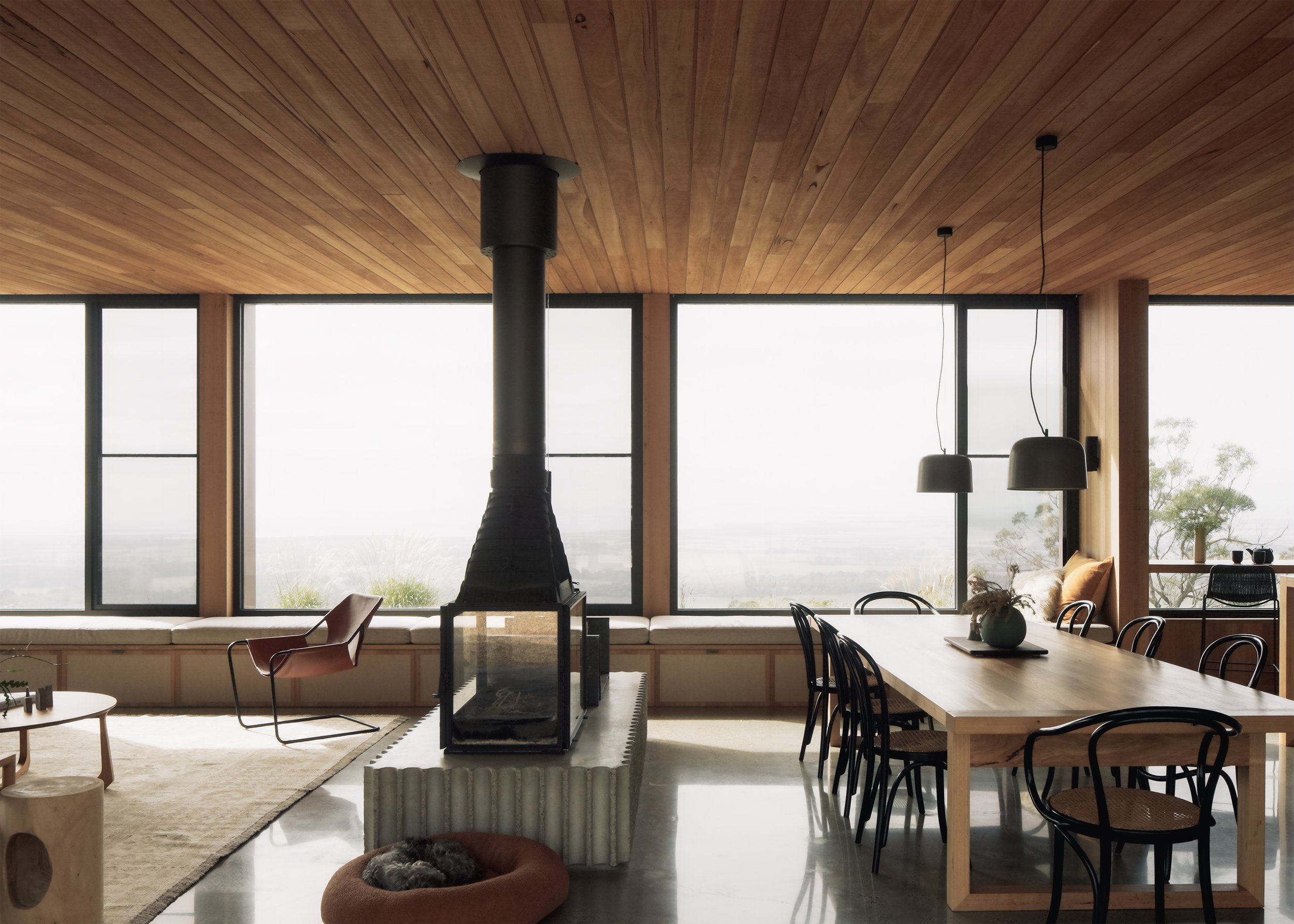
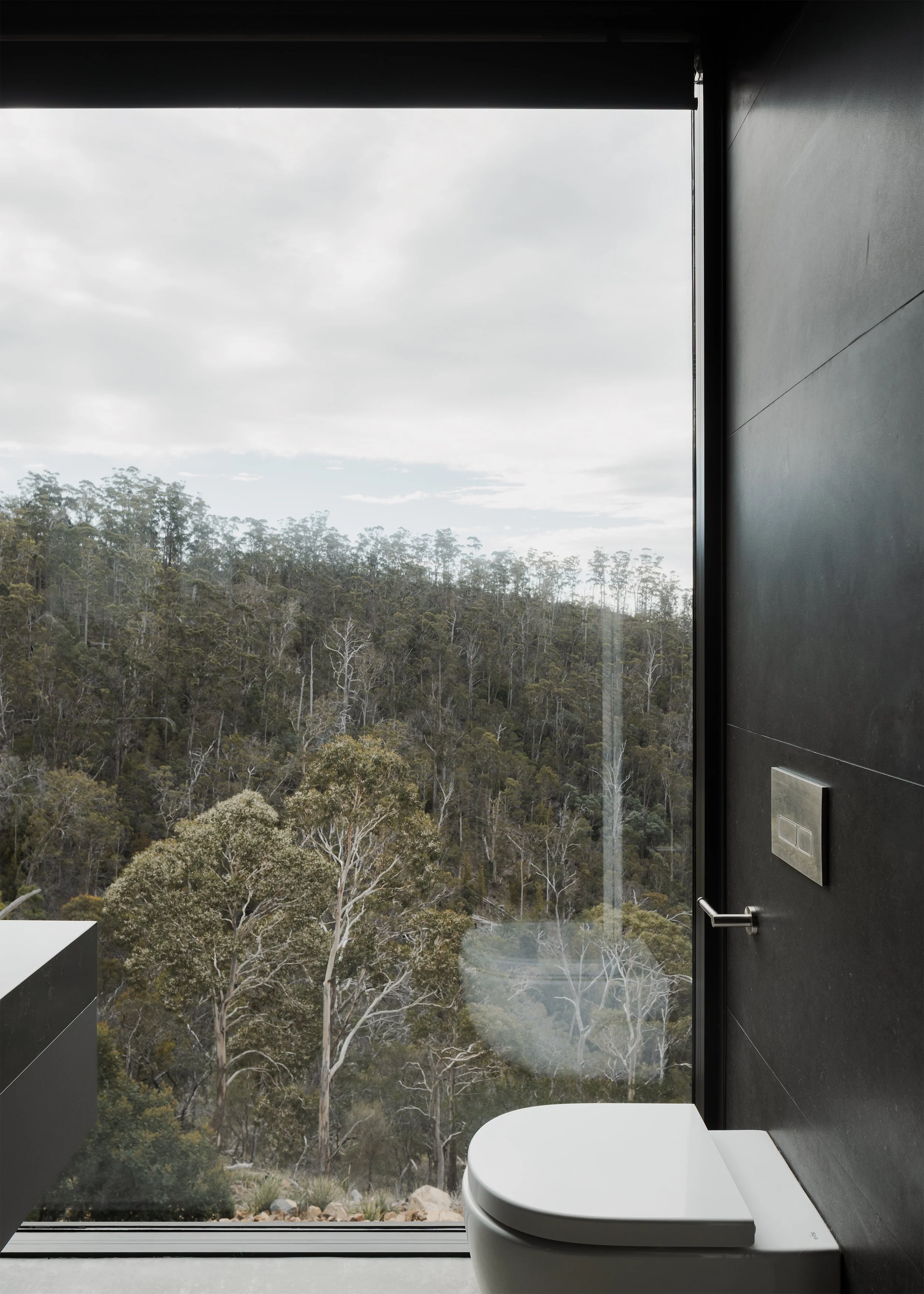
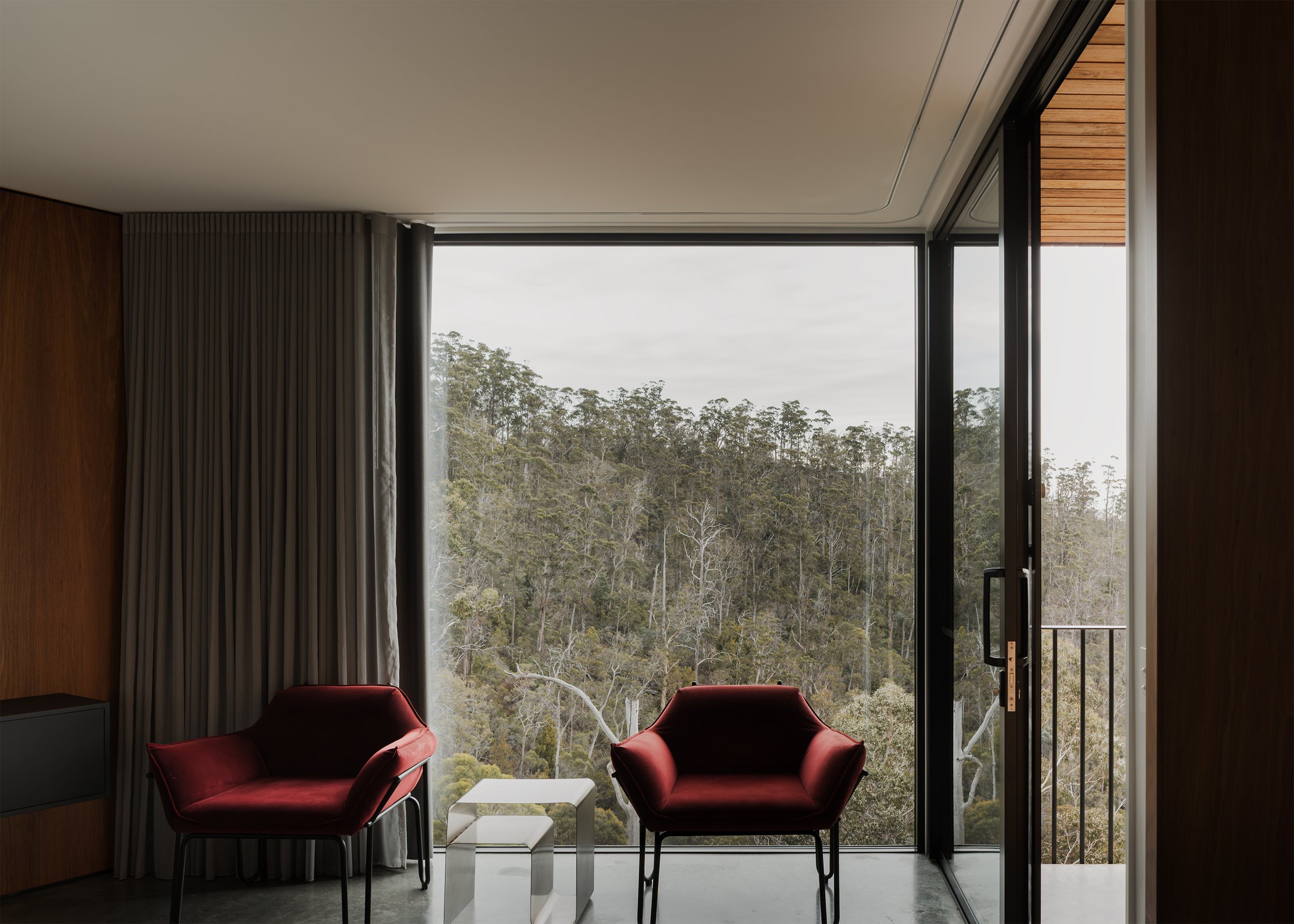
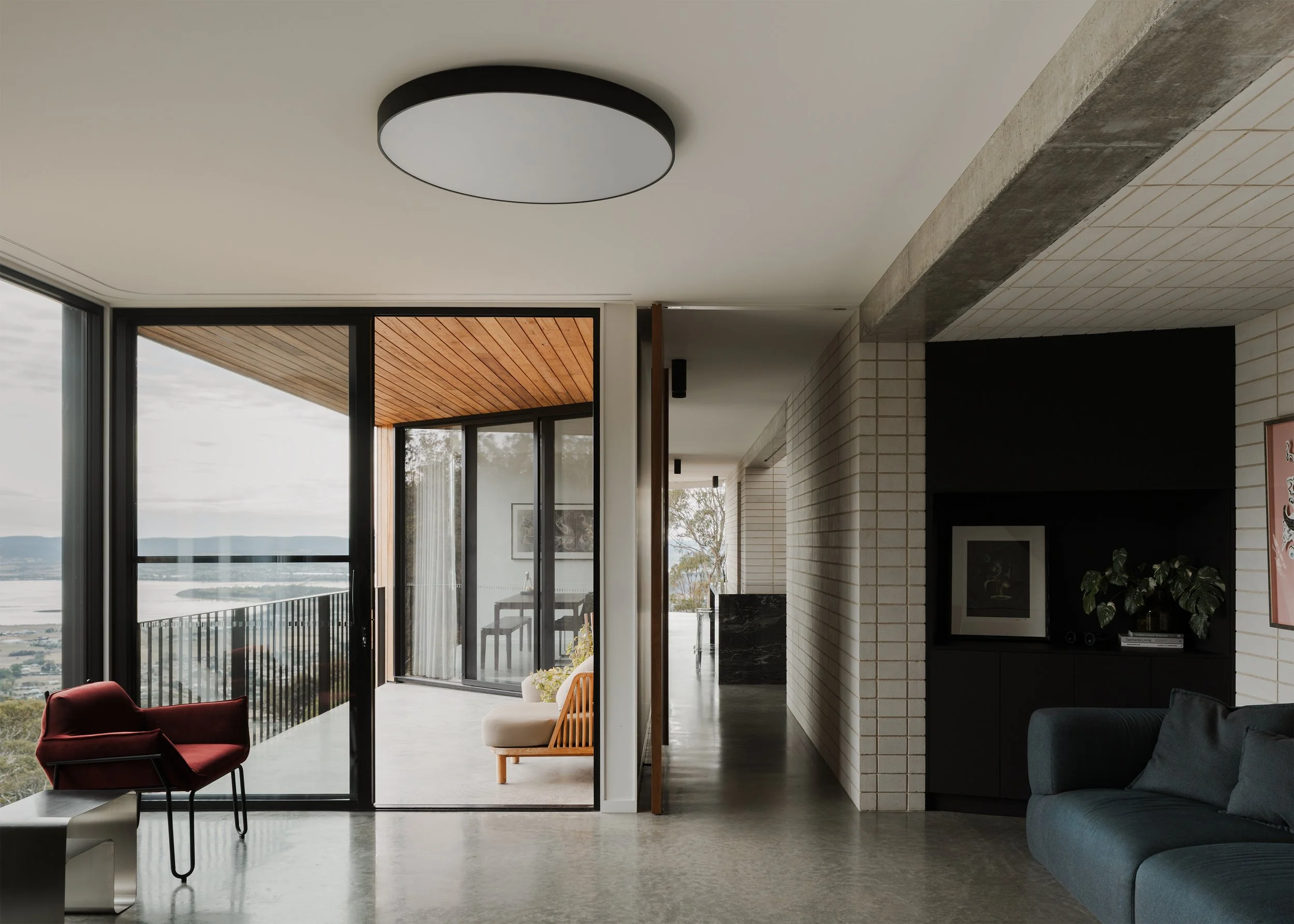
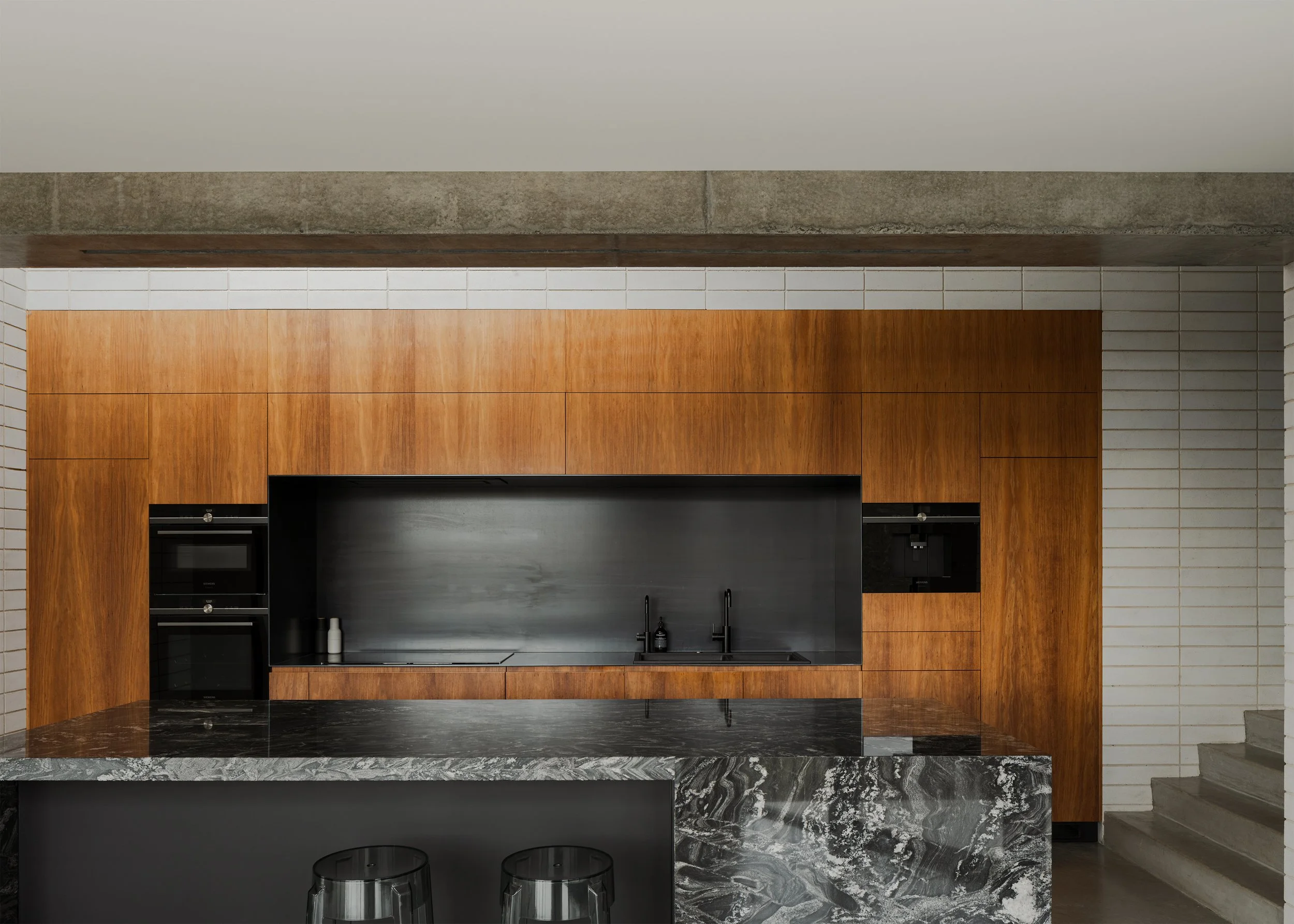
That sequence establishes a principle repeated throughout the house. The floor plate is long and shallow, with substantial masonry along its rear edge and expansive glazing facing north and toward Pittwater. The kitchen is recessed so the glazed line can continue across the dining area, while the outlook remains available from each room. Openness is therefore concentrated where it has purpose rather than applied uniformly.
On such an exposed site, that extensive glazed edge is also part of the building envelope. Rylock Windows & Doors was selected for the project, with Williams identifying the framing system’s response to exposure, wind pressure and the bushfire context as important to maintaining the large areas of glazing. He also connects the windows to another aspect of retreat: acoustic comfort, describing a house quiet enough for the sounds of the surrounding bush to be heard.
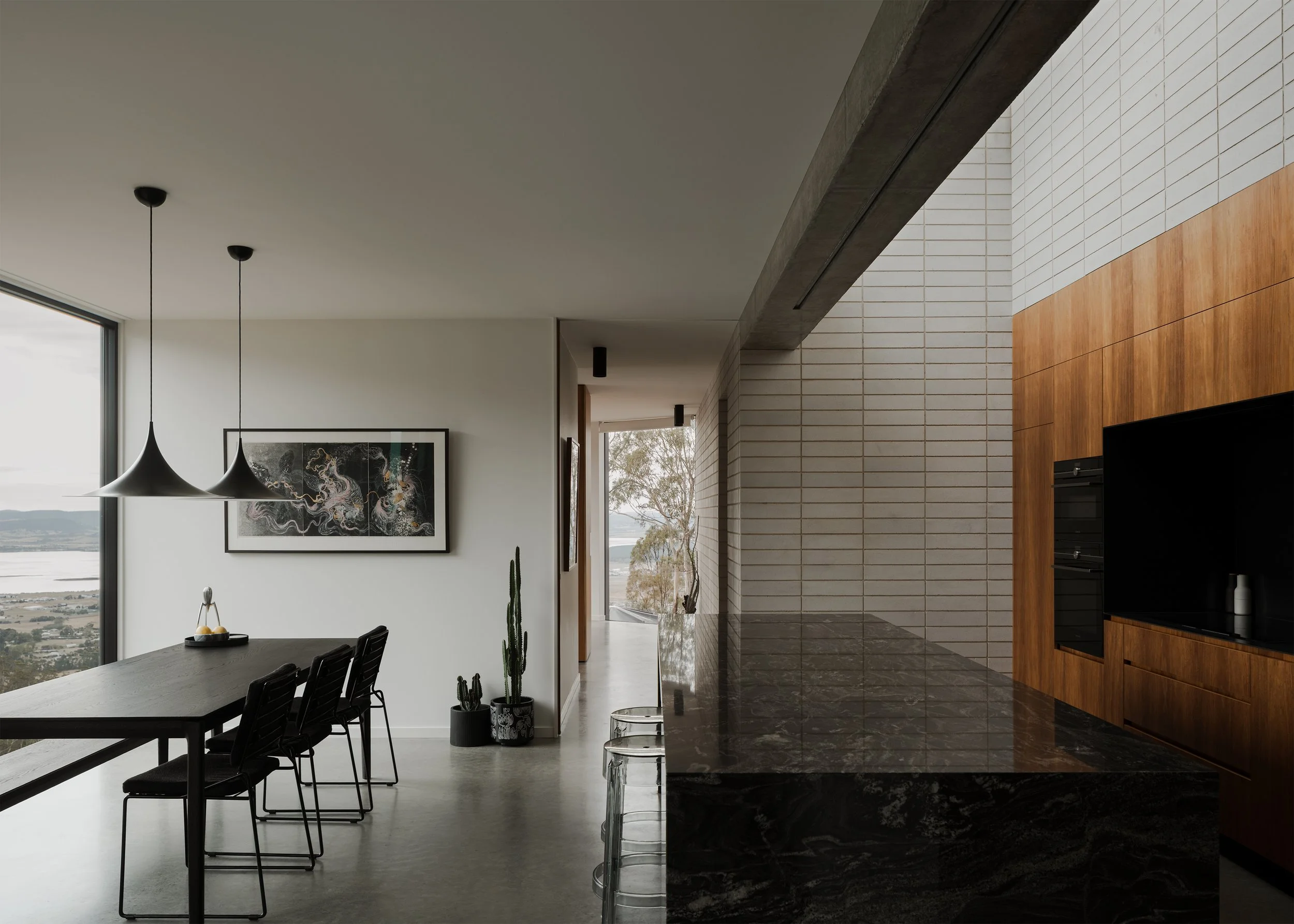
The masonry performs an equally important role on the opposite side of the plan. Concrete block replaced an earlier intention to use brick because its dimensional consistency suited the precisely ordered construction. Its matte finish also responds to Tasmania’s strong light, softening and evening illumination across the interior. Positioned at the rear of the living spaces, the mass receives low winter sun while being protected from summer sun and assists in moderating internal temperature.
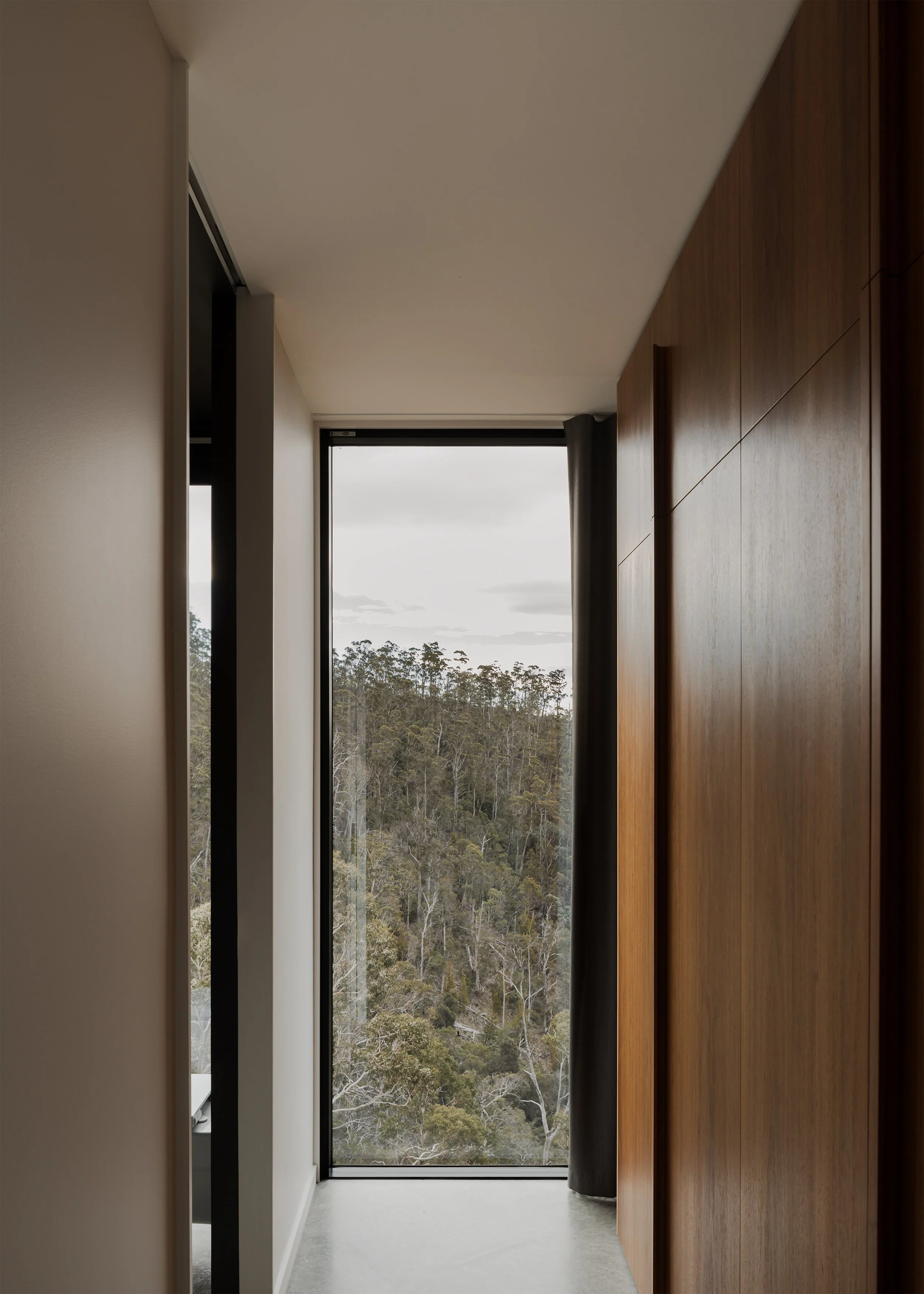
Yet the strongest reading of Eyrie House is spatial rather than simply material. Williams argues that darkness and enclosure are not conditions a home should automatically eliminate. “If it's a glass box, you've got one space. Essentially, you've got one experience.” Against the exposed edge of the mountain, the ability to move between darker and brighter rooms, compressed and expansive volumes, masonry and glass gives occupants different ways of inhabiting the same site.
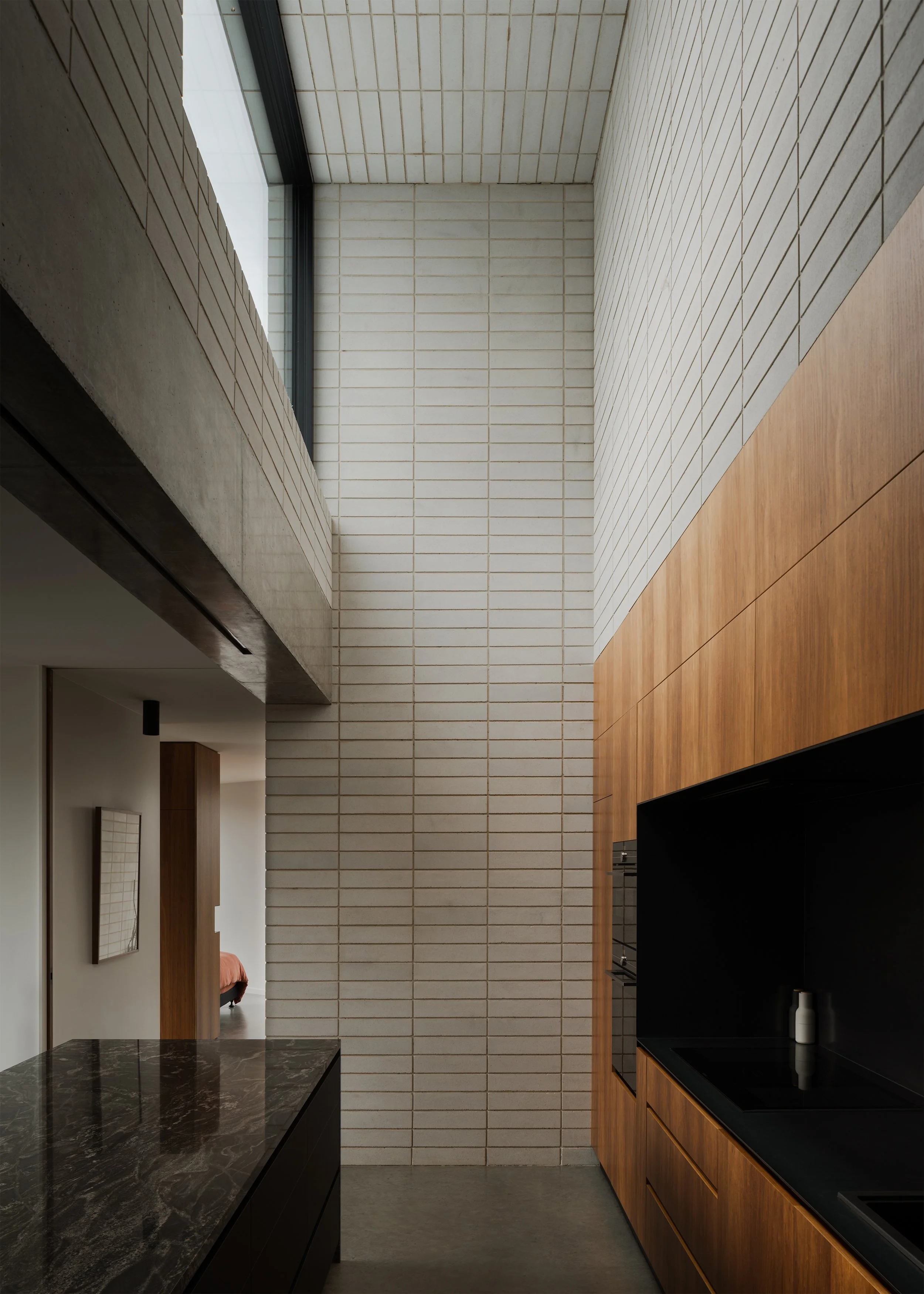
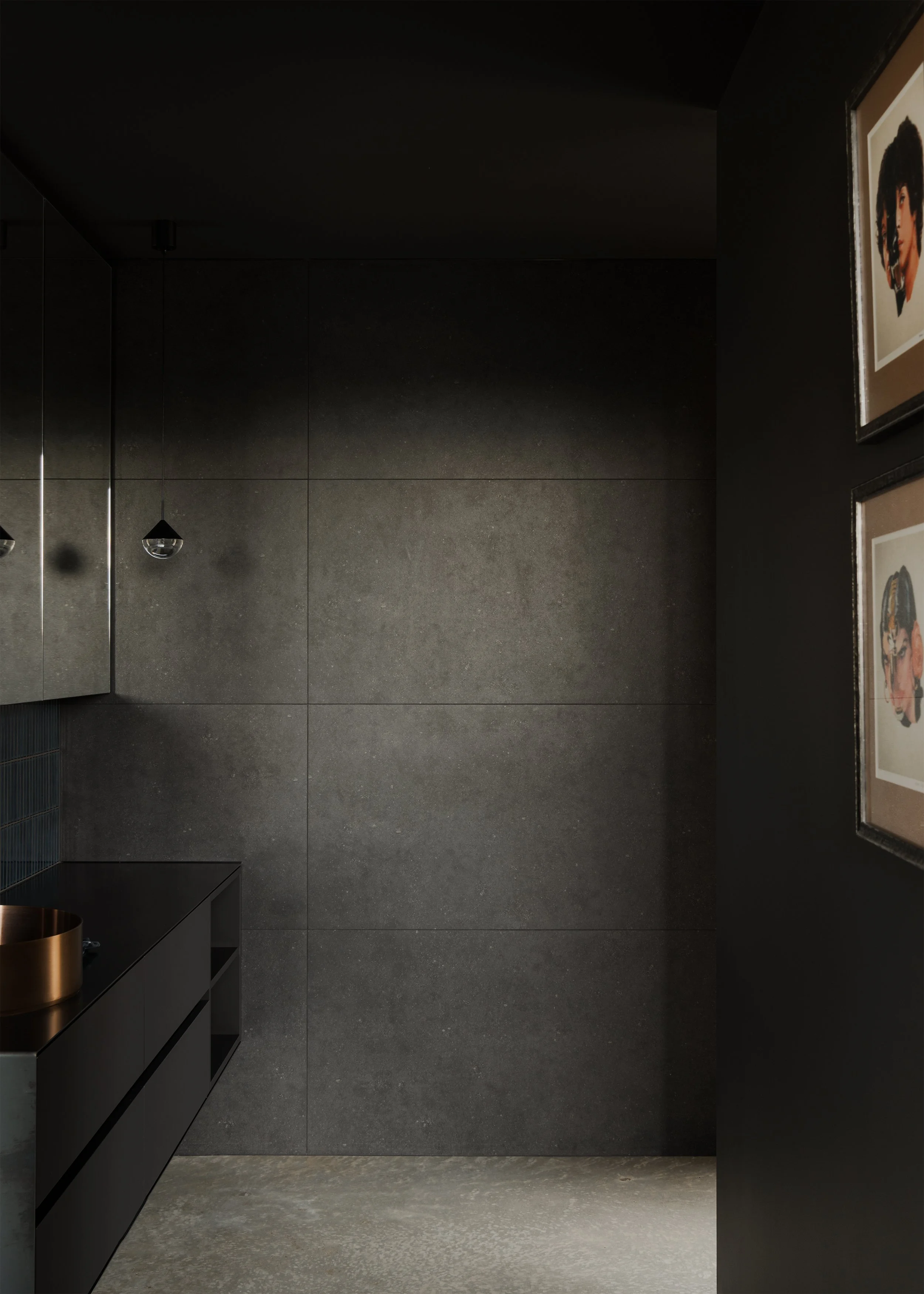
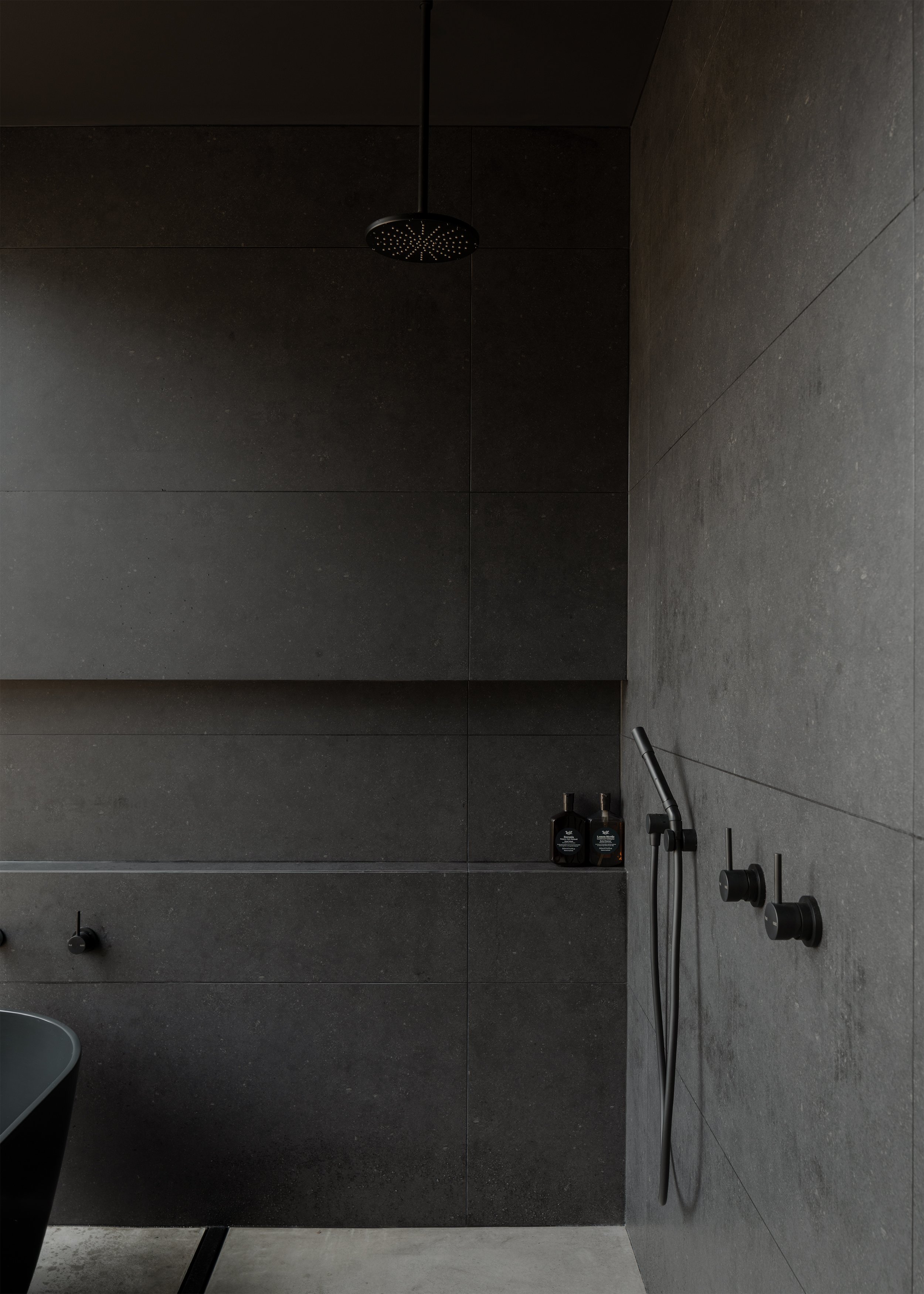
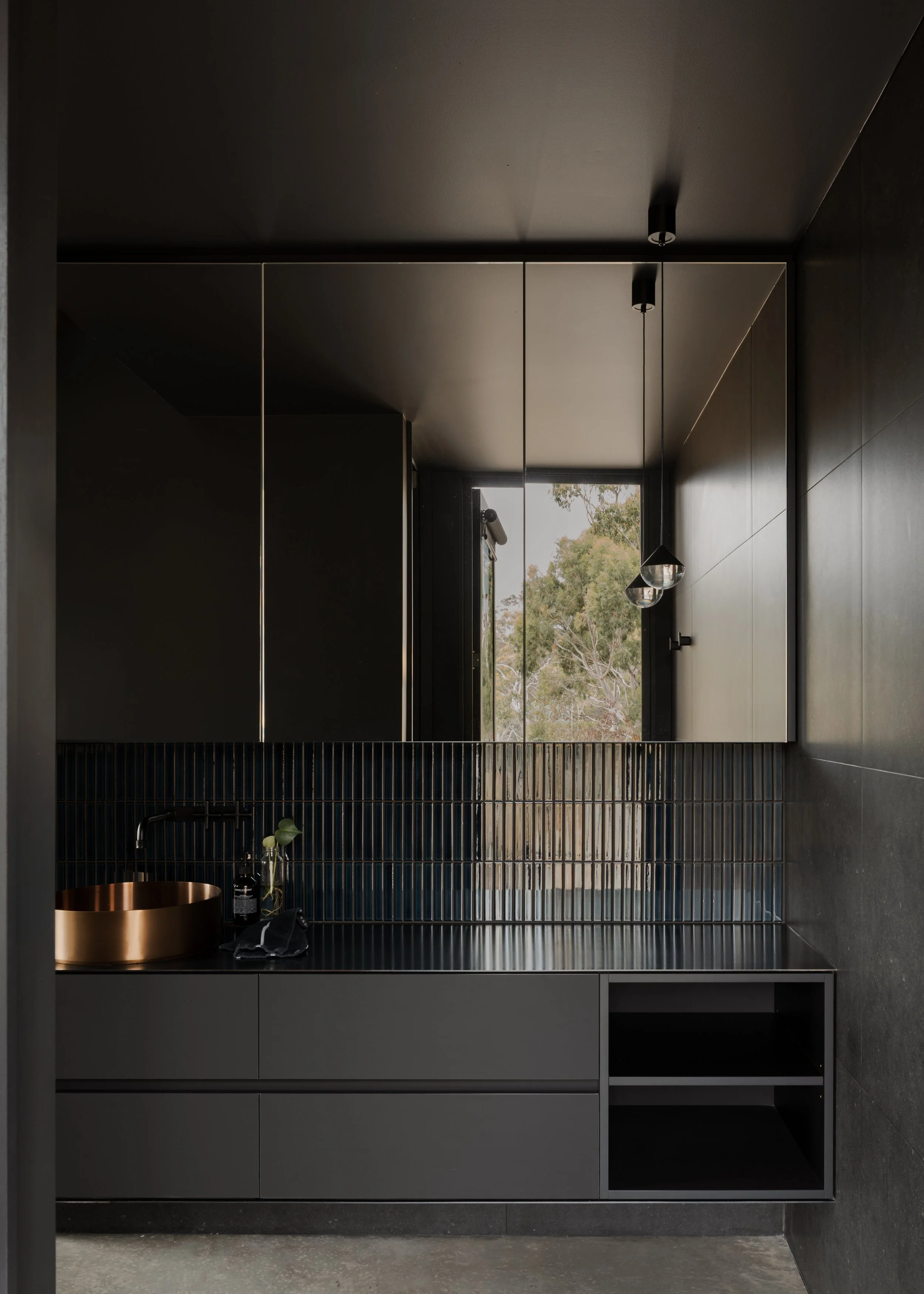
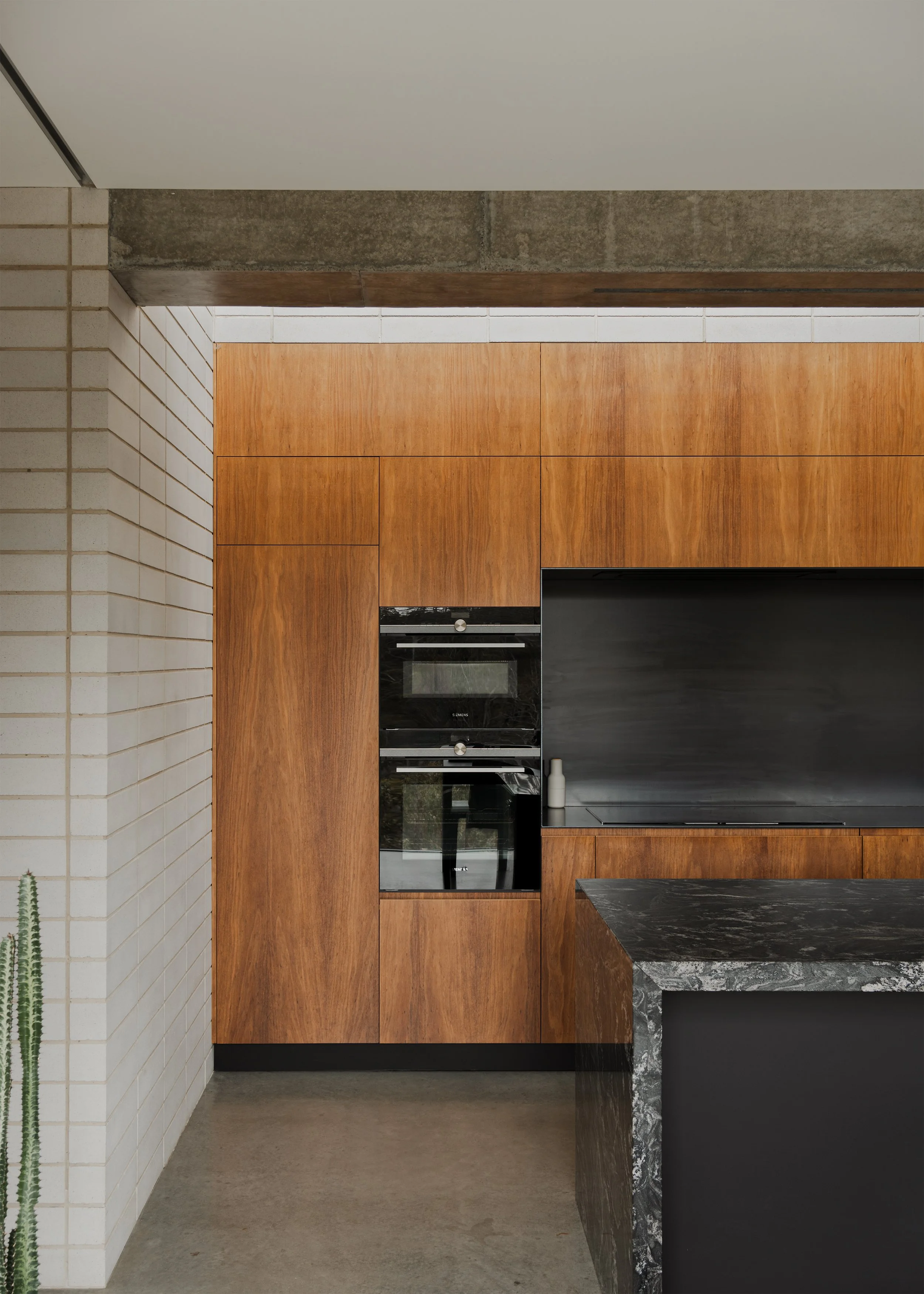
A deliberately limited palette reinforces this hierarchy. Blockwork, concrete floors, glass and dark joinery reduce visual competition so that the architecture can recede behind the weather and outlook. The clarity is not an end in itself; it allows the differences between spaces to become more legible.
Tasmania’s changing conditions remain vividly present on Mount Rumney. Eyrie House does not attempt to make those conditions disappear. Instead, it provides what Williams calls “both the protective base and the vantage point to experience it to its fullest.” Its simplicity lies in that balance: enough enclosure to feel protected and enough exposure to understand exactly where the house is.
Follow Simple Dwelling through email
Receive new films and features on Australian homes shaped by restraint, place and daily life.
From the archive
Horizon House by Neil Architecture
A long, low rural retreat shaped by wind, outlook and material durability.
Related Features