Cascade House by Sonelo Architects
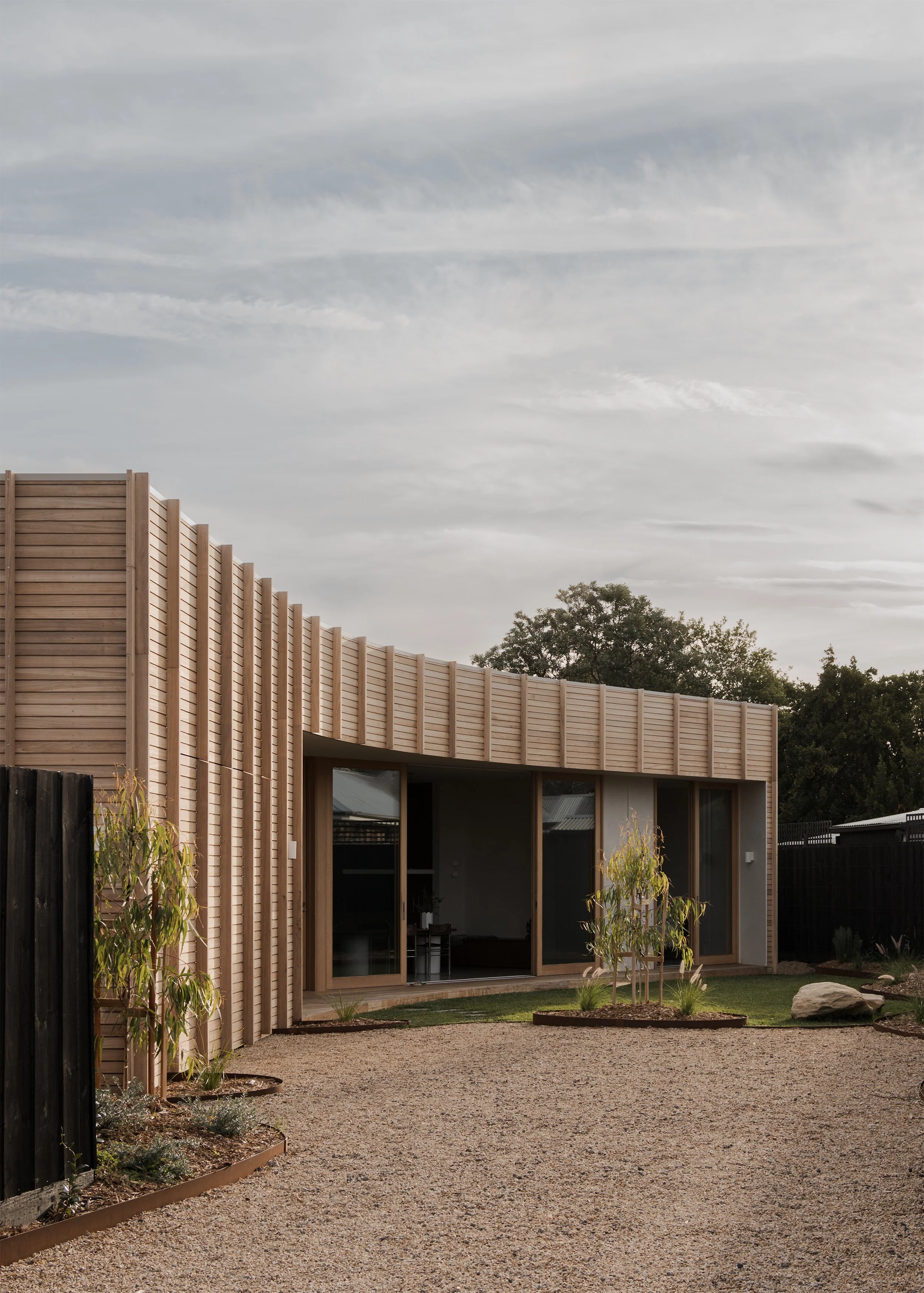
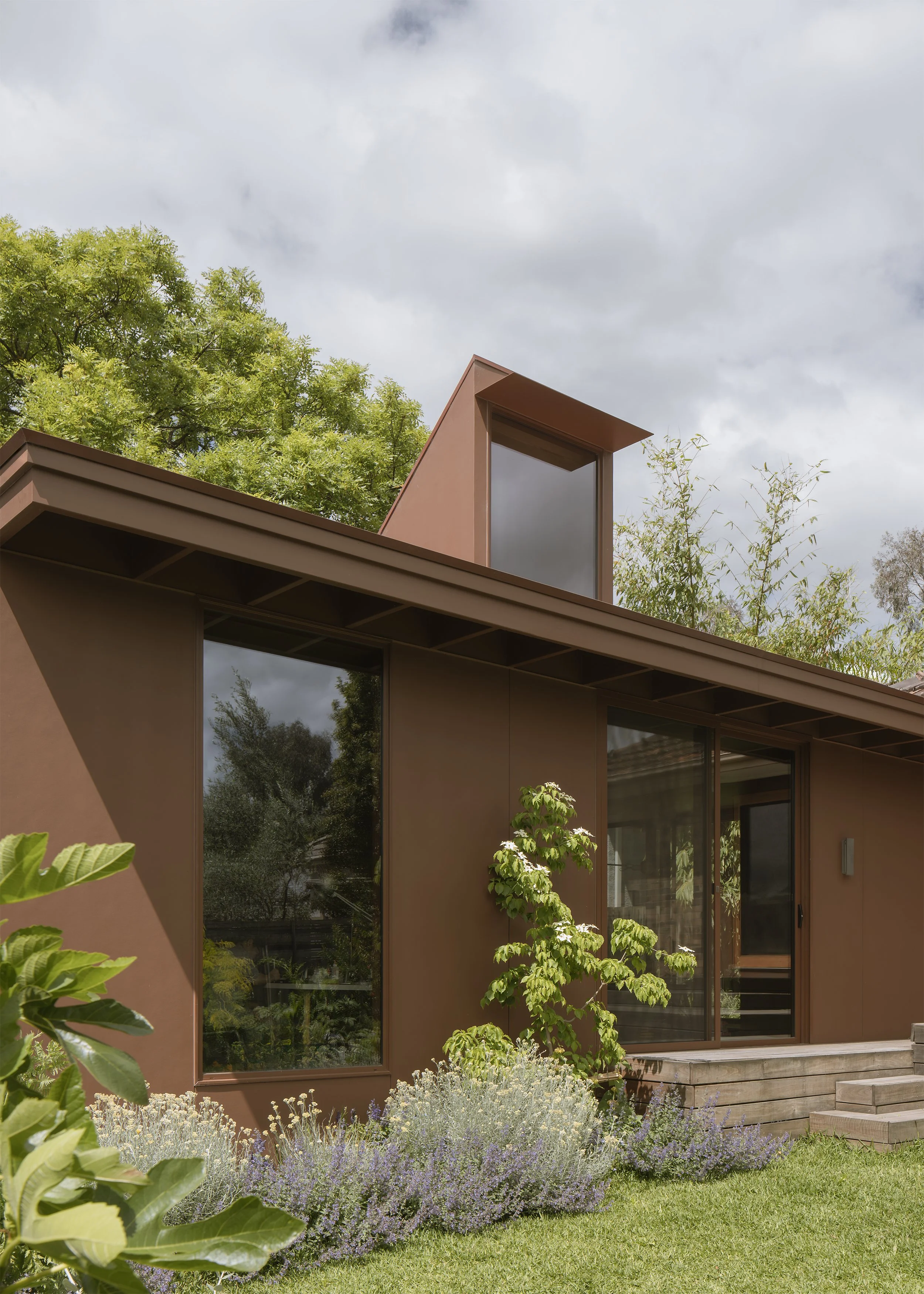
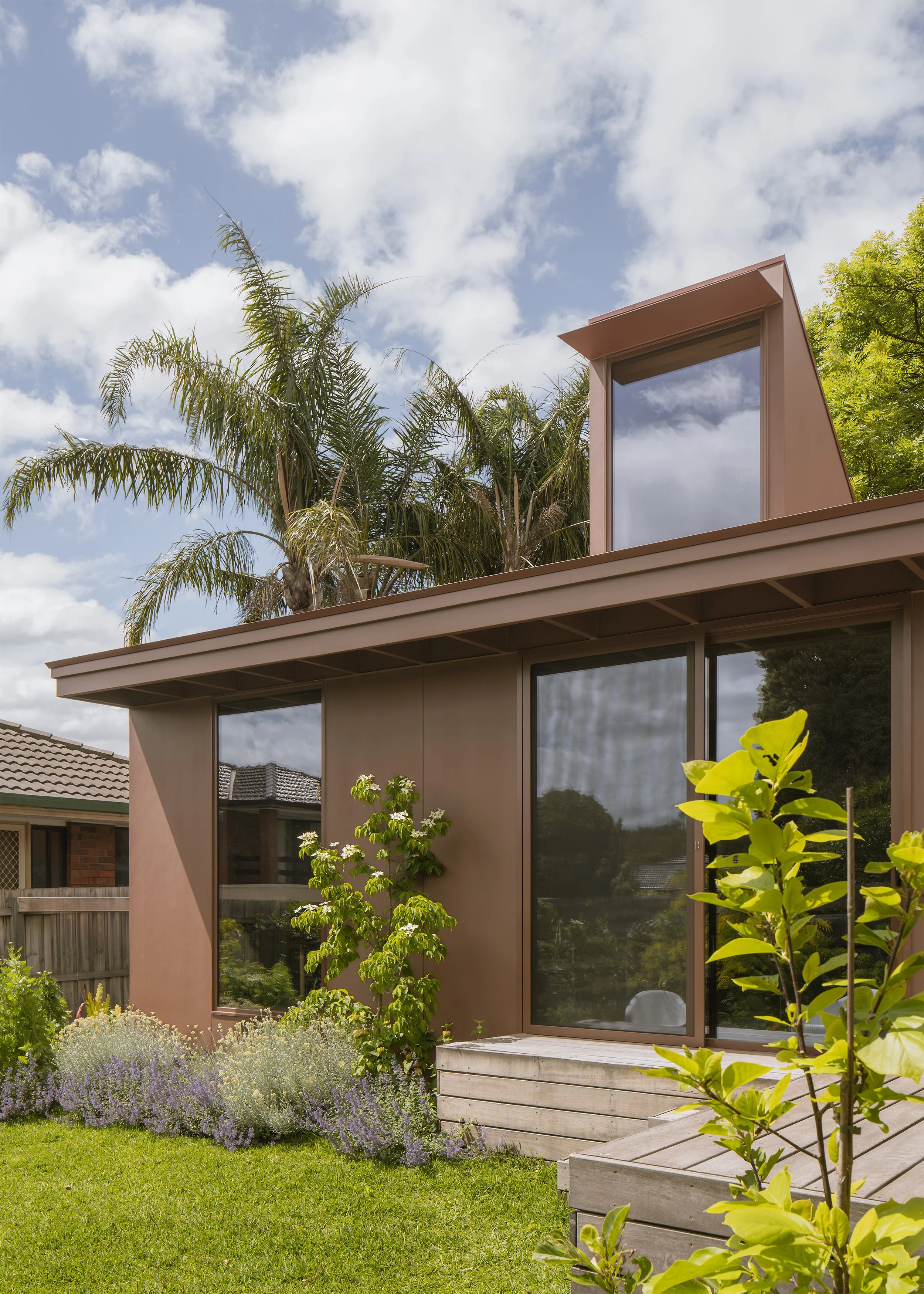
On a sloping suburban site in Coburg North, Cascade House by Sonelo Architects uses a stepped extension and layered thresholds to connect an existing brick dwelling with its garden.
Location
Coburg North, Victoria
Architecture
Sonelo Architects
Build
Cale Peters Construction
Landscape Design
Amanda Oliver Gardens
Film & Photography
Anthony Richardson
Production
Simple Dwelling
“We wanted a house that can support the way we live in an efficient way. A house which is a sanctuary that we can raise our young family. A house that is connected to the nature and gardens. A house where work and family can coexist. And a calm and serene place where we can be connected as a family.”
– Wilson Tang, Sonelo Architects
For Sonelo Architects, transforming Cascade House began with a familiar suburban contradiction: a brick house surrounded by potential garden yet barely connected to it. Located in Coburg North, Victoria, the architects’ own home occupies a site that drops away from the street towards the rear. Rather than simply append a level room to the existing house, the practice has used the fall of the land to organise a more layered interior. The alteration and addition moves down towards the garden, introducing a sunken living room and a series of wide thresholds that give the difference in height a role within family life.
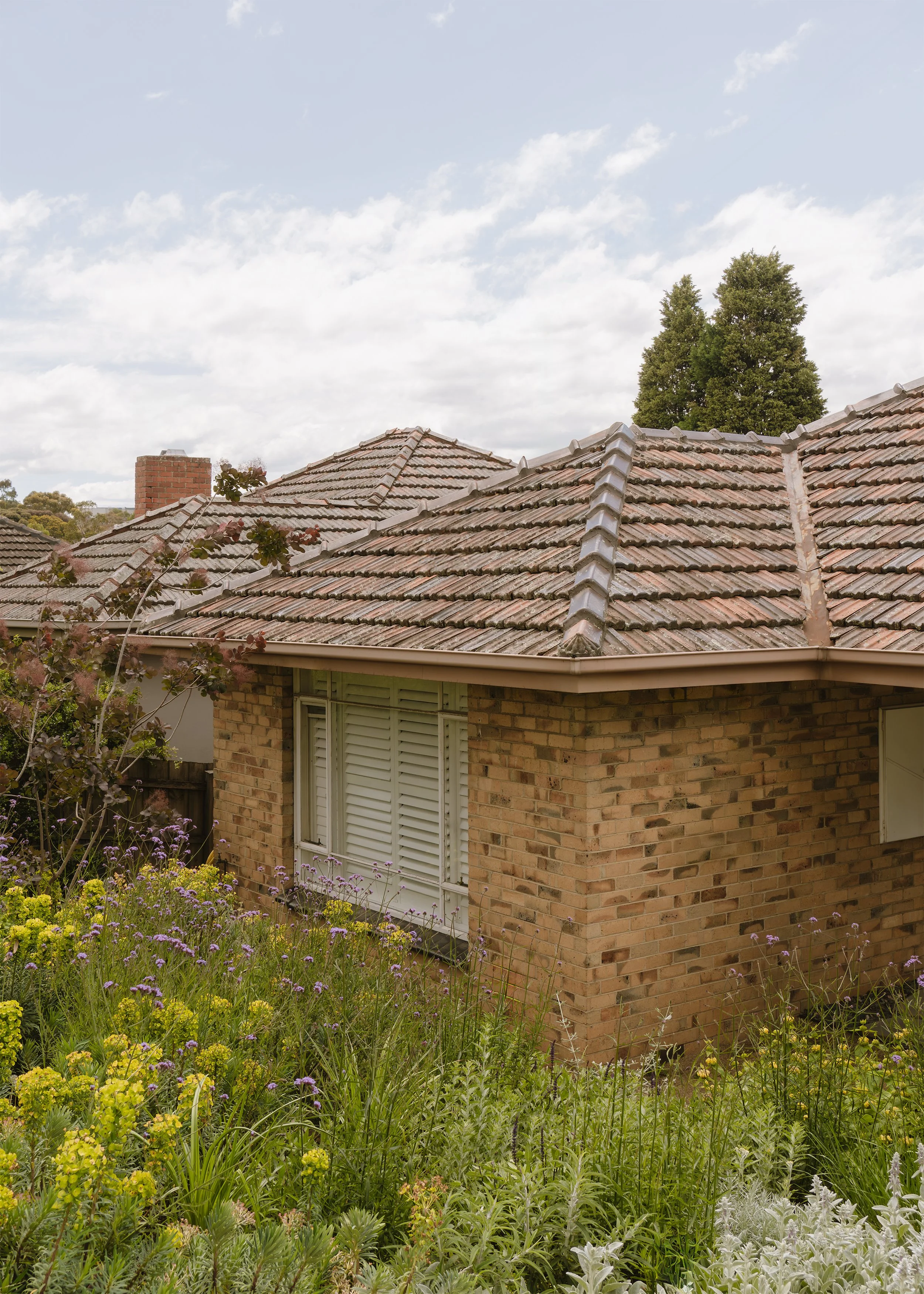
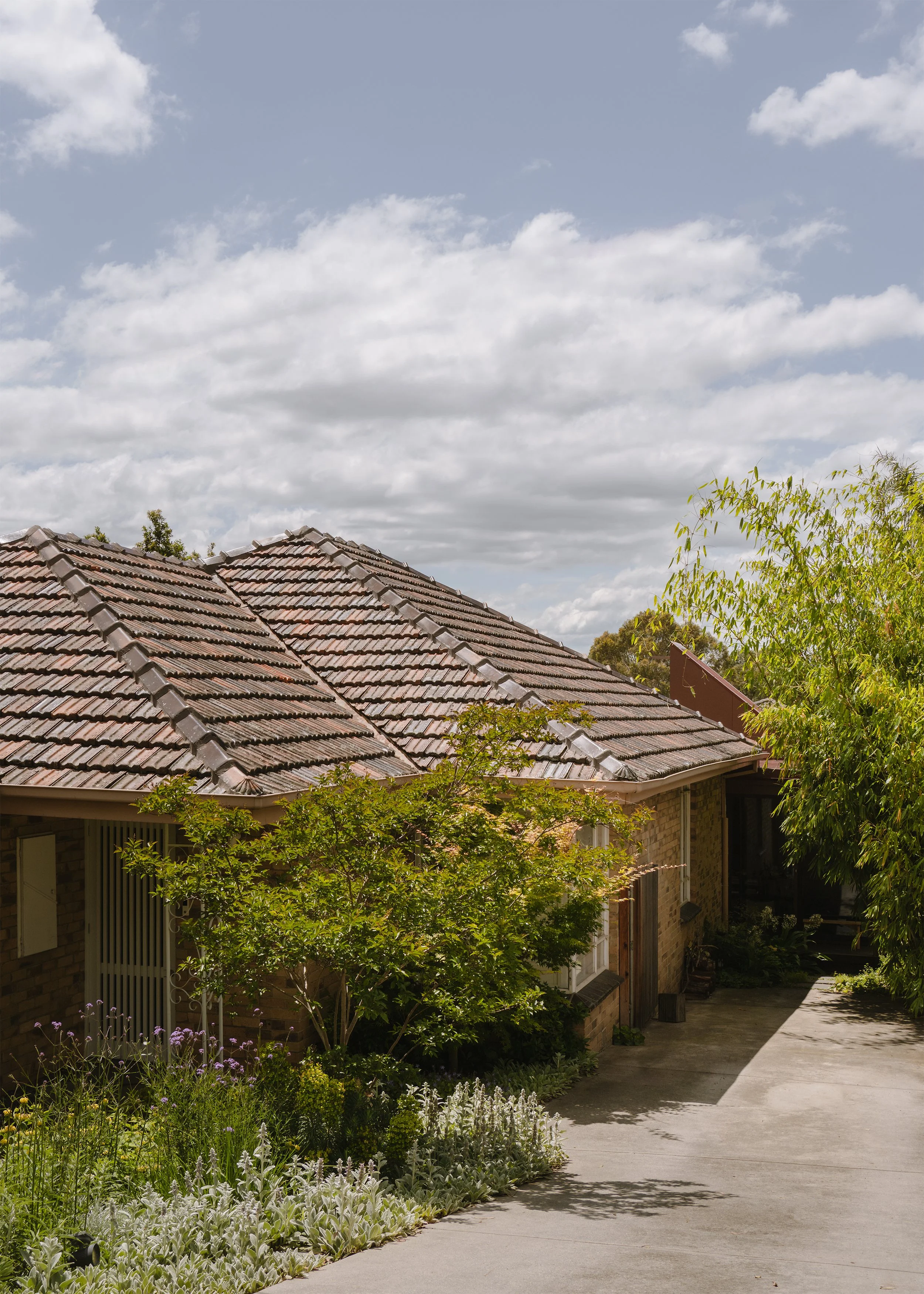
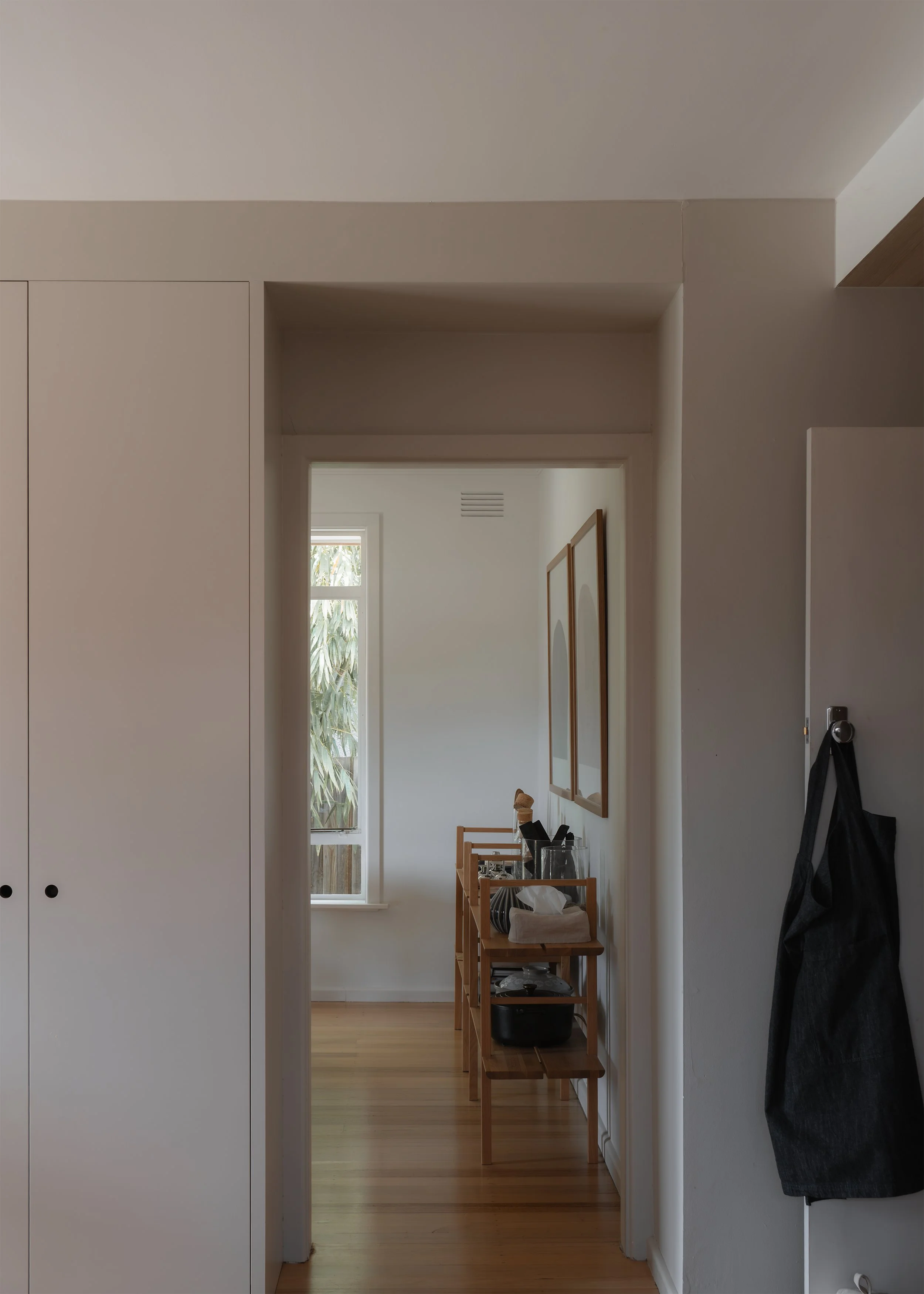
The original triple-fronted house had qualities worth retaining. Its cream brickwork, terracotta-tiled roof and relatively generous ceiling heights gave the dwelling a light and recognisable postwar character. But its relationship with the garden was less convincing. The rear rooms looked inward, and the house terminated well above the natural ground. The architects recall that the difference was approximately one and a half metres where the earlier building stopped, with the wider block falling by around three metres. A straightforward continuation of the floor level would have preserved the separation they wanted to resolve.
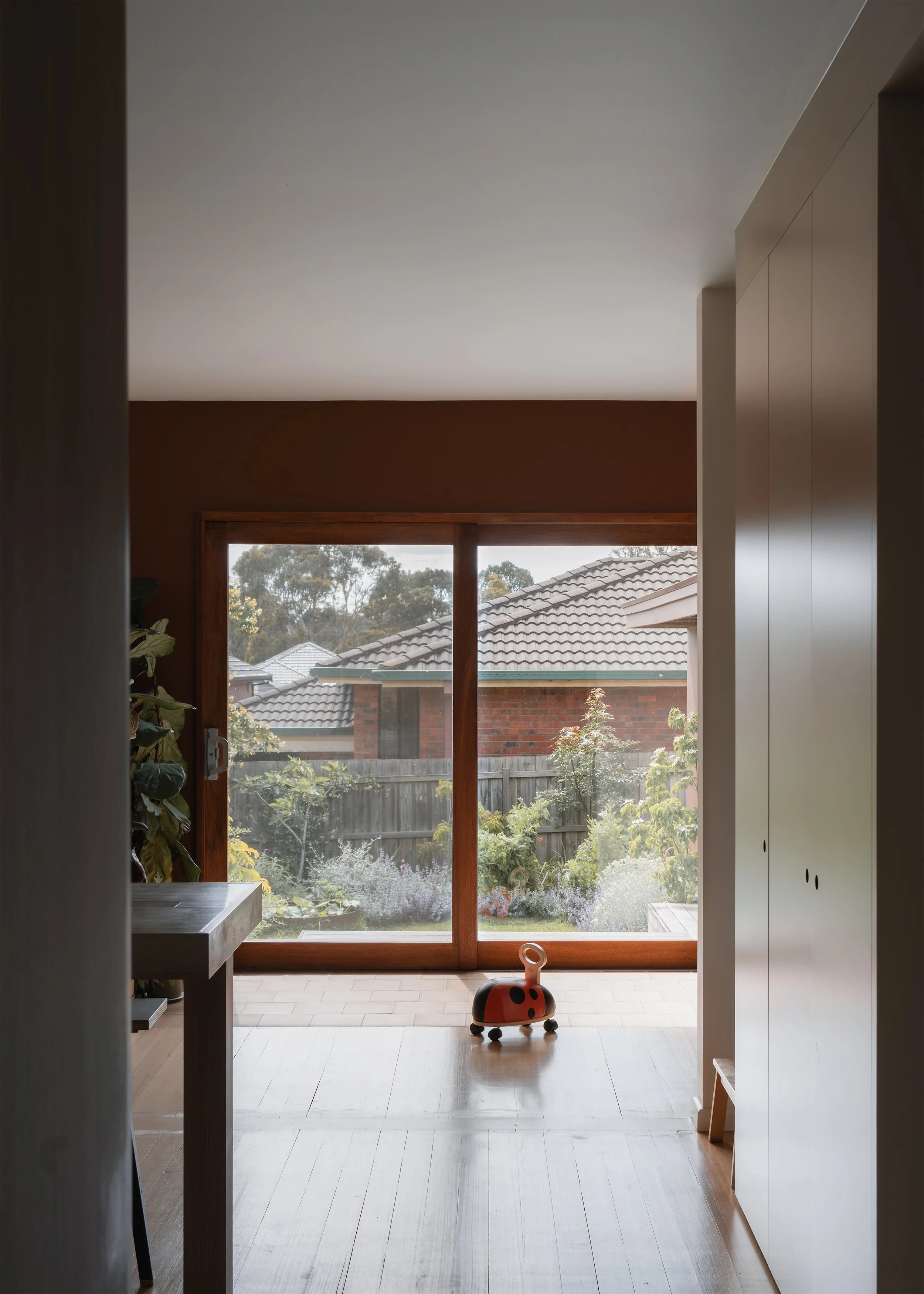
As both architects and occupants, the couple approached the renovation with an understanding of how the existing house functioned and where it fell short. Having initially intended to live in the home for a year or two before making changes, they began renovating after just three months, when leaking windows, a failing kitchen and bathroom issues demanded attention. What followed was a series of alterations undertaken as their family grew, gradually bringing the house closer to the way they wanted to live.
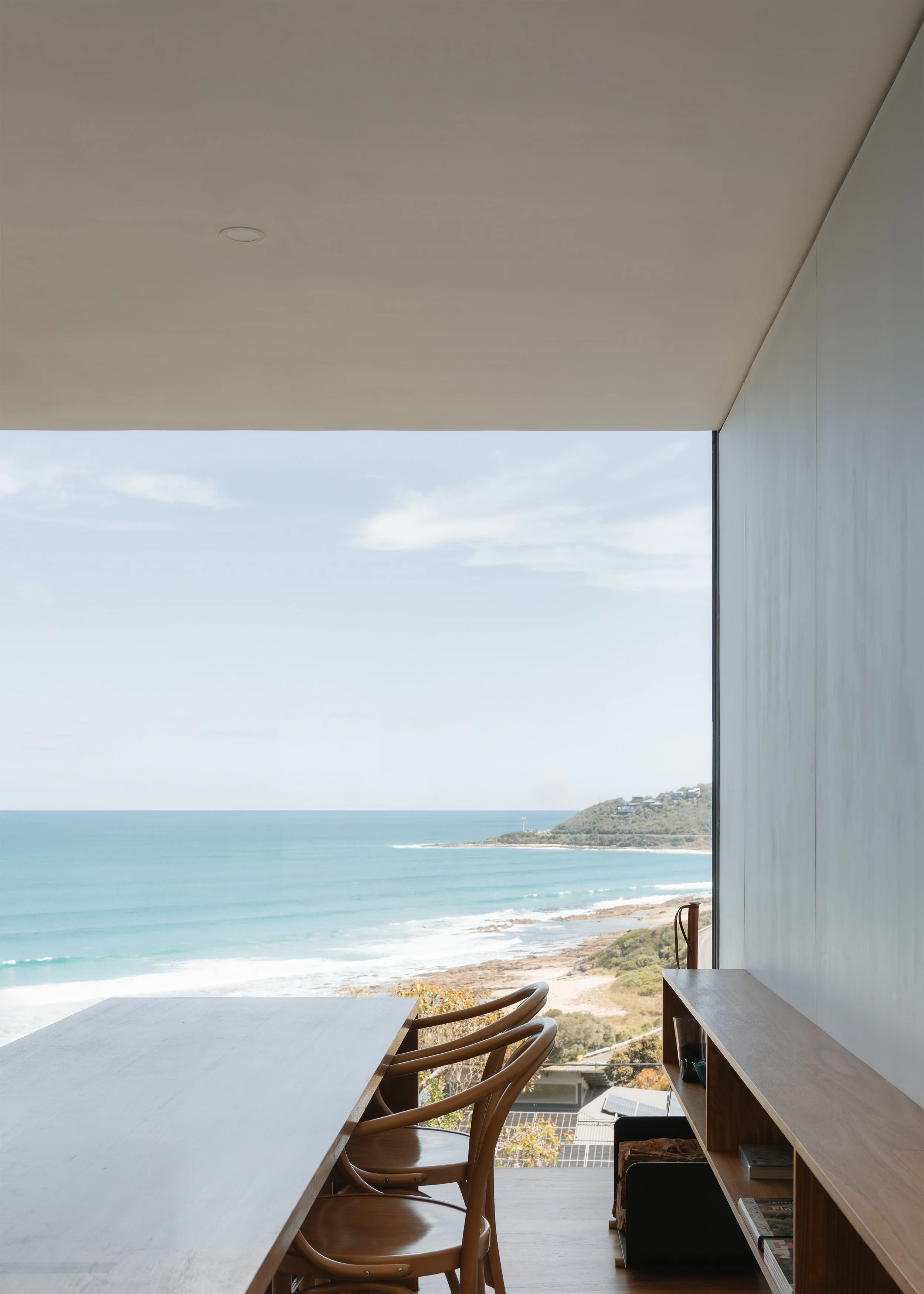
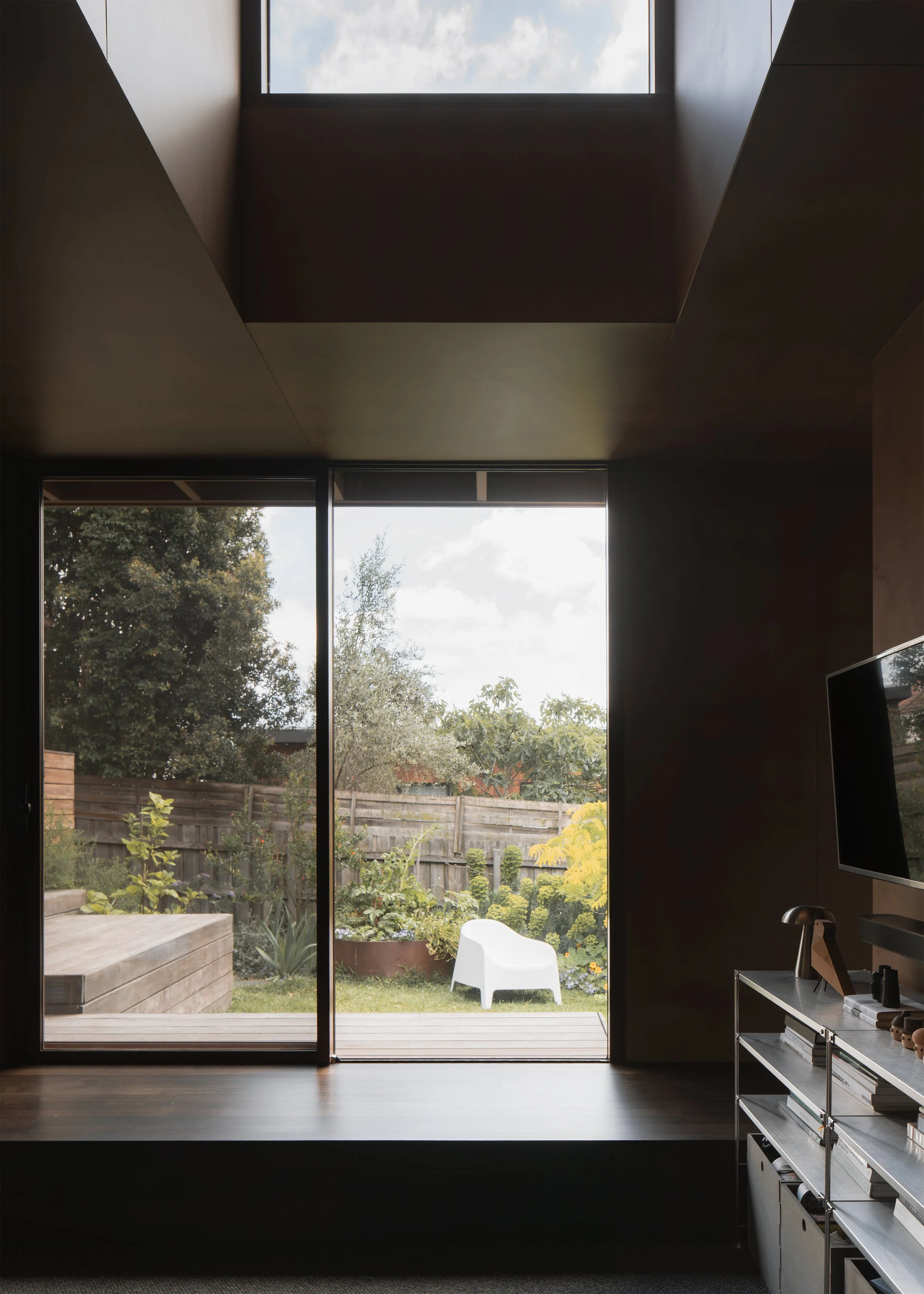
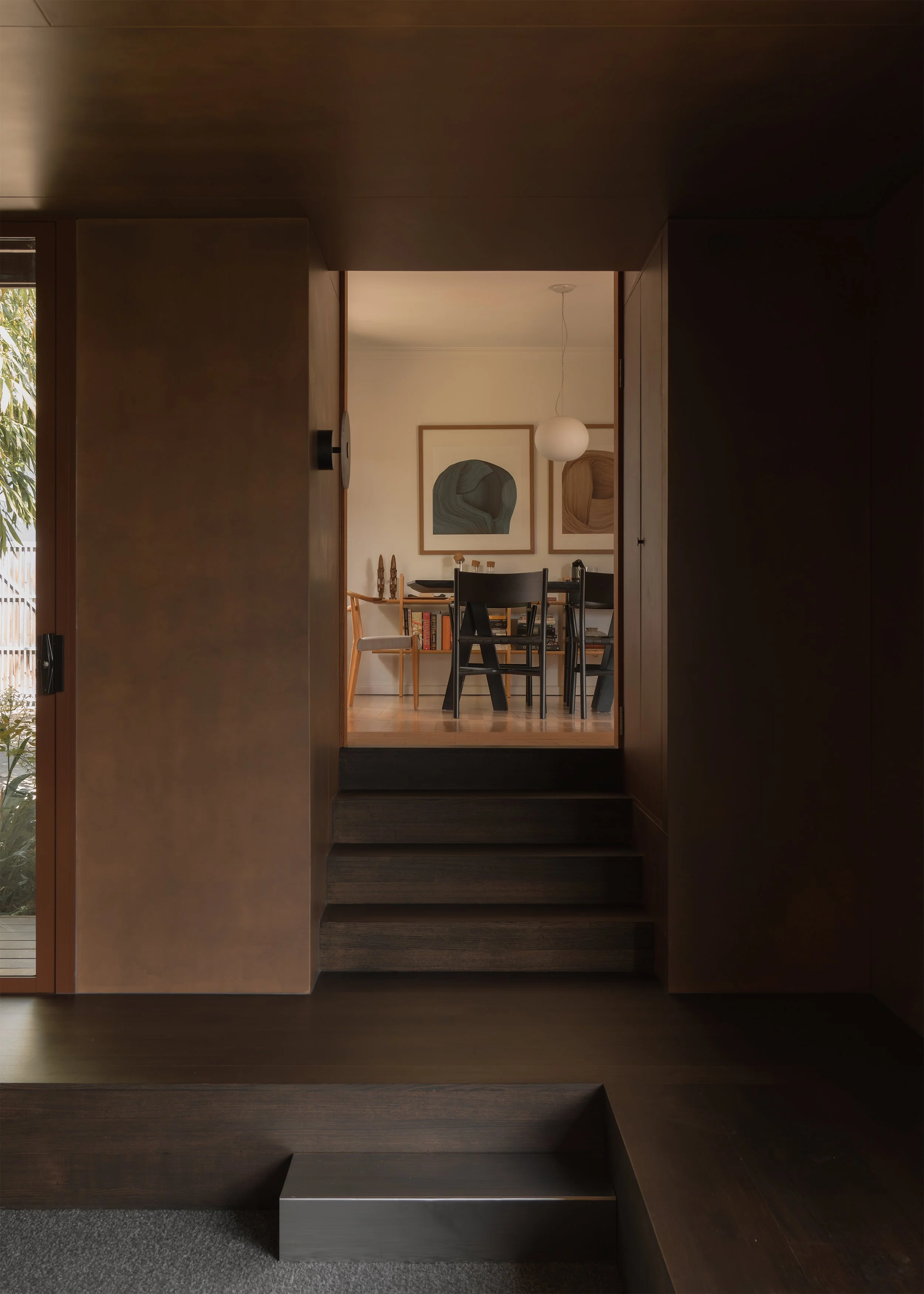
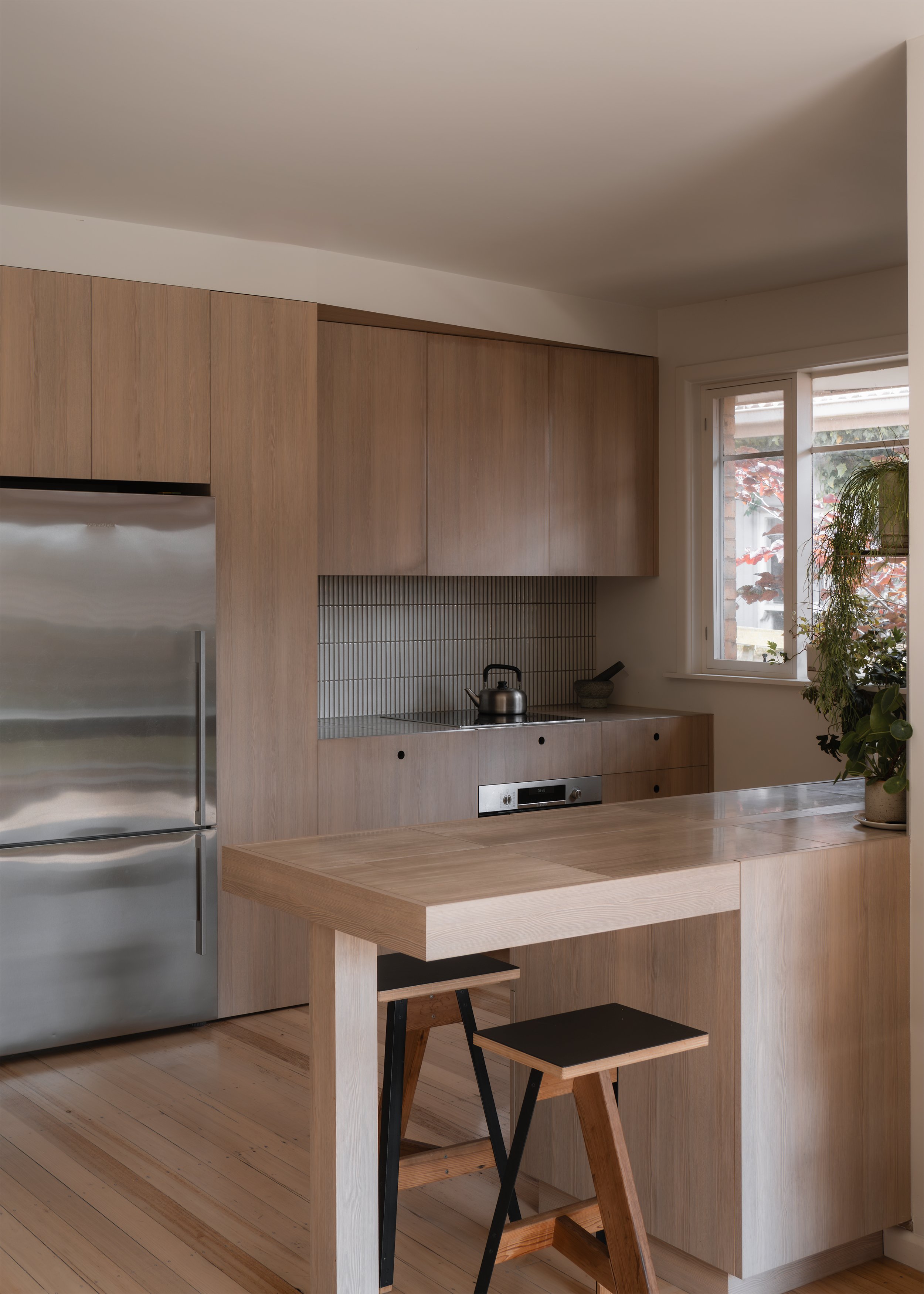
“We wanted the architecture to speak to its context and topography,” the architects explain. The new extension consequently takes its cue from the declining land. A lower living room opens towards the rear garden, while the kitchen and dining areas remain connected at the higher level within the older dwelling. In plan, the family’s shared spaces are close; in section, they are distinct. This becomes a useful alternative to one uninterrupted open-plan room. Conversation and outlook carry between the spaces, but groups can gather separately and the rooms retain their own atmosphere.
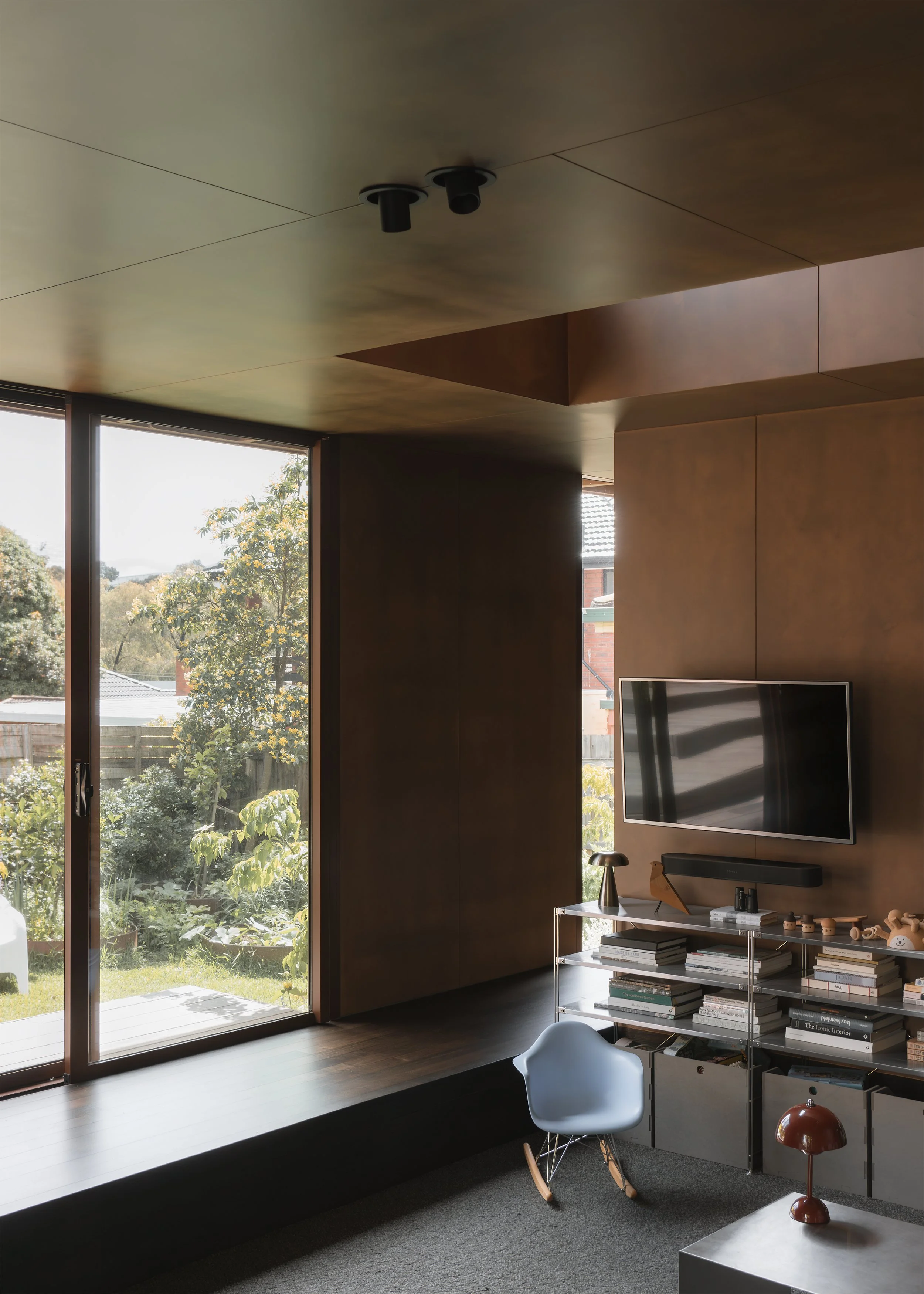
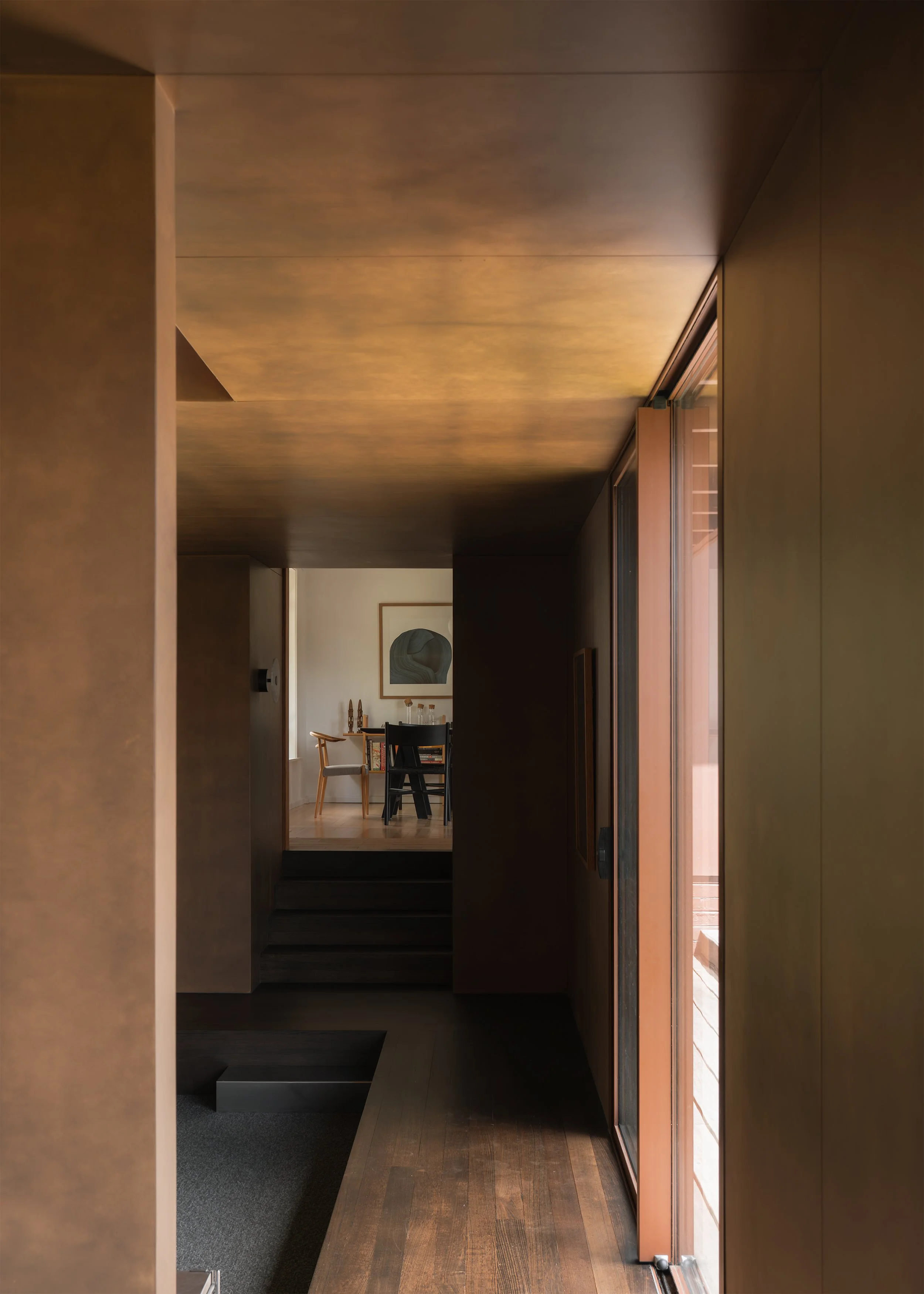
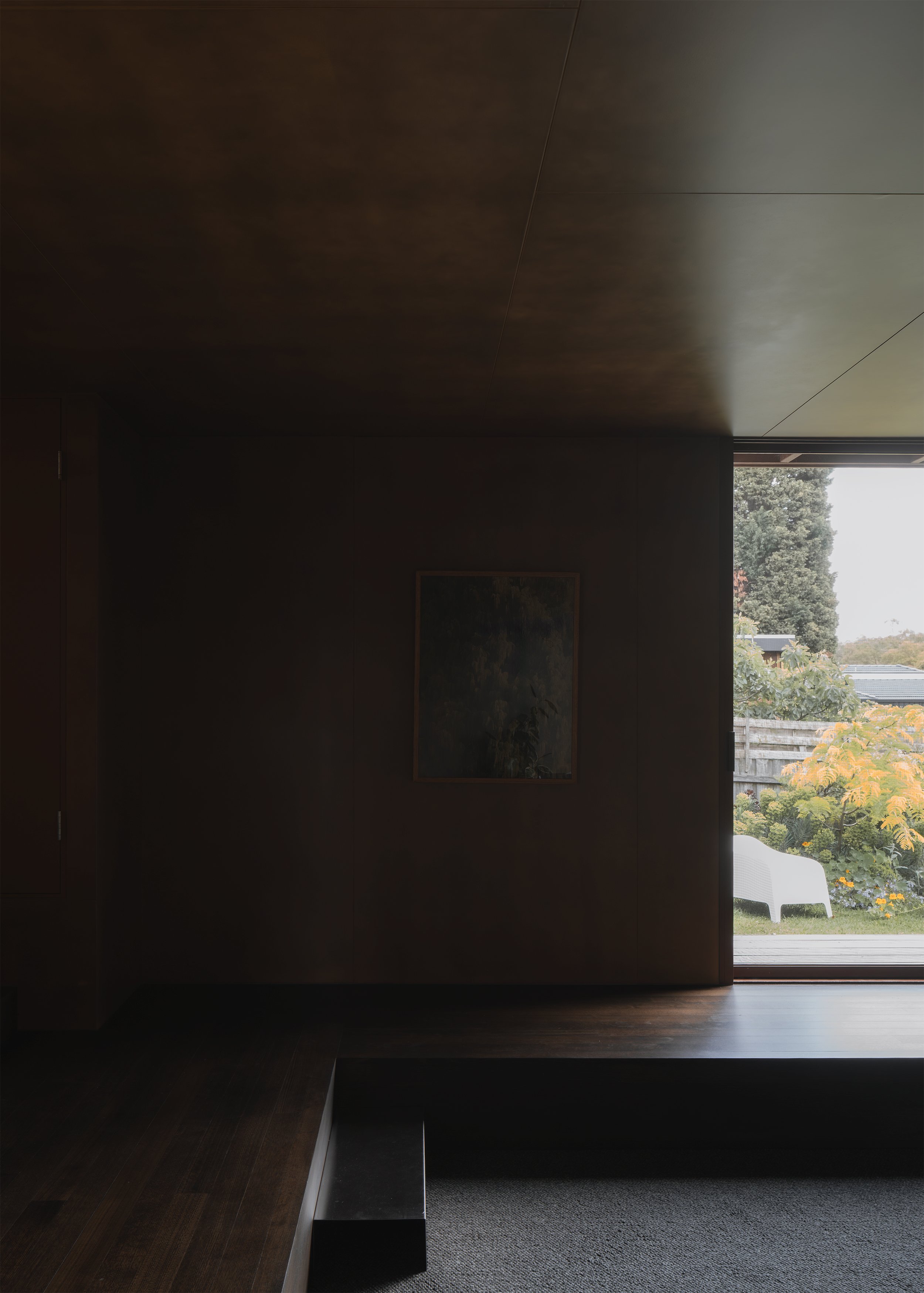
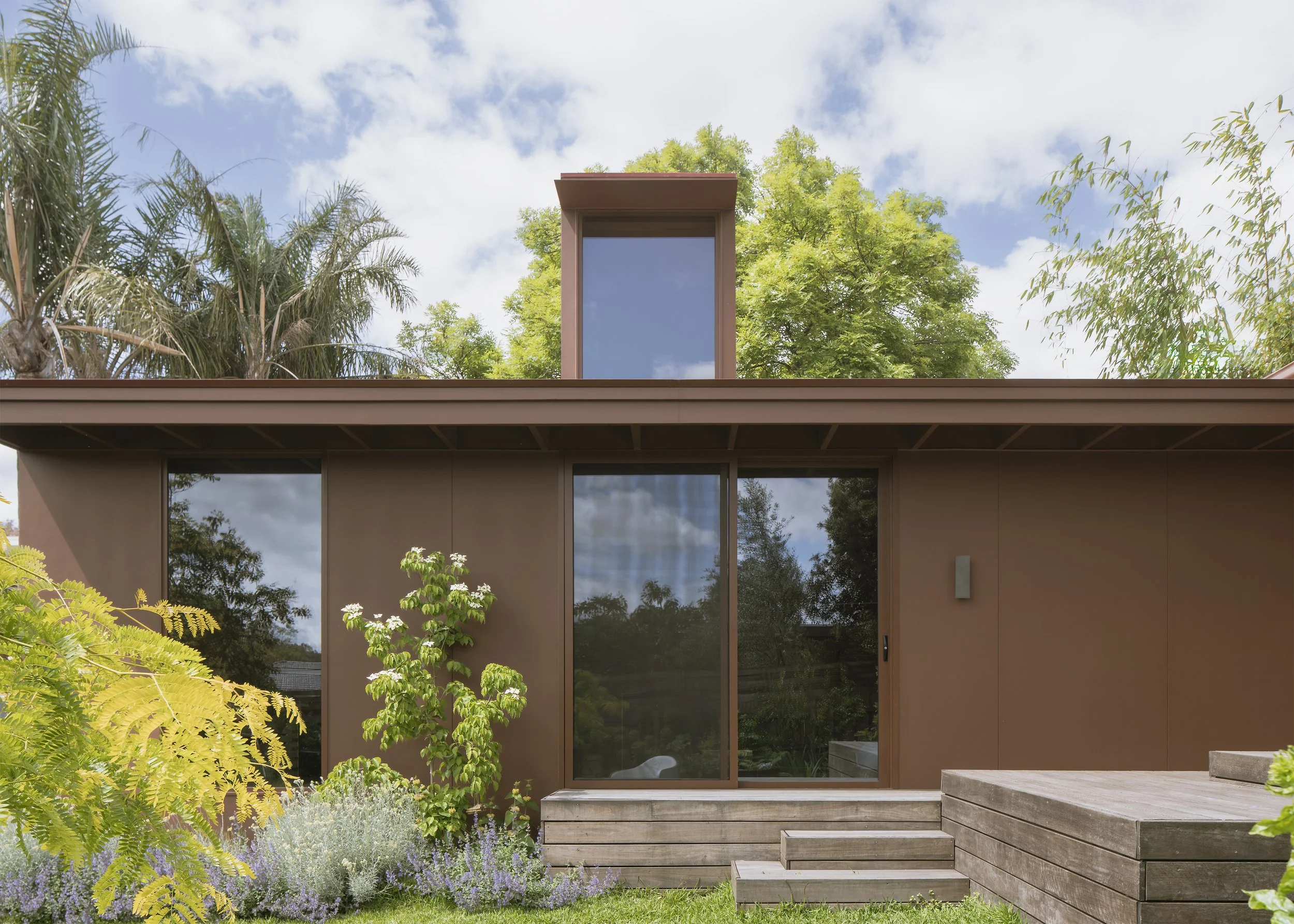
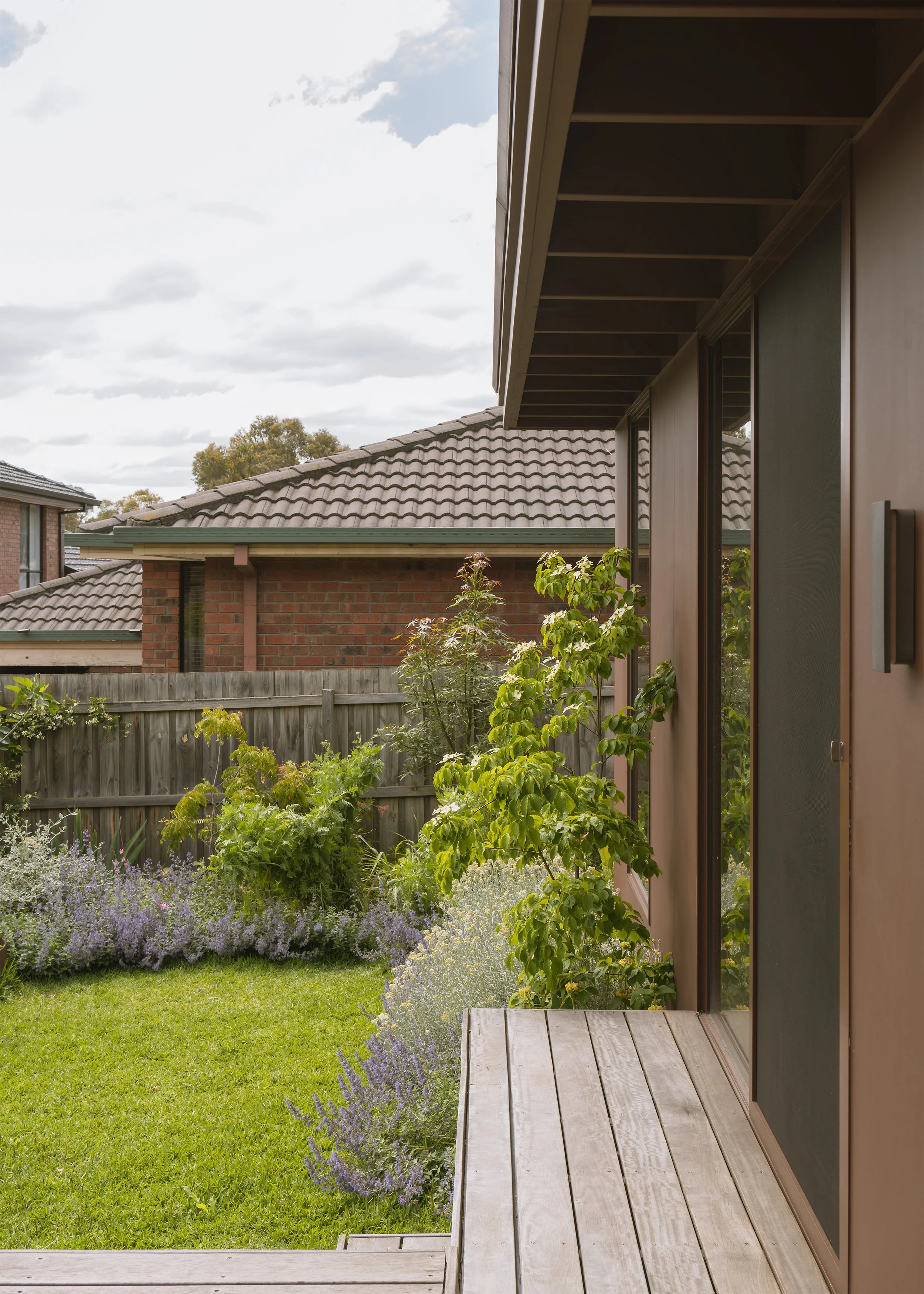
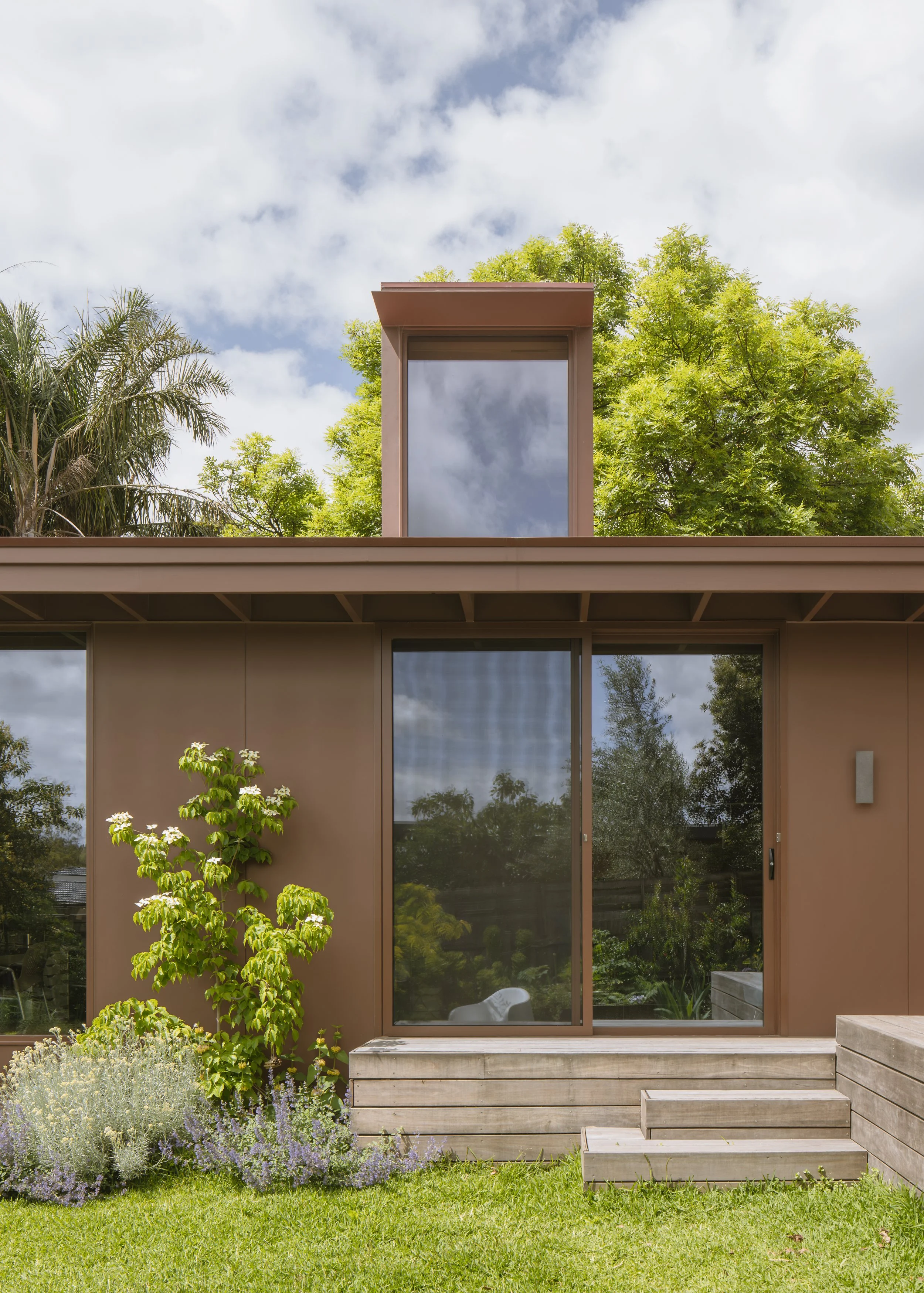
The level change is treated as more than circulation. Within the house, steps broaden into a plinth that can accommodate people when gatherings extend beyond the conventional seating. Outside, the deck descends in generous stages, with edges wide enough to pause upon, look into the garden or watch the children at play. “We wanted to be able to maximize the potentials of any steps that takes you from point A to point B,” one architect says. These ordinary movements are made part of the architecture’s social capacity.
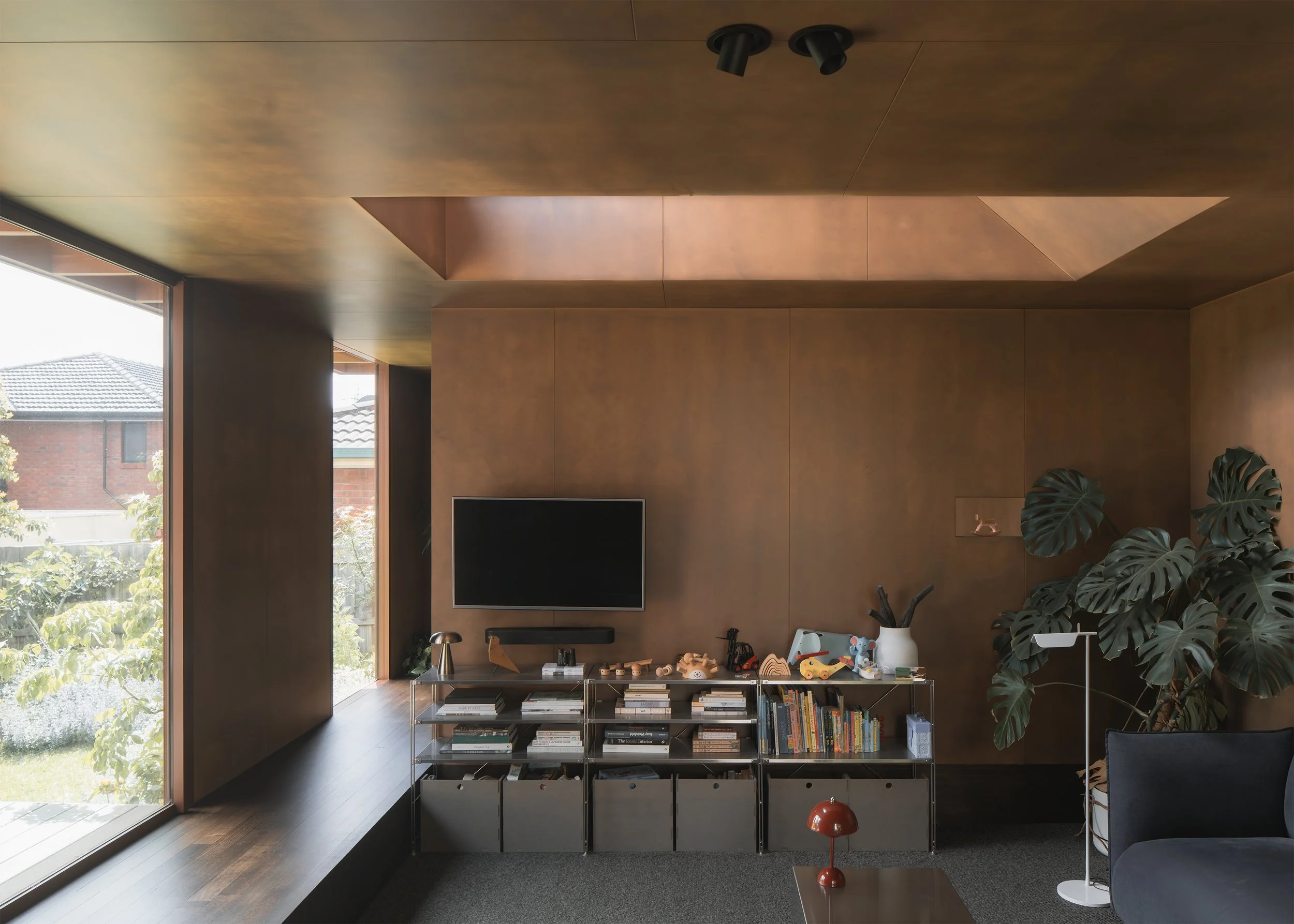
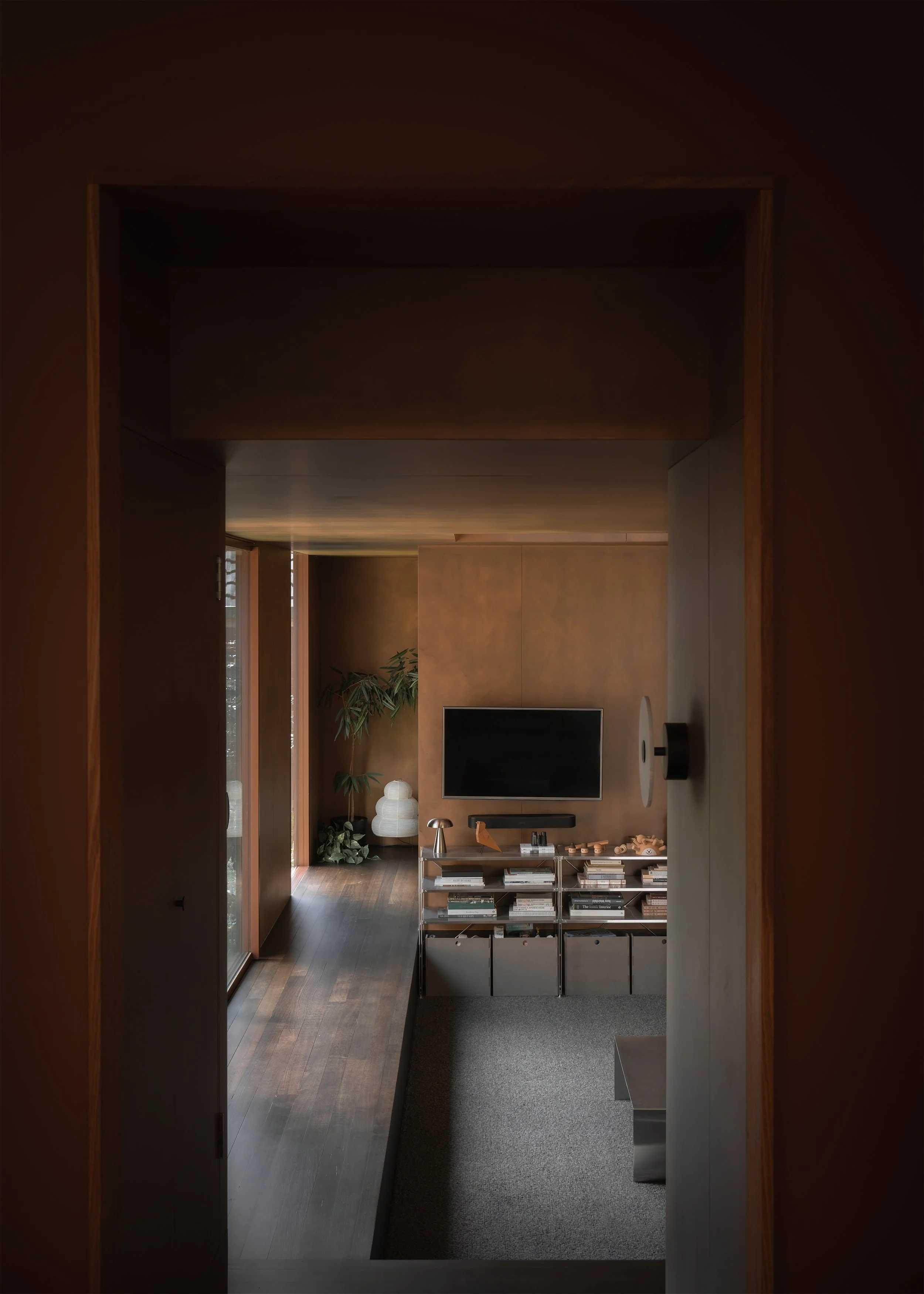
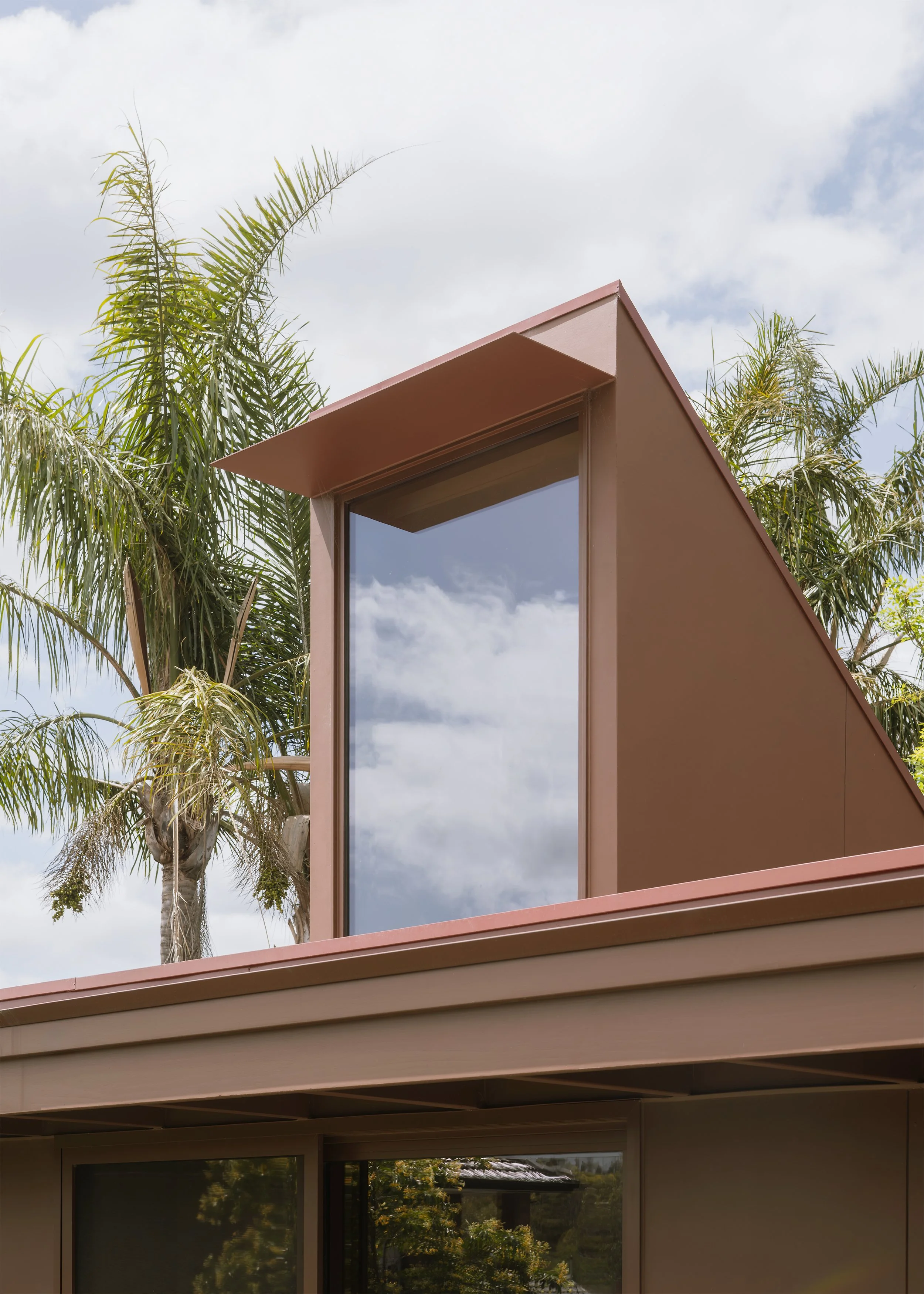
Light contributes another layer to the sequence. The new living room is deliberately darker than the external garden. Stained timber flooring and clear-coated MDF wall panels give the near surfaces weight and texture, allowing the brighter exterior to hold the eye. This is not an interior that attempts to compete with the landscape through its own brightness. The material palette also extends the warm earth colours of the existing roof and brickwork, and responds to the clay-rich character the architects identify in the surrounding creek precinct.
The walls reveal the importance of execution. Rather than a costly finish installed conventionally, the owners chose comparatively humble material and more attentive detailing. Panel grooves, small shadow lines, mitred corners and coating samples give MDF a bronze-like quality. This choice was both financial and collaborative: “we enjoy working with craftsmen,”. The result depends as much upon the carpenter and painter as the underlying material.

Cascade House illustrates a spatial restraint that cannot be measured by the absence of rooms or detail. The retained building remains legible; the new rooms are arranged through short changes in level rather than a wholesale reconstruction. There are compromises too, including older windows retained for budget reasons, while new glazing and insulation address comfort where possible. Completed in stages as the architects raised their two children, the project reflects the particular experience of designing and inhabiting one's own home. A house that once ended abruptly above the garden has acquired an inhabited edge. Its most persuasive move is not a grand gesture, but a series of steps that make the ground, rooms and people more closely related.
Discover thoughtful Australian homes
Receive new films and stories exploring thoughtfully designed Australian homes shaped by restraint and place, delivered to your inbox.
Project Details
Project
Cascade House
Location
Coburg North, Victoria, Australia
Project type
Alterations and Additions
Context
Suburban
Site area
502m²
Floor area
178m²
Architecture
Sonelo Architects
Project team
Wilson Tang and Elodie Lim
Builder
Cale Peters Constructions
Landscape design
Amanda Oliver Gardens
Engineer
Structify Consulting
Building surveyor
Pinnacle Building Surveying

Related
Skye House by Breathe Architecture
What does housing look like in the face of a climate crisis? At Skye House, the answer is clear, right-sized, high-performing, and people-focused. Sitting within Nightingale Village in Brunswick, this project by Breathe sets a new standard for sustainable urban living.


Related Features